A pool patch repair kit in Seminole County is the first thing most homeowners reach for when a vinyl liner springs a leak. It's cheap, it fits in a junk drawer, and for a clean puncture it genuinely works. This guide covers how to choose one, apply it correctly in Florida's heat and humidity, and recognize the point where a patch stops being the answer.
What Is a Pool Patch Kit?
A pool patch kit pairs a vinyl (or epoxy) patch with a solvent-based adhesive designed to seal small holes and tears before they become bigger leaks. It's an affordable tool for closing up pinhole leaks and small tears in a vinyl liner, saving the cost of a liner replacement.
Which kit you need depends on your pool's surface. Vinyl liners call for a flexible patch and solvent adhesive, while fiberglass pools usually need epoxy putty instead. If the damage looks bigger than a pinhole, or it's a hairline crack rather than a tear, our swimming pool repair service team can take a look before you reach for the adhesive.
Choosing the Right Pool Patch Kit for Seminole County Pools
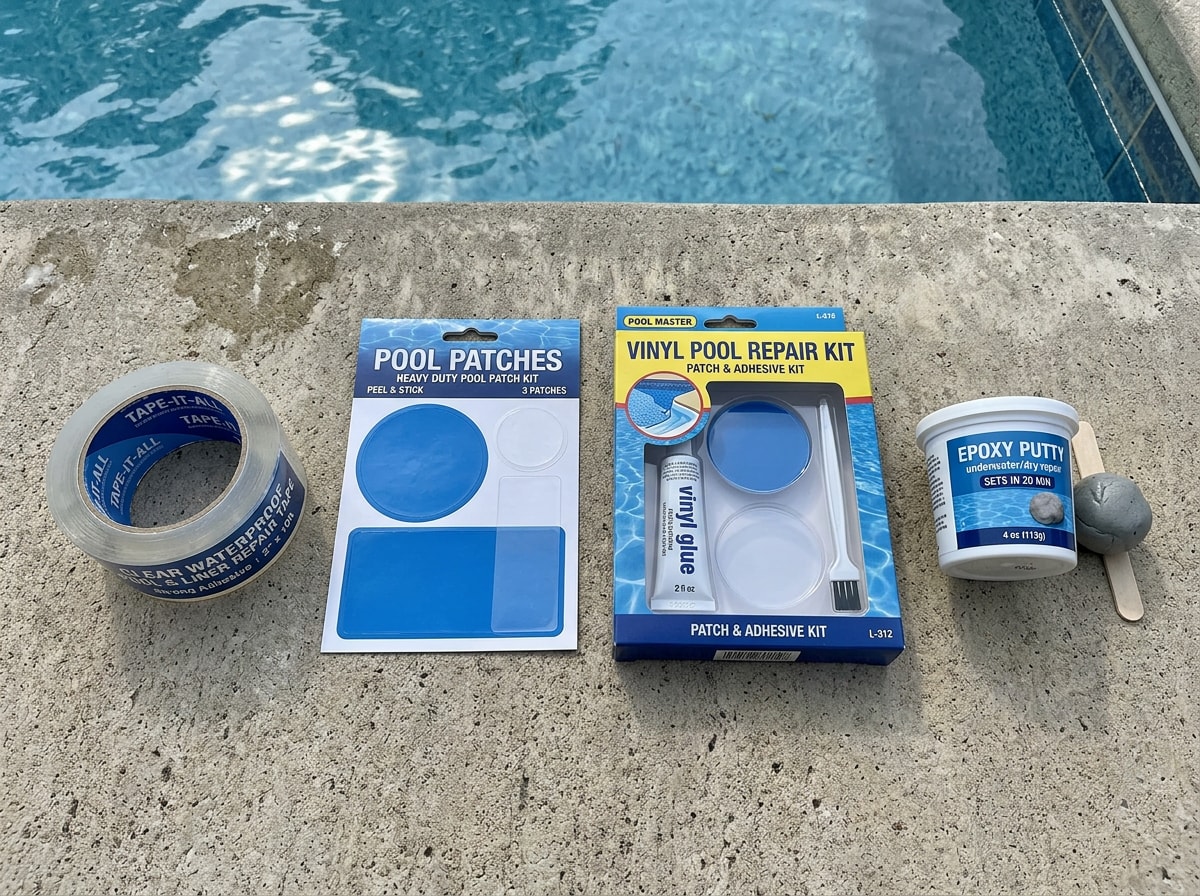
Not every patch kit works the same way. Picking the right one matters as much as applying it correctly. Locally, you'll typically find four main options.
| Patch Type | Best For | Application | Typical Hold |
|---|---|---|---|
| Waterproof tape | Quick, temporary seal on dry surfaces | Above waterline only | Days to a few weeks |
| Peel-and-stick patches | Small pinhole leaks, inflatables | Dry or wet surfaces | Weeks to a few months |
| Vinyl patch + adhesive kit | Liner tears and punctures | Above or below waterline | Months to years if prepped correctly |
| Epoxy putty | Fiberglass shell chips and small gouges | Dry, cured surfaces | Years, if the surrounding gelcoat is sound |
Which one fits depends on the pool's surface material, the size and location of the hole, and whether the repair needs to hold underwater versus above the waterline. A patch meant for dry application won't always bond the same way below the surface, so check the label before buying.
When to Use a Patch Kit vs. Call a Pro
Small holes and clean punctures in a vinyl liner usually respond well to a patch kit. Cracks in the walls or floor, seam failures, and repeat leaks in the same spot are a different story.
A patch is a repair for a small, localized problem, not a substitute for a structural fix. If the same area keeps failing after two or three honest attempts, or you're seeing a widening crack instead of a tear, it's worth a professional eye. You can schedule a free inspection and have a technician confirm whether it's a patch job or something bigger before you spend another afternoon on it.
How to Use a Pool Patch Kit (Step-by-Step)
With a little prep and a few simple steps, a patch kit can fix a hole quickly and hold for a long time. Clean the area around the hole thoroughly first. Dirt, algae, or oily residue will keep the adhesive from bonding, wet or dry.
Locate the Leak
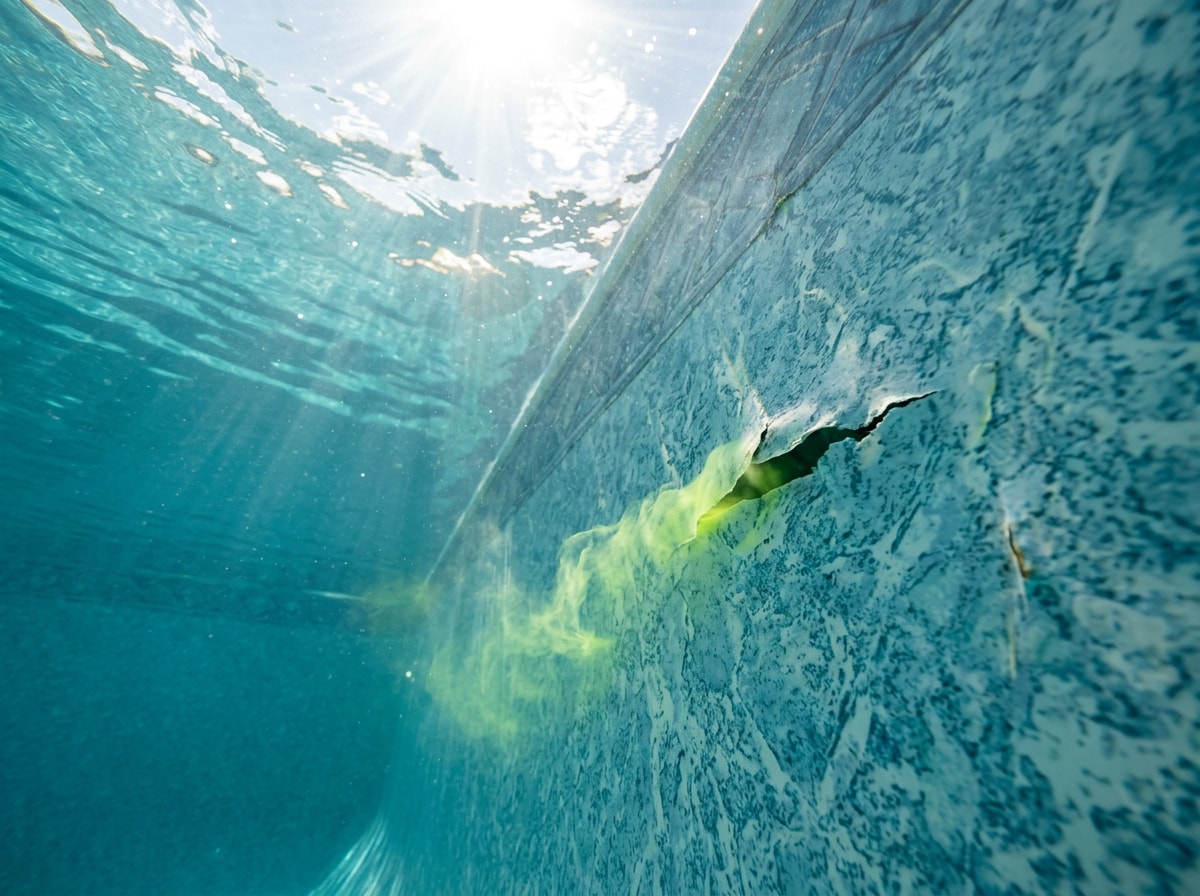
Start by turning off the pump and letting the water settle completely. Then use leak detector dye, squirting a few drops near the suspected tear. The dye gets pulled into any active leak, pinpointing the exact spot.
This pairs well with a basic bucket test, which compares water loss in the pool to a sealed bucket to confirm you're actually losing water to a leak and not just evaporation. If dye tests and a visual check aren't turning up an obvious source, that's often a sign the leak is in plumbing or an underground fitting rather than the liner. Our leak detection guide for Seminole County pools walks through those harder-to-find leaks in more detail.
Don't skip the physical inspection either. Grab goggles and feel along seams, folds, and the pool floor for soft spots or visible damage.
Supplies You'll Need
Gather these before you start:
- A vinyl liner patch kit rated for your type of repair
- A pool brush and clean cloth
- Scissors to round the patch corners
- A heavy, smooth object (a clean rock or weighted bag) to hold an above-water patch in place while it sets
- Goggles if you're applying the patch underwater
Florida's storm season makes it worth keeping a spare pool patch repair kit for Seminole County homes on hand year-round, rather than scrambling for one after a branch punches through the liner during an afternoon storm.
Apply the Patch
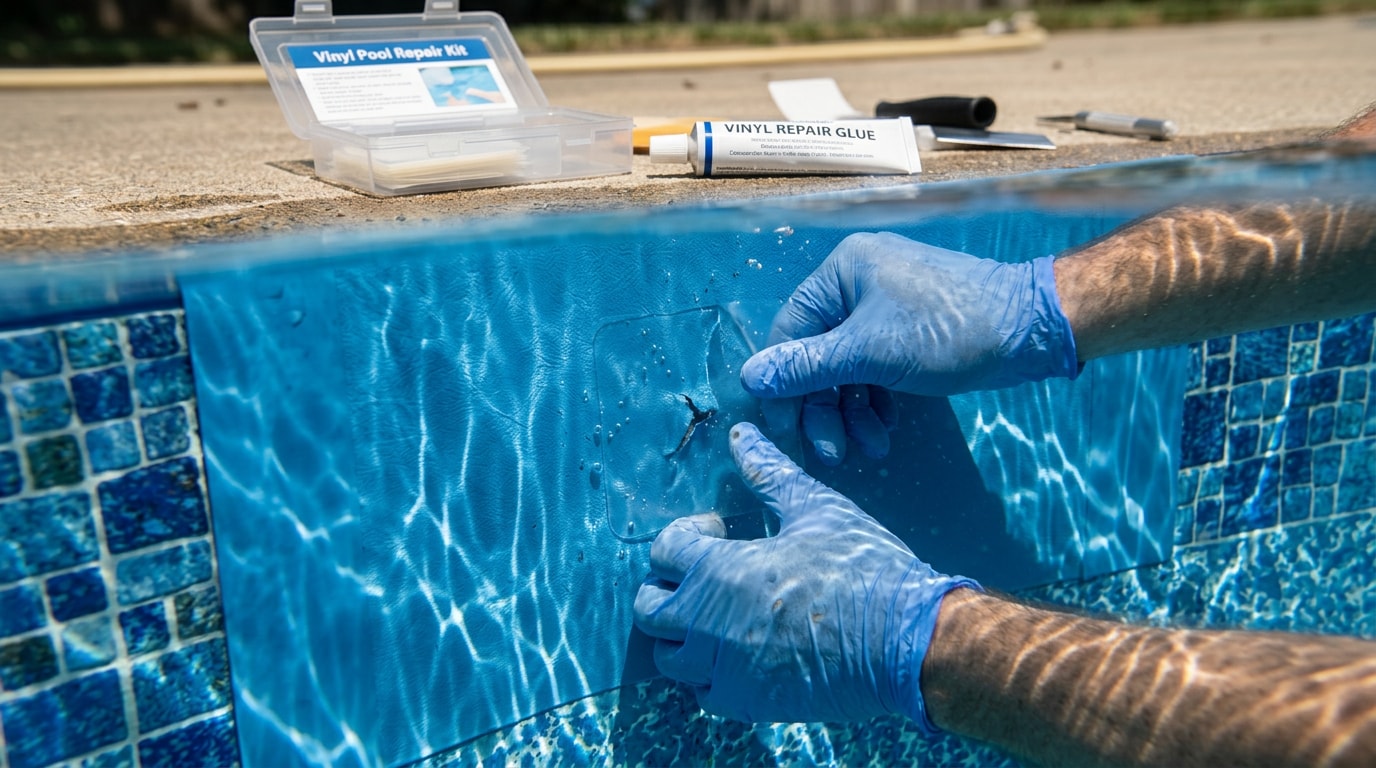
Cut the patch two to four inches larger than the damage and round the corners so it doesn't catch and peel. If you're working underwater, fold the patch in half, apply adhesive to one side, then submerge it and unfold it directly over the tear, pressing out air and water bubbles as you go.
Central Florida's climate adds a wrinkle here. High humidity and warm pool water can affect how adhesive sets and bonds. Most vinyl cements reach a tacky, workable state in just a few minutes, but general instructions for standard vinyl cement call for pressing surfaces together while tacky and allowing them to bond for at least an hour before use, with the strongest hold achieved after one day. Underwater repairs generally need even more patience: nothing should disturb the patch while it sets, and underwater repairs should be given even longer drying time than above-water ones.
Cure times vary by product, so check the manufacturer's technical instructions for vinyl cement before swimming again, and don't rush a patch just because the pool looks tempting on a 95-degree afternoon.
Maintaining Your Pool Patch Kit
Keep adhesive tubes sealed tightly between uses. Seminole County's humidity can dry out or clump partially used adhesive faster than it would in a drier climate.
Check patch edges every few months for lifting or discoloration, especially on pools that sit in full sun most of the day. A well-maintained pool patch repair kit in Seminole County should be ready to use without a last-minute store run. For broader seasonal upkeep, our pool maintenance service page covers the checklist items that help you catch small problems before they need a patch at all. You can also check conditions specific to your area on our Seminole County service page.
When to Replace Your Pool Patch Kit
A few signs it's time to replace the kit, or possibly the liner itself:
- Dried-out or clumped adhesive
- Brittle or cracked vinyl patches
- Repeated patch failures in the same spot
After inspecting hundreds of vinyl liners across Seminole County's neighborhoods, our technicians see the same failure pattern repeatedly: a patch that looked solid in the package failed within weeks because the surface wasn't fully clean and dry before bonding, or because the underlying vinyl was already too brittle to hold a seal. If a patch won't hold after two or three honest attempts, that's a sign of a bigger underlying problem, not a bad patch job, and it's time to get a free inspection rather than buy another kit.
Explore our full range of pool services if you're dealing with more than a simple liner tear.
FAQ
Can You Patch a Pool Liner Underwater?
Yes. Many vinyl patch kits are made specifically for underwater use, and in a lot of cases applying the patch underwater is actually the preferred option, since draining the pool risks further liner damage and structural stress. Fold the patch, apply adhesive, submerge, and press it over the tear while squeezing out trapped water and air.
What Can You Use to Patch a Pool Liner?
A vinyl patch-and-adhesive kit, waterproof pool tape, or peel-and-stick patches cover most vinyl liner repairs, each suited to slightly different hole sizes. Epoxy putty is the better option for fiberglass pools. Match the material to your pool type, as covered in the comparison table above.
Where Can I Find Pool Patch Repair Kits Locally?
Hardware stores and pool-supply retailers around Seminole County typically stock several patch kit options. If a leak looks bigger than a DIY fix, request a service visit and a technician can assess it in person.
Do Pool Repair Patches Actually Work?
Patches work well for small punctures and clean tears, holding for months or longer when applied correctly. They're not a permanent fix for seams, large tears, or structural cracks. Those situations usually call for liner replacement or professional repair instead.
How Long Does a Pool Patch Last?
A correctly applied vinyl patch can last anywhere from several months to a few years, depending on sun exposure, water chemistry, and how well the surface was prepped before bonding. Patches applied over dirty or poorly dried vinyl tend to fail much sooner.
What Temperature Should It Be When Applying a Patch?
Most vinyl adhesives are formulated for application between roughly 35°F and 95°F. In Seminole County's summer heat, work in the shade when possible and avoid applying adhesive to a liner surface that's hot to the touch, since that can shorten the tacky working window.
Is It Safe to Handle Pool Water and Chemicals During a Repair?
Yes, as long as you follow basic precautions. Maintain free chlorine levels continuously between 1 and 3 parts per million and keep the pH level of the water at 7.2 to 7.8 before and after any repair, and always follow the product label for safe handling. For ongoing water balance, the PHTA's pool maintenance guidance is a solid reference, and testing chlorine and pH at least twice per day, and more often during heavy use, keeps a freshly patched pool in good shape while it cures.