Swimming pool leak detection in Seminole County starts with one question: is your pool actually leaking, or is it just losing water to Florida's heat? Get that wrong and you either pay for a repair you didn't need or ignore a crack that's quietly undermining your deck. Here's how local pros tell the difference, what it costs, and how to hire someone who won't guess.
This guide reflects the methods our licensed technicians at Swimm Solutions use on Seminole County service calls, including a recent Lake Mary job where a steady quarter-inch daily drop traced back to a cracked return-line fitting under the paver deck, confirmed with dye testing and repaired without lifting a single paver.
Is It a Leak or Just Florida Evaporation?
Before anyone tests plumbing or dives the shell, the first move is ruling out evaporation. Florida sun and wind pull a surprising amount of water out of an uncovered pool, especially a heated one.
The bucket test settles it in 24 hours:
- Fill a bucket to match the pool's water level and set it on a step
- Mark the water line inside the bucket and on the pool wall
- Wait 24 hours with the pump running normally
- Compare the two drops
If the pool drops noticeably more than the bucket, evaporation isn't the explanation, you have a leak worth investigating.
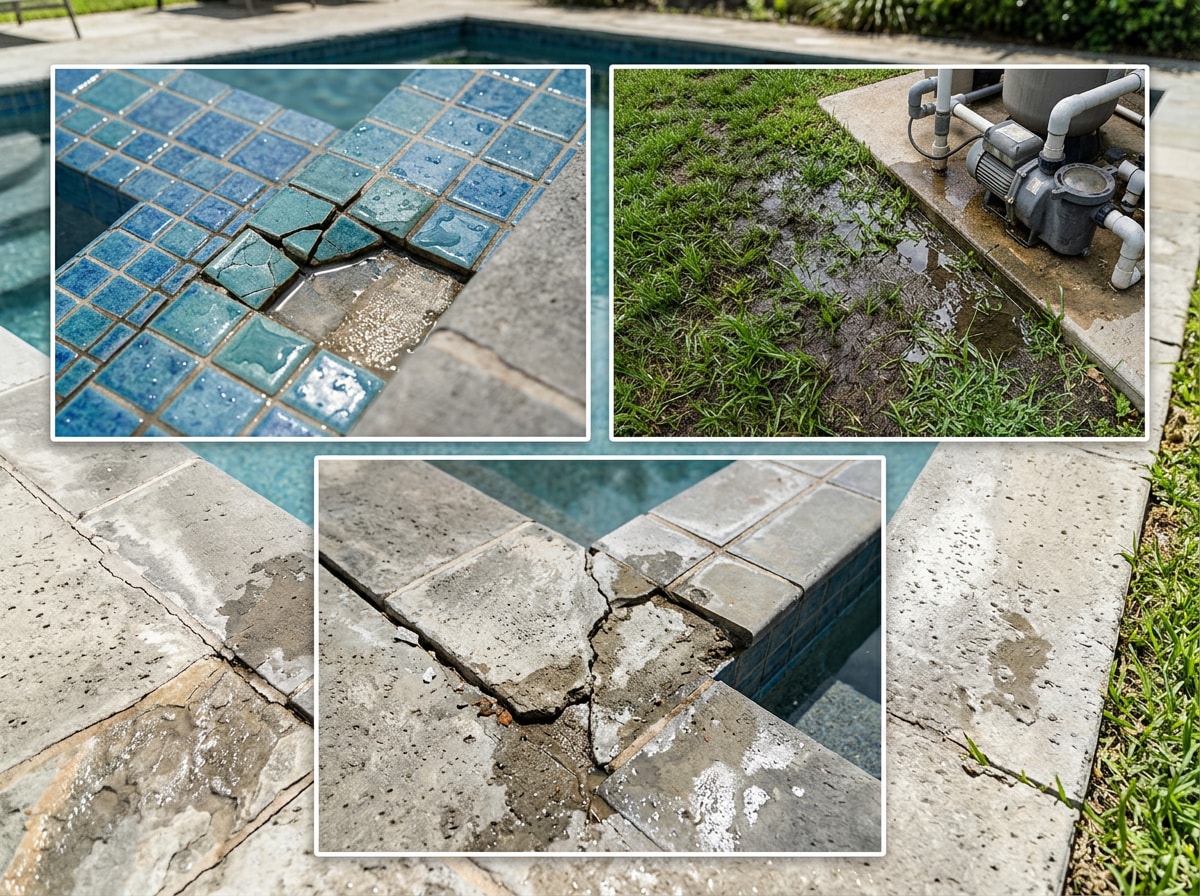
Beyond the bucket test, watch for:
- Water level dropping more than about a quarter-inch per day
- Cracked tile, decking, or visible shell damage
- Wet or spongy spots near equipment lines, even without rain
- Air bubbling from return jets during normal operation
- A water bill that jumps $20 to $50 with no clear explanation
Any one of these could have another cause. Several together are worth a professional look.
Why Seminole County Pools Leak More Than You'd Expect
Soil and geology do a lot of the damage here before a pool ever shows a crack. Seminole County sits on Florida's karst limestone, and the southwestern part of the county is specifically shaped by sinkhole subsidence into underlying solution cavities, including the Cranes Roost, Palm Springs, and Grace Lake basins, formed by subsidence of surficial deposits into solution cavities in the underlying limestone . Statewide hazard planning lists Seminole among the counties with "Most Favorable" conditions for sinkhole activity ranked as Very Likely to occur annually in susceptible areas .
That doesn't mean your backyard is about to open up. It does mean minor ground settlement, sometimes just an inch or two, is enough to shear a PVC joint or crack a shell that would otherwise hold up fine on firmer soil.
One local detail most leak guides skip: Seminole County Utilities offers a one-time billing adjustment for pools losing water. Seminole County allows for a one-time credit in a 5-year period of $35 on a sewer account affected by a pool fill , and requests must be submitted within 60 days of the affected bill . It's not a repair fund, but it's worth filing the moment you confirm a leak, since it takes the sting out of the water bill while the real fix gets scheduled.
If a depression ever opens near your pool rather than a simple leak, Florida's Department of Environmental Protection notes that if the hole is under or very near a structure or swimming pool, your property owner's insurance may cover assessment and repair , so don't fill it yourself before calling your insurer.
What Happens If You Ignore a Pool Leak
A slow leak rarely stays slow. Left alone, it compounds, pulling chemical balance out of range, straining equipment, and eventually threatening the structure around the pool.
Added upkeep. Frequent top-offs throw off sanitizer and pH almost immediately, meaning more time spent on water chemistry balancing. Pumps running dry or low add wear that shortens their lifespan, which is where most homeowners end up needing pool equipment repair sooner than planned.
Long-term damage. Water escaping under the shell can erode soil, leading to deck settling that eventually calls for pool deck renovation. Nationally, minor leaks account for nearly one trillion gallons of water wasted each year in U.S. homes , according to the EPA's WaterSense program. A single undetected pool leak can waste thousands of gallons a year on its own.
How Professional Leak Detection Works
Leak detection in Seminole County follows a consistent sequence rather than guesswork. It breaks down into three stages: locating the leak, informing you of the results, and repairing it.
Locate
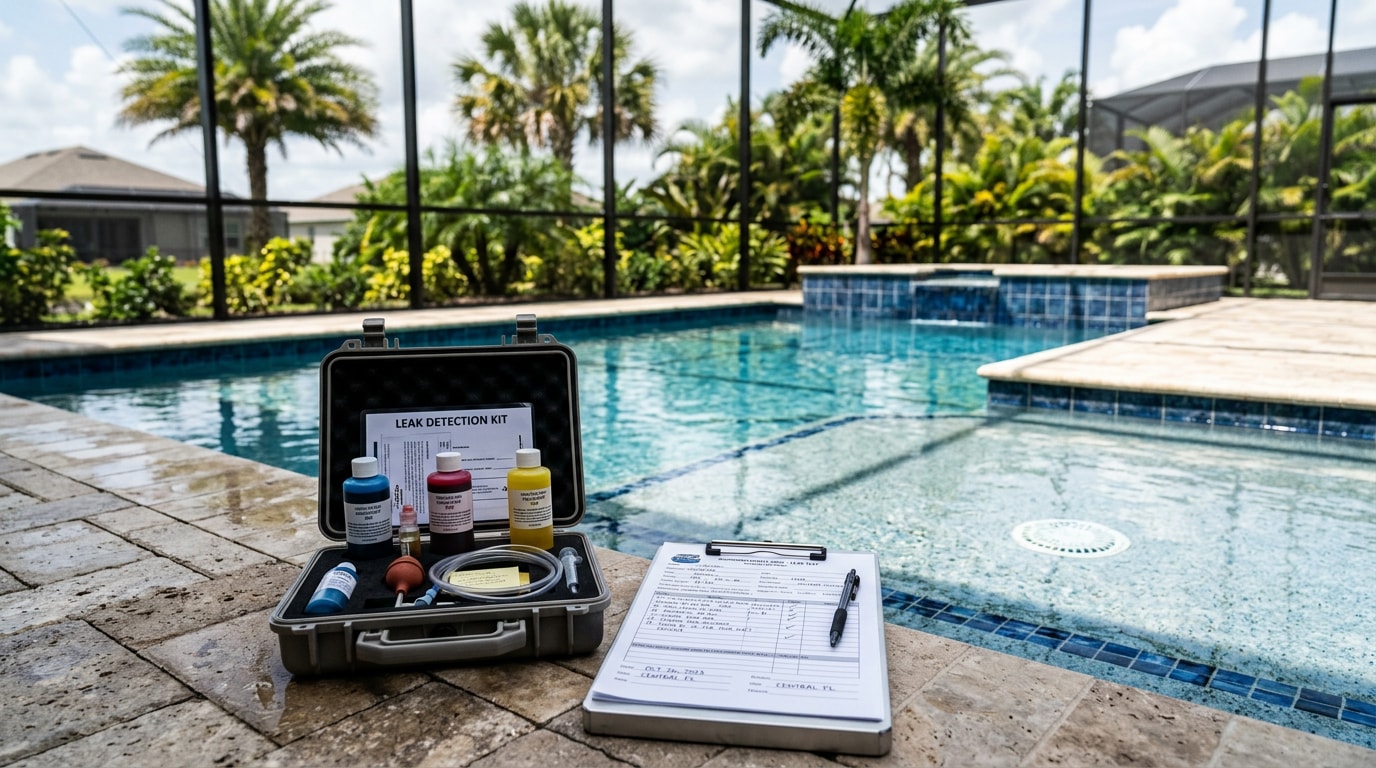
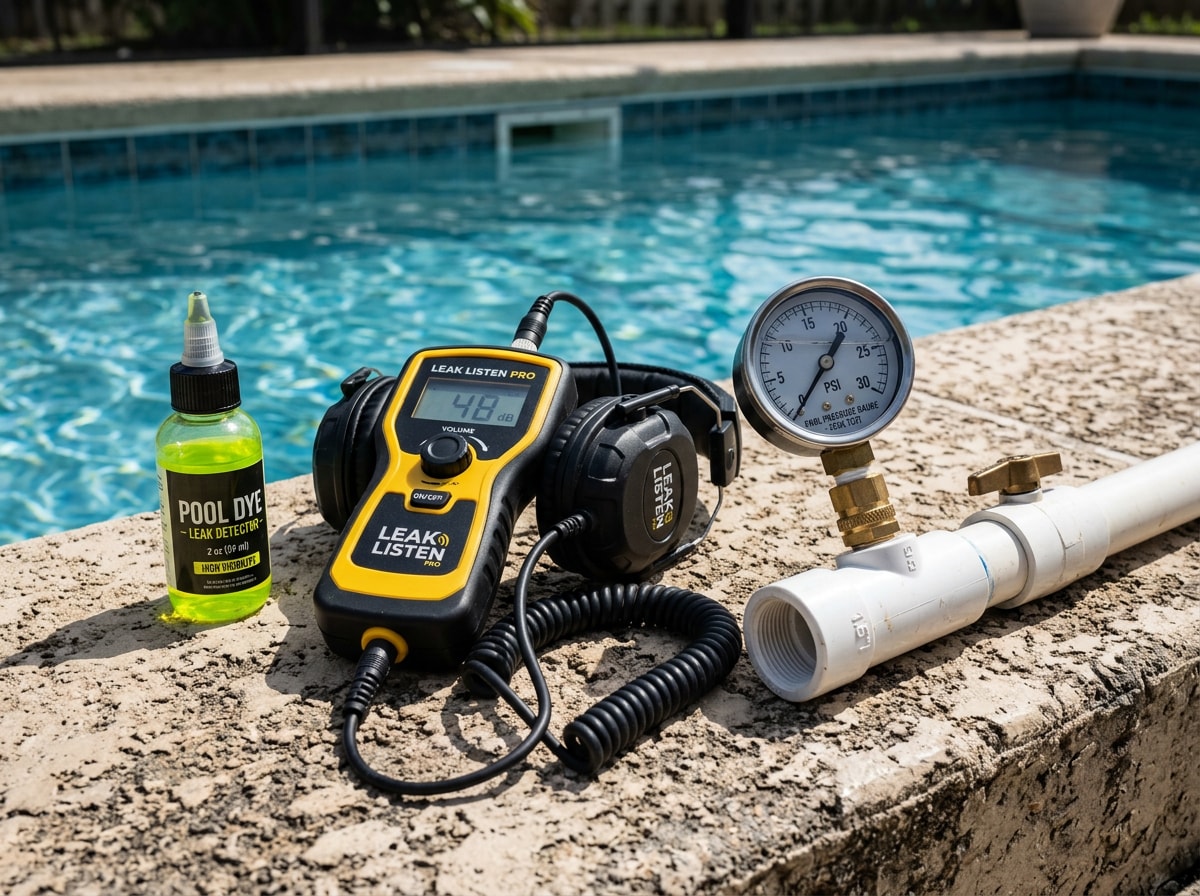
Technicians use non-invasive methods to pinpoint the source. Pressure testing isolates plumbing lines, dye testing reveals leaks at fittings or cracks underwater, and electronic listening equipment detects sound from pressurized lines. Dive inspections are sometimes used for harder-to-reach shell leaks.
Inform
After testing, you should get a written leak report stating where the leak is, what likely caused it, and the diagnosis in plain language, followed by a repair estimate broken down by leak type.
Repair
Repair approaches vary by leak type. Shell cracks are typically patched in place, failed fittings get re-sealed, and damaged tile lines often need tile replacement rather than a patch. Most leak repairs can be done with the pool full or only partially drained, which saves time and water. Larger structural issues sometimes call for a full pool renovation instead of a spot fix. You can see examples of completed repair work in our project gallery.
How Much Does Pool Leak Detection Cost in Seminole County?
Diagnostic pricing depends on pool type and how deep the search has to go.
| Pool Type / Test | Typical Cost |
|---|---|
| Above-ground pool inspection | $100 to $700 |
| Standard inground pool, dye and pressure test | $300 to $600 |
| Inground pool with underground plumbing investigation | $600 to $1,000+ |
Pool leak detection costs an average of $300, not including the cost of the leak repair itself , and can run up to $1,000 if you have an inground pool and need to dig a bit deeper to find the problem . Actual repair costs vary separately. A fitting is far cheaper to fix than a buried plumbing line.
What to Look for in a Leak Detection Company
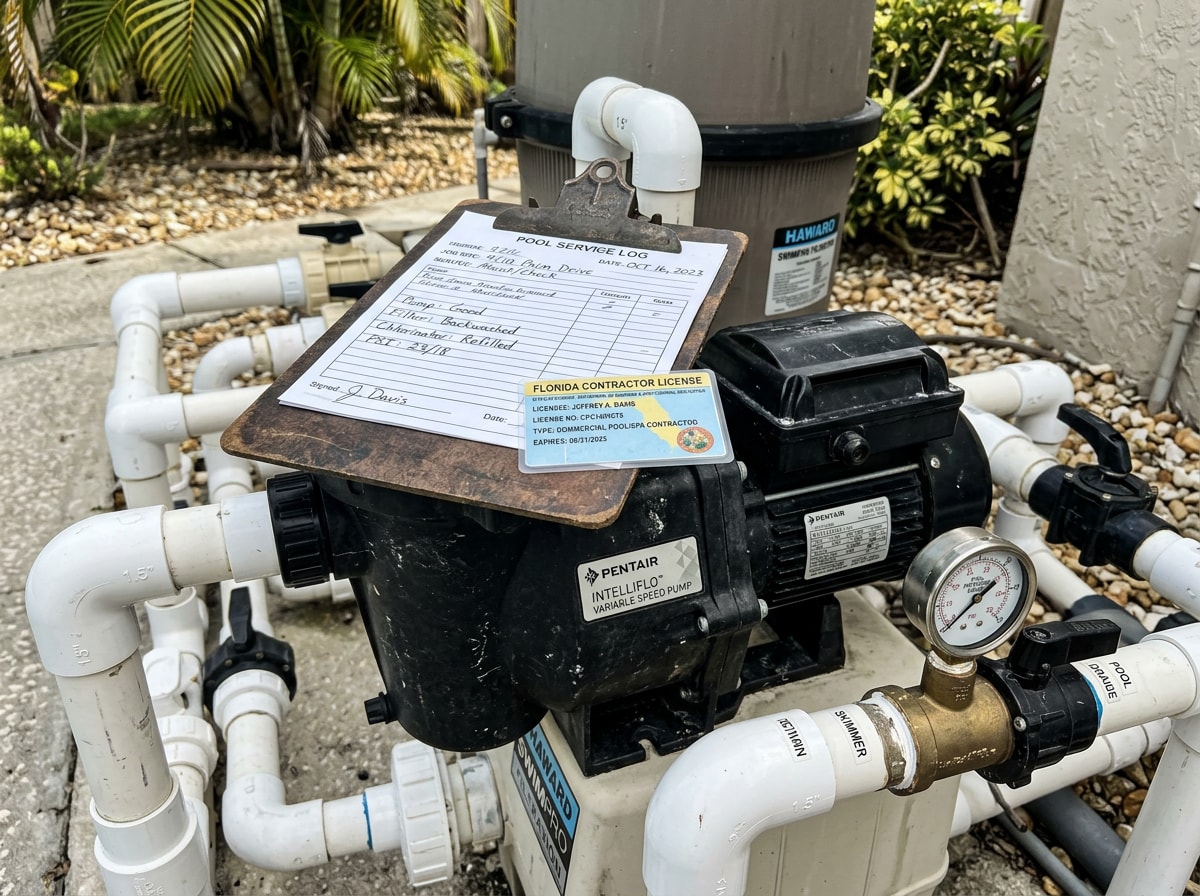
A qualified swimming pool contractor uses non-invasive equipment, documents findings in a written report, and carries proper licensing and insurance. Experience with your specific pool type (gunite, vinyl, or fiberglass) matters too, since each responds differently to pressure and dye testing.
Florida's Department of Business and Professional Regulation maintains a public licensing database that allows property owners to verify whether a pool contractor holds a valid state-issued license before authorizing repair work . You can check any contractor's status on the official DBPR license verification portal before signing anything.
| Factor | Licensed Leak Specialist | Unlicensed "Leak Finder" |
|---|---|---|
| Equipment | Pressure, dye, electronic detection | Visual guesswork |
| Reporting | Written diagnosis and repair estimate | Verbal opinion, no documentation |
| Guarantee | Warranty on repair work | Rarely offered |
| Licensing / insurance | Verified and insured | Often neither |
If you're comparing providers, ask how long they've worked specifically in Seminole County, since local soil conditions and permitting rules change the job.
Questions to Ask Before Hiring a Leak Detection Professional
Ask these before booking:
- Is the inspection non-invasive, or will it require cutting into tile or decking?
- What's covered under the diagnostic fee, and is it credited toward repair if you move forward?
- Is there a repair guarantee, and for how long?
- If draining is necessary, who handles it, and is a partial drain an option?
Clear answers upfront save you from surprise charges later. Once the leak is fixed, keeping up with routine care, as outlined in our guide to year-round pool management in Windermere, helps you catch the next small problem before it becomes an expensive one. If you're ready for a straight answer on your own pool, schedule a service call and a technician will walk you through the process before any work starts.
FAQ
How much does pool leak detection cost?
Expect $100 to $700 for an above-ground pool and $300 to $1,000 or more for an inground pool, depending on whether the technician needs to isolate and pressure-test underground lines. A basic dye test runs on the lower end; a full underground investigation runs higher.
How do I know if my pool is leaking or just evaporating?
Run the bucket test: fill a bucket to match the pool's water level, mark both, and check after 24 hours with the pump running. If the pool drops more than the bucket, it's a leak, not evaporation.
Can you fix a pool leak without draining it?
In most cases, yes. Shell cracks, fitting leaks, and many plumbing repairs can be completed with the pool full or only partially drained. Full draining is usually reserved for extensive structural work or liner replacement.
How long does pool leak detection take?
Most pools are diagnosed in a single visit, though complex or multi-leak systems can take longer . A straightforward fitting or skimmer leak can often be confirmed in one to two hours; underground plumbing leaks take longer to isolate.
What's the best way to find a leak in an above-ground pool?
Start with a visual check of liner seams, skimmer fittings, and the area around the pump. A liner leak often shows up as a damp spot directly beneath the pool. If a DIY check doesn't turn up an obvious cause, call a professional before the damage spreads.
Ready to stop guessing? As a licensed swimming pool contractor, Swimm Solutions handles detection and repair in one visit across Seminole County. Get a free estimate and get a straight answer on your pool.