Fixing a green pool in Winter Springs, FL comes down to four moves: test, balance, shock, and filter until the water runs clear. Most backyard blooms clear in 24 to 72 hours once you stop guessing and follow the right order. Here is the exact process, plus the mistakes that keep a green pool green long after the "fix."
Quick Overview: How to Fix a Green Pool, Step by Step
| Step | What to Do | Time Needed |
|---|---|---|
| 1. Test | Check free chlorine, pH, alkalinity, and CYA | 5-10 minutes |
| 2. Balance pH | Bring pH to 7.2-7.4 with muriatic acid | Immediate |
| 3. Shock | Dose calcium hypochlorite based on severity | Apply at dusk |
| 4. Brush | Scrub walls, steps, and tile lines | 20-30 minutes |
| 5. Filter | Run the pump continuously | 24-72 hours |
| 6. Retest | Recheck chlorine and rebalance | Every 12-24 hours |
If you'd rather skip straight to a solution, our Green Pools service handles this entire sequence for Winter Springs homeowners.
Step-by-Step: Clearing a Green Pool
Skipping steps, especially testing and brushing, is the most common reason a green pool stays green after a homeowner has already "done everything."
Test the Water First
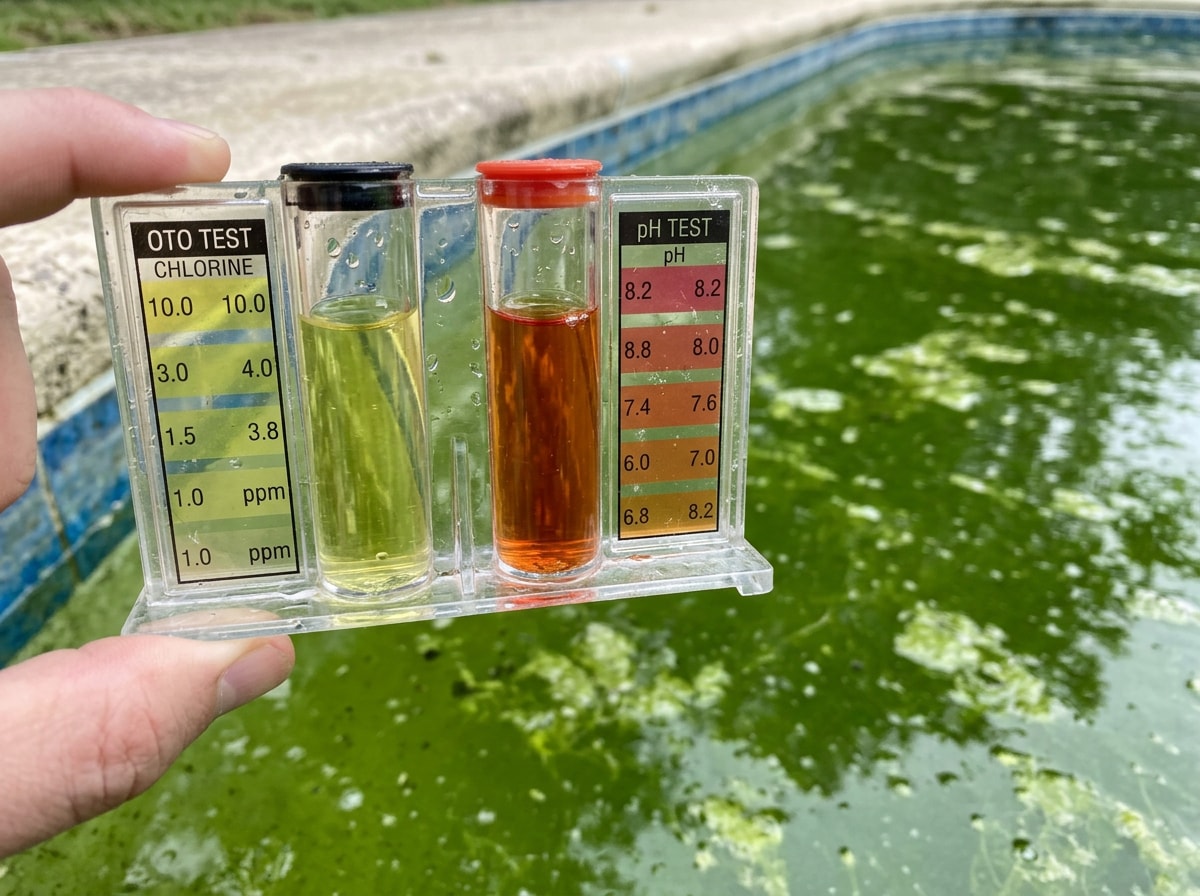
Test free chlorine, pH, total alkalinity, and cyanuric acid before adding anything. This tells you exactly what you're working with instead of guessing at doses.
If free chlorine reads near zero and pH is high, your sanitizer has essentially stopped working. That combination is usually what let the algae bloom take hold.
Balance pH to 7.2-7.4
Use muriatic acid to bring pH into the 7.2-7.4 range before shocking. As the pH of the water increases and becomes more alkaline, the effectiveness of chlorine and bromine decreases. A Michigan State University pool-chemistry training manual puts the recommended pH levels at 7.2 to 7.6 for this exact reason.
Locking in pH first means your shock treatment works harder once it hits the water, instead of fighting an uphill chemical battle. Our water chemistry balancing service handles this step for owners who would rather not juggle acid dosing by hand.
Shock the Pool by Severity
A standard maintenance dose will not touch a full algae bloom. Match the shock amount to how dark the water looks.
| Water Color | Severity | Shock Dose |
|---|---|---|
| Light green / hazy | Mild bloom | 1-2 lbs cal-hypo per 10,000 gal |
| Medium green | Moderate bloom | 2-3 lbs cal-hypo per 10,000 gal |
| Dark green / swampy | Severe bloom | 3-5 lbs cal-hypo per 10,000 gal |
Add shock at dusk or after sunset. UV rays burn off chlorine fast, so a daytime dose can lose much of its strength before it ever reaches the algae.
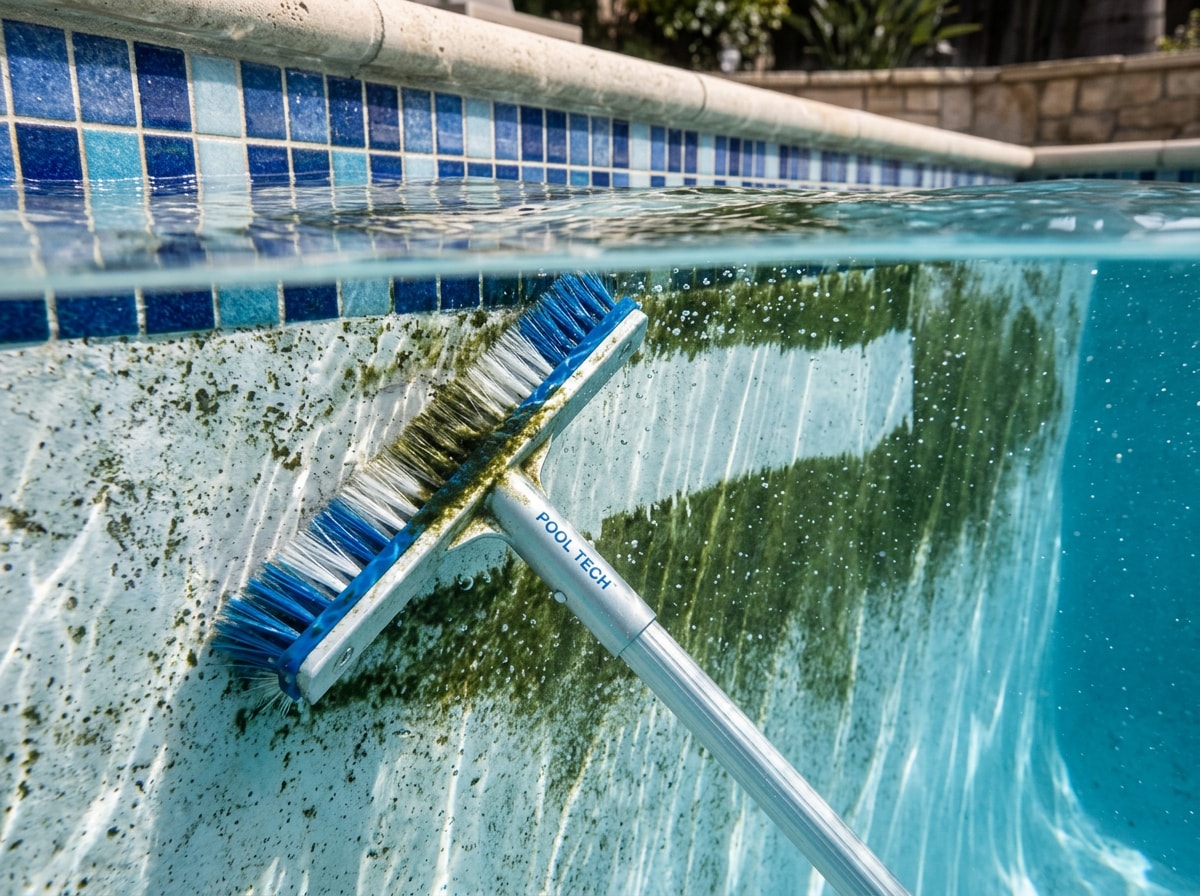
Brush Every Surface
Scrub walls, steps, tile lines, and the areas behind ladders and fixtures. This breaks up the algae film clinging to surfaces so the shock can actually reach it.
Dead, loose algae is far easier to filter out than algae still bonded to plaster or tile. Use a stiff brush on plaster or concrete and a softer one on vinyl or fiberglass to avoid scratching.
Run the Pump Continuously
Run the pump 24/7 for at least the first day or two after shocking. This keeps chlorine circulating and filters out dead algae as it settles.
Once the water turns cloudy gray, that's a good sign: it means algae is dying. Vacuum to waste if your system supports it, bypassing the filter so dead algae doesn't clog it or recirculate.
A clogged or undersized cartridge will slow this whole process down. If your filter media looks packed with debris, our guide on pool filter cartridges in Winter Springs walks through cleaning intervals and replacement timing.
Retest and Rebalance
Retest after a full filtration cycle, usually 12-24 hours. If chlorine has dropped and the water still looks tinted, repeat the shock dose and keep filtering.
Once the water runs clear, do a final chlorine check and full rebalance of pH, alkalinity, and CYA. This step locks in stable chemistry so the clear water actually stays that way.
Why Does Pool Water Turn Green in Winter Springs?
Green water almost always comes down to algae outrunning your sanitizer. Algae spores are always present in outdoor water; once chlorine drops too low, they multiply fast and can turn a pool visibly green within a day or two.
Central Florida's wet season brings frequent, heavy afternoon storms. Those storms dilute chlorine, raise pH, and wash organic debris into the pool, all in a matter of hours. A busy pool party can burn through sanitizer just as fast. Poor circulation, high phosphate or cyanuric acid levels, and skipped brushing make any of these worse.
A neglected green pool is more than an eyesore. One study found a link between abandoned residential swimming pools, increases in mosquitoes, and West Nile virus infections, which is part of why disinfecting a green pool matters for the whole neighborhood, not just your own swim schedule.
How Long Does It Take to Clear a Green Pool?
Most pools show dramatic improvement within 24 hours of proper shocking, though full clarity can take two to five days depending on bloom severity and filtration strength. Light green water often clears overnight; dark, swampy water takes longer and may need repeat treatment.
The biggest factor in recovery time isn't the chemicals, it's continuous filtration. A pump running around the clock clears water far faster than one on a timer. If you'd rather hand the whole process off, our pool maintenance service handles green-to-clear turnarounds routinely.
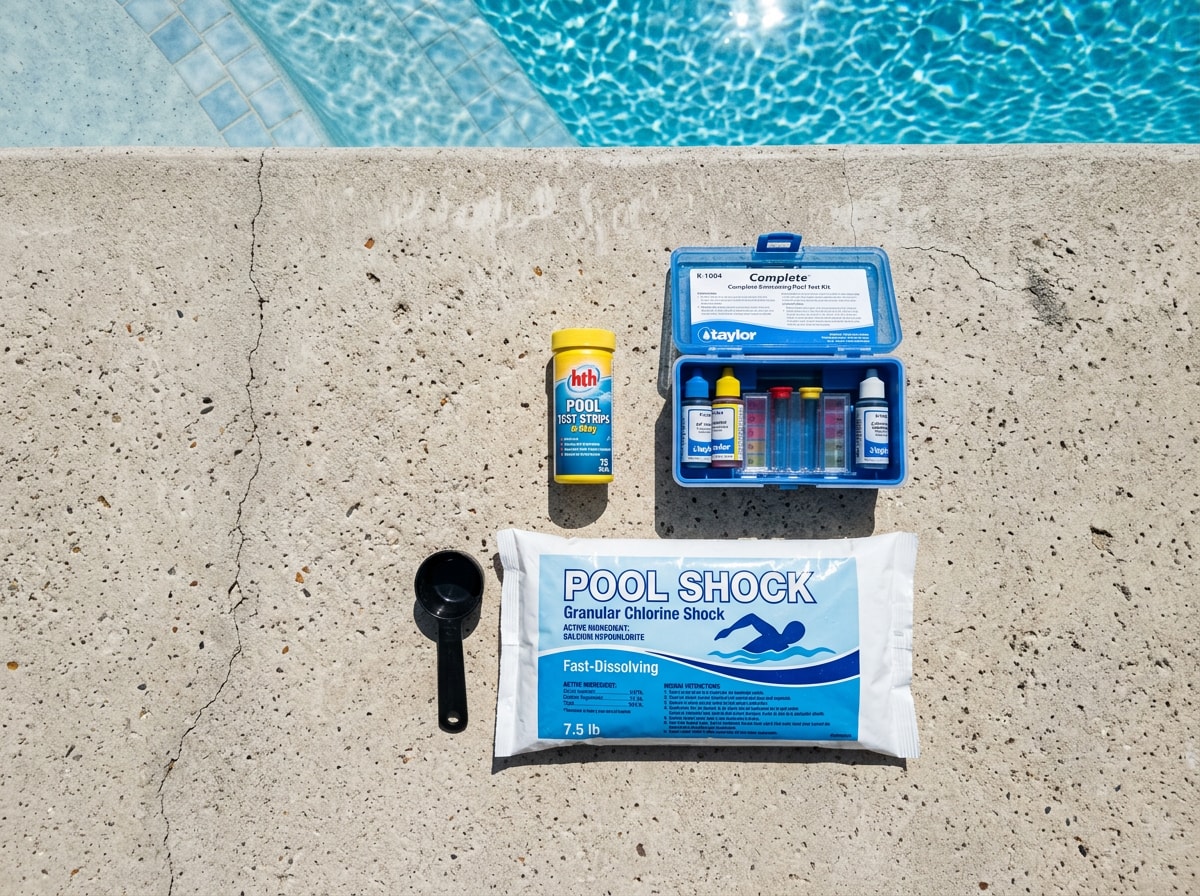
What You Need Before You Start
Gather supplies before touching the water so you're not pausing mid-process:
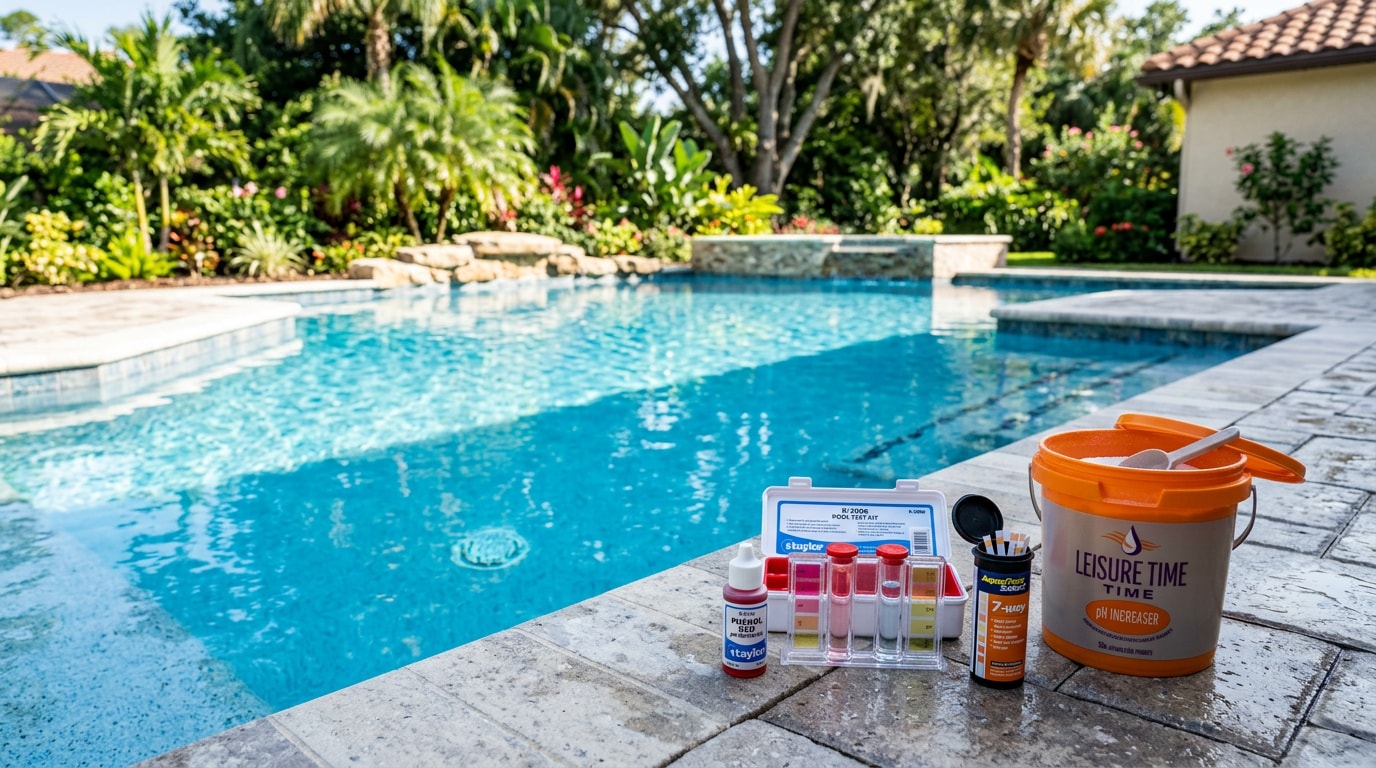
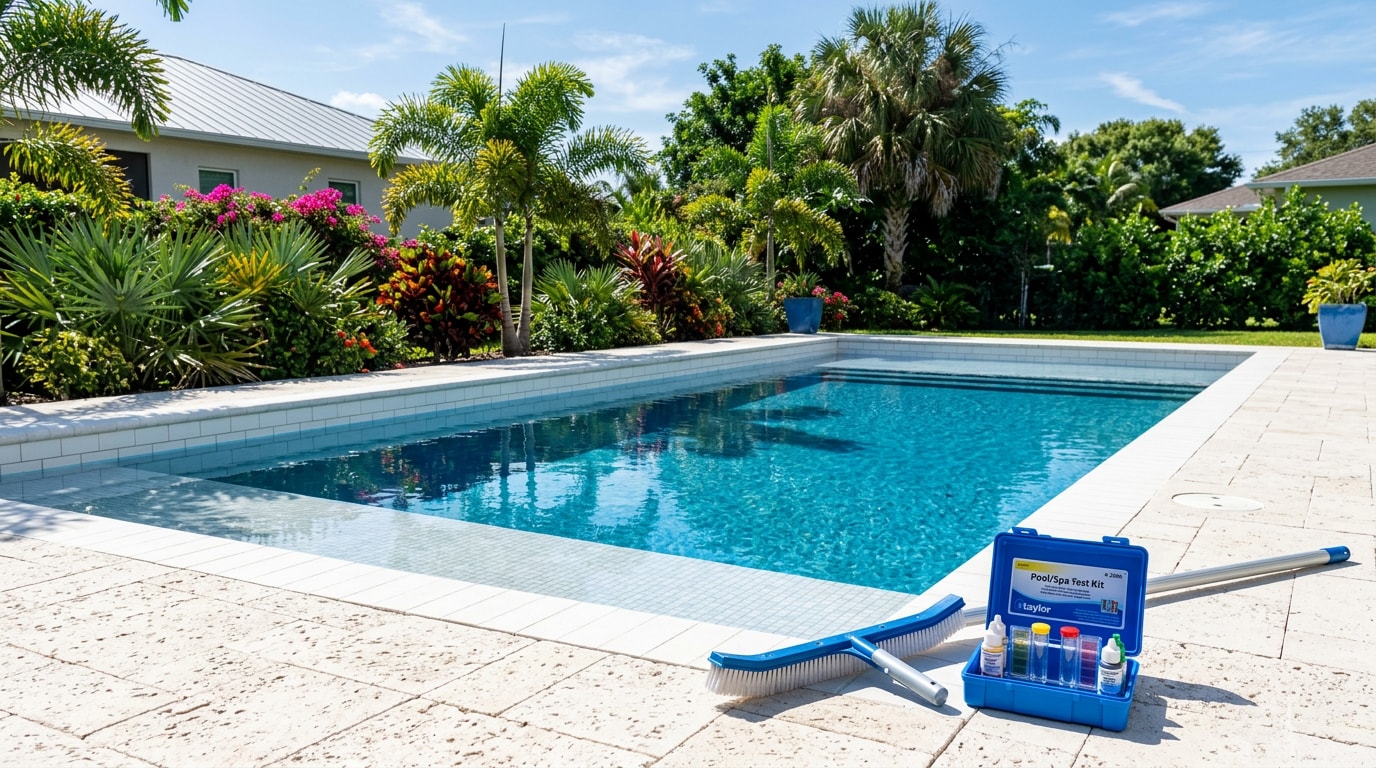
- A reliable test kit or test strips
- A sturdy pool brush (stiff for plaster, soft for vinyl/fiberglass)
- Calcium hypochlorite pool shock
- Muriatic acid
- Algaecide (optional, for maintenance after the bloom clears)
- A manual vacuum or vacuum-to-waste setup
Having everything on hand before you start keeps the job moving. Stopping to run to a store mid-treatment gives algae time to regrow.
Still Green After Shocking? What's Going Wrong
Sometimes a pool stays green despite a normal shock dose. In our service calls across Seminole County, the pools that clear fastest are the ones where the owner tested before shocking, not after guessing at a dose.
Common reasons a pool stays green:
- Cyanuric acid is too high. Above roughly 80-100 ppm, chlorine can't reach an effective level no matter how much you add.
- Equipment is failing quietly. A pump that's lost prime, a stuck feeder, or a clogged filter can let sanitizer levels crash with no obvious warning sign.
- Phosphates are feeding the algae. Fertilizer runoff, leaves, or fill water can keep algae growing even when chlorine looks adequate on paper.
- The shock dose was undersized. A dark, swampy pool almost always needs more than a single standard dose.
If equipment seems to be the issue, our emergency repairs service can diagnose a failing pump or feeder before it causes a repeat bloom.
Keep It Clear After the Fix
Preventing another bloom comes down to consistency:
- Steady sanitizer levels, checked regularly
- A weekly brushing habit, even when the water looks clear
- Enough filter run-time for your pool's volume
- A quick chemical test after any heavy rain event
Health officials recommend testing pH and disinfectant levels at least twice a day, and hourly during heavy use , which is a useful benchmark even for a residential pool during a busy weekend. Scrubbing pool surfaces to remove any slime layer on a regular schedule, not just after a bloom, is the other half of that equation.
Winter Springs' frequent summer storms are a common trigger for repeat blooms, since rain dilutes chlorine and shifts pH within hours. A standing maintenance routine for your property, not just reactive treatment, is what actually keeps a pool clear long-term.
When to Call a Professional
Some green pools need more than a DIY pass. If the water is still dark or swampy after two or three rounds of shocking, if equipment seems to be malfunctioning, or if you simply don't have time to run a multi-day treatment cycle, professional help makes sense.
A trained technician can also catch underlying issues, like a failing pump, a damaged filter, or chronic phosphate problems, that keep causing repeat blooms. Our green to clean service is built specifically for this turnaround, and we work throughout Winter Springs, FL on exactly this kind of recovery.
Schedule a free inspection and we'll tell you honestly whether a DIY shock cycle will get you there or whether the pool needs a professional pass.
FAQ
What is the fastest way to clear up a green pool?
Test the water, correct pH to 7.2-7.4, apply a calcium hypochlorite shock sized to the algae severity, brush all surfaces, and run the filter continuously until the water clears. Skipping any of these steps slows the whole process down.
Can you fix a green pool without draining?
Yes, in most cases. A proper shock-and-filter cycle resolves the vast majority of green pool blooms without removing any water. Draining is really only necessary when cyanuric acid is extremely high or the pool has structural issues that need inspection.
Why is my pool still green after shocking it?
The shock dose was likely undersized for how dark the water was, or cyanuric acid is too high for chlorine to reach an effective level. Retest, recalculate the dose based on severity, and reshock rather than waiting it out.
Can a green pool be saved?
Nearly every green pool can be saved with proper shock treatment, brushing, and filtration. Pools neglected for weeks or months with heavy debris buildup may take longer and sometimes benefit from professional-grade equipment to fully recover.
Is it safe to swim in a green pool?
No. A green pool typically carries low sanitizer levels and elevated bacteria risk alongside the visible algae. If the water looks or smells bad, the standard guidance is to stay out and keep kids and pets away until it tests clear and balanced.
Will a green pool clear on its own without chemicals?
No. Algae will keep multiplying as long as chlorine stays low, and sunlight alone won't fix the chemistry. Without a shock dose and filtration, a green pool typically gets darker, not clearer.
How much does a green pool clean-up cost in Winter Springs?
Cost depends mainly on bloom severity, pool size, and whether any equipment repair is needed alongside the chemical treatment. Light blooms caught early cost far less to resolve than pools neglected for weeks. Contact us for a quote based on your specific pool.
How often should I test my pool once it's clear?
Test at least a few times a week during Florida's wet season, and immediately after any heavy rain or pool party. More frequent testing catches a chlorine drop before it turns into another bloom.
For more on year-round water balance in this climate, see our guide on salt water pool chlorinators in Winter Springs, or visit {{SITE_URL}}/ to see the full range of services we offer across Seminole County.