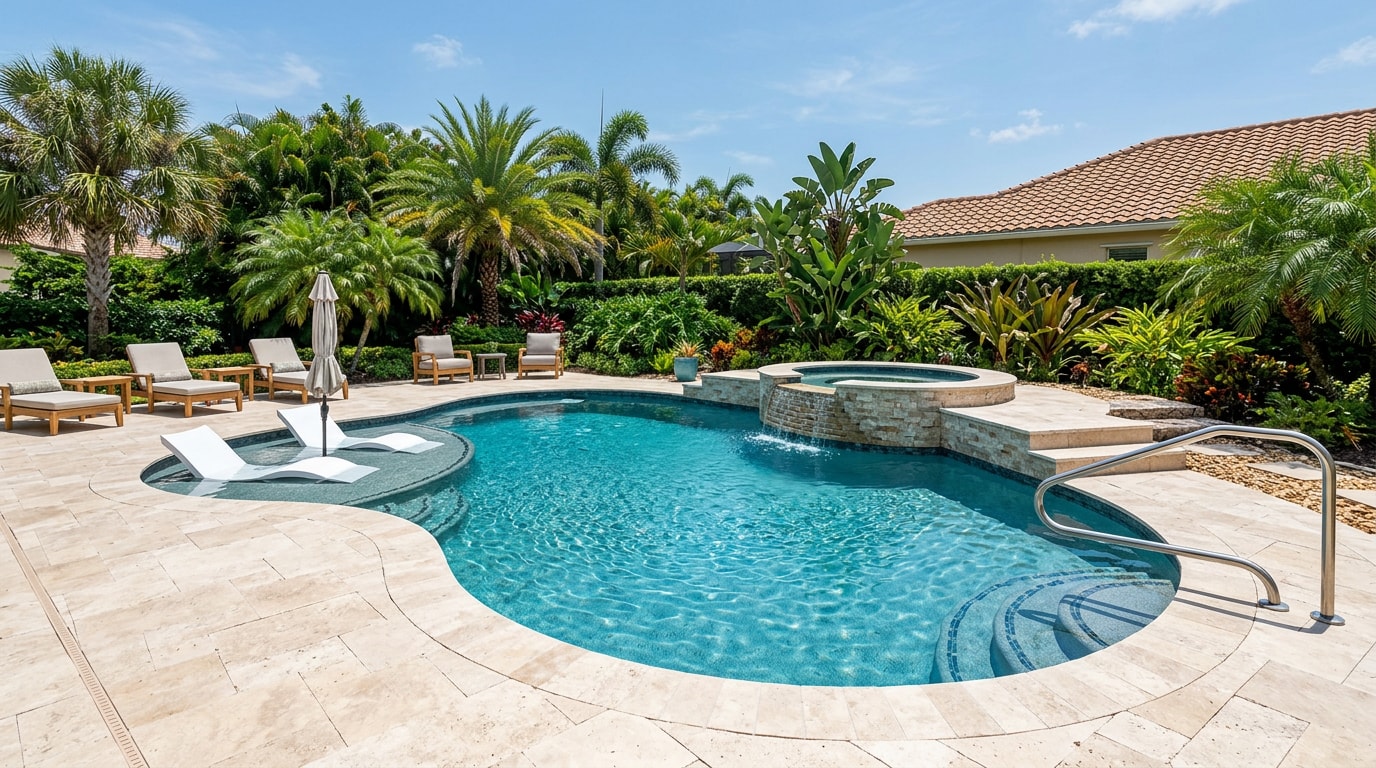
A salt water pool chlorinator in Winter Springs, FL converts dissolved salt into chlorine automatically, so you stop hauling jugs and guessing at dosages. Central Florida's long swim season puts extra strain on manually dosed pools, which is why so many Tuskawilla and Bear Creek homeowners switch every year. Here's what installation involves, what it costs in 2026, and how to keep the system running once it's in.
How a Salt Chlorinator Changes Pool Care in Winter Springs
A salt system uses a cell to generate chlorine continuously from dissolved salt, which means softer water, fewer chemical odors, and steadier sanitation than manual dosing.
That consistency matters more here than in most of the country. Florida pools often run nearly year-round instead of sitting closed for a winter season, so a system that produces sanitizer on demand avoids the gaps that let algae take hold after a summer storm dilutes chlorine levels.
Health authorities recommend keeping chlorine in a 1-4 ppm range with pH between 7.0 and 7.8 , and a properly sized salt cell holds that range far more consistently than a manual dosing schedule. Chlorine and pH remain the first line of defense against germs that can make swimmers sick, according to the CDC , which is true whether the chlorine comes from a jug or a cell.
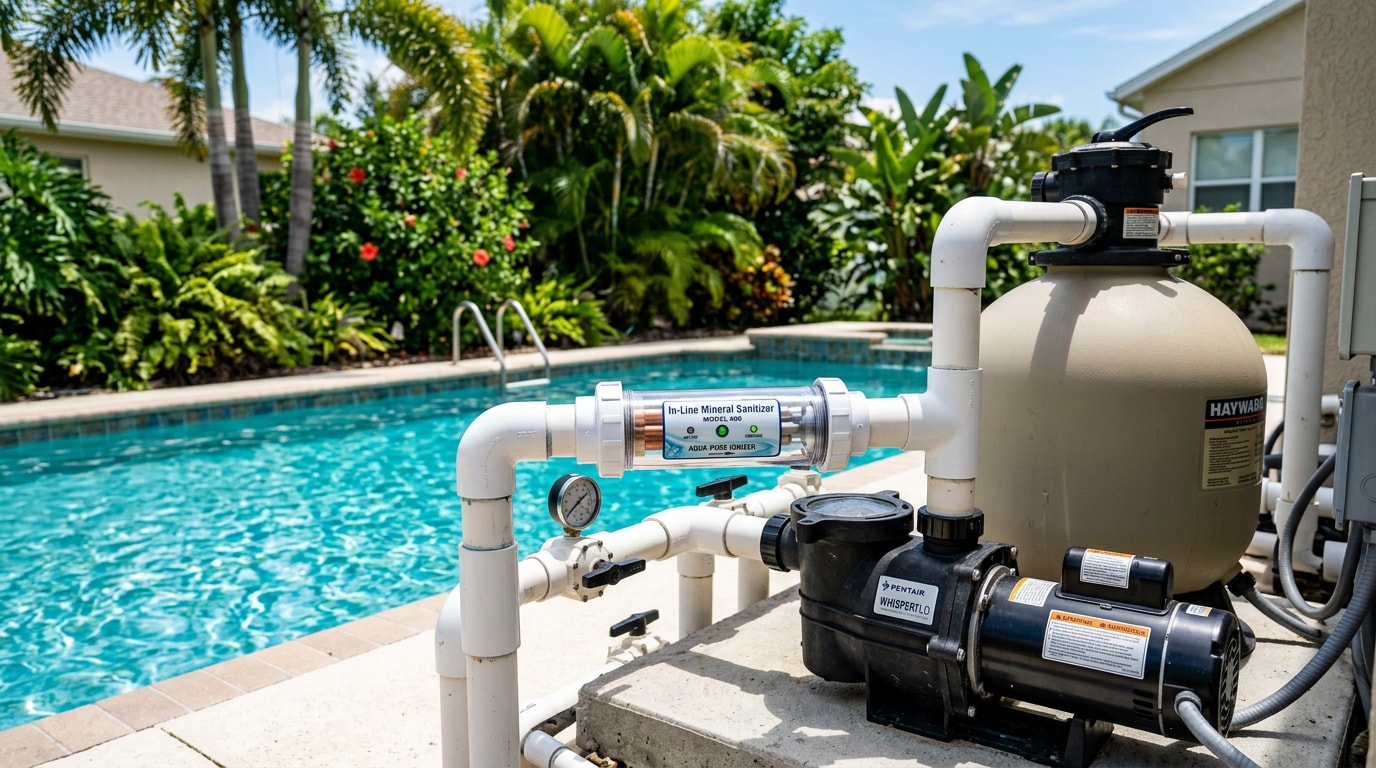
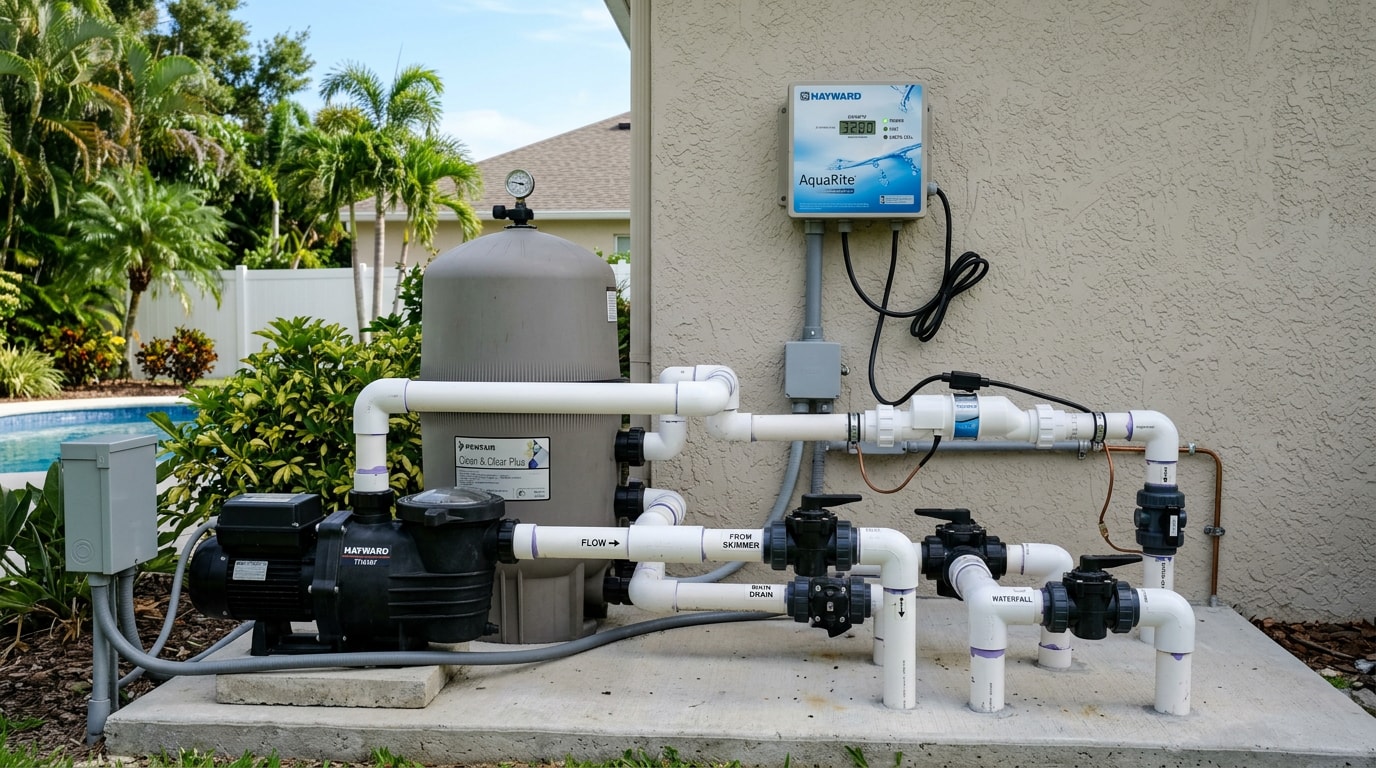
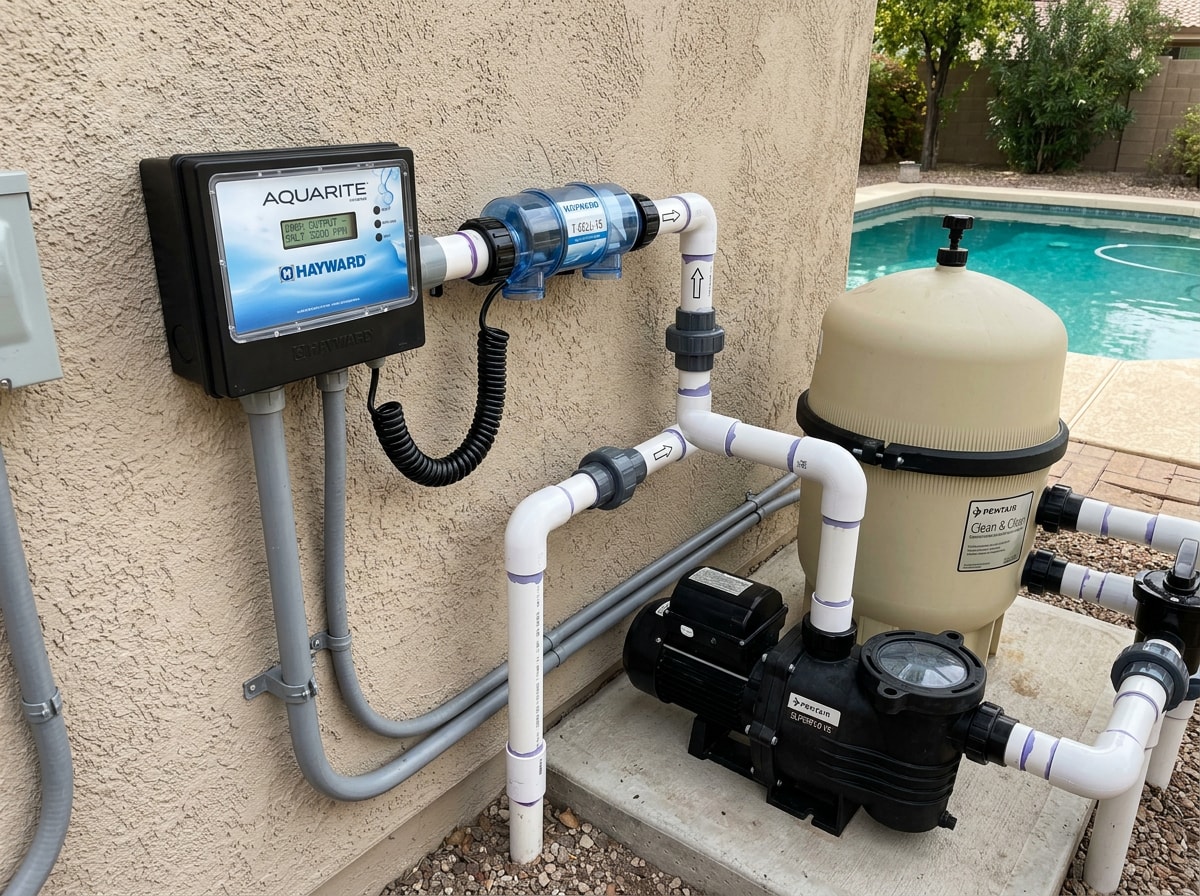
Salt Chlorinator Installation: What Actually Happens
A typical installation includes:
- The salt cell (the chlorine generator itself)
- A control panel wired into your existing pool equipment
- Plumbing connections into the filtration line
- Electrical tie-ins to the pump circuit
- Initial salt dosing, calibrated to your pool's gallon capacity
Most installs take a few hours with minimal pool downtime. A technician should inspect your current pump, filter, and plumbing first, since older equipment sometimes needs minor updates before a chlorinator can be added.
On recent Winter Springs service calls, our technicians typically complete cell wiring, plumbing tie-ins, and output calibration in under four hours, even on pools with older multi-speed pumps that need a relay adapter first. If your equipment pad needs upgrades beyond the chlorinator itself, our pool equipment upgrade service covers pump, filter, and heater additions in the same visit.
Cost to Add a Salt System in Winter Springs (2026)
Pricing depends on pool size, whether you're converting an existing chlorine pool or installing fresh, and how much the equipment pad needs updating beforehand.
| Scope of Work | What's Included | Typical Range |
|---|---|---|
| Cell + control panel only | Equipment and basic wiring, existing plumbing reused | Lower end of the market |
| Full conversion | Cell, control panel, plumbing tie-in, initial salt dose | Mid-range, most common for Winter Springs homes |
| Conversion + equipment upgrade | Salt system plus pump, filter, or flow-switch replacement | Higher end, usually bundled to save a second labor visit |
Ongoing costs run lower than manual dosing in most cases, since the cell produces sanitizer on demand instead of relying on repeated chemical purchases. The main recurring cost is the cell itself, which eventually needs replacement as output declines with age and water chemistry.
Want a number specific to your pool's gallon capacity and equipment setup? Request a free estimate and we'll walk the pad with you before quoting anything.
Sizing the Salt Cell to Your Pool
Residential salt chlorinator equipment breaks down into two parts: the cell itself and the control panel that regulates it. Rather than chasing a brand name, compare systems by output capacity (grams of chlorine per hour), the gallon rating the cell is built for, and how that rating lines up with your actual pool volume.
A cell rated below your pool's real volume runs constantly and wears out faster. An oversized cell gives more headroom and generally lasts longer, since it doesn't need to run at full output to keep up with demand. Hayward's AquaRite salt systems, for example, are built to automatically convert salt into chlorine within a 2,400-3,400 ppm salt range , and most residential cells on the market target a similar window. Warranty length varies by manufacturer and cell size, so confirm the terms before buying rather than assuming a standard across brands.
Keeping a Salt System Running Smoothly
A salt chlorinator rarely stands alone. Most owners eventually need related service: cell cleaning, water balancing, or a repair when output drops.
Common salt-system issues include:
- Scale buildup on the cell plates, which reduces chlorine output over time
- Control board errors or flow-switch faults that stop the chlorinator from firing
- Salt or stabilizer levels drifting out of range after heavy rain
Catching these early almost always costs less than waiting for a full system failure. Our pool equipment repair service handles cell diagnostics and board troubleshooting, and water chemistry balancing keeps salt, pH, and stabilizer in range so the cell doesn't have to work harder than it needs to. For a closer look at cell cleaning schedules and replacement costs, see our guide on pool salt cell care.
When a Chlorine-to-Salt Conversion Makes Sense
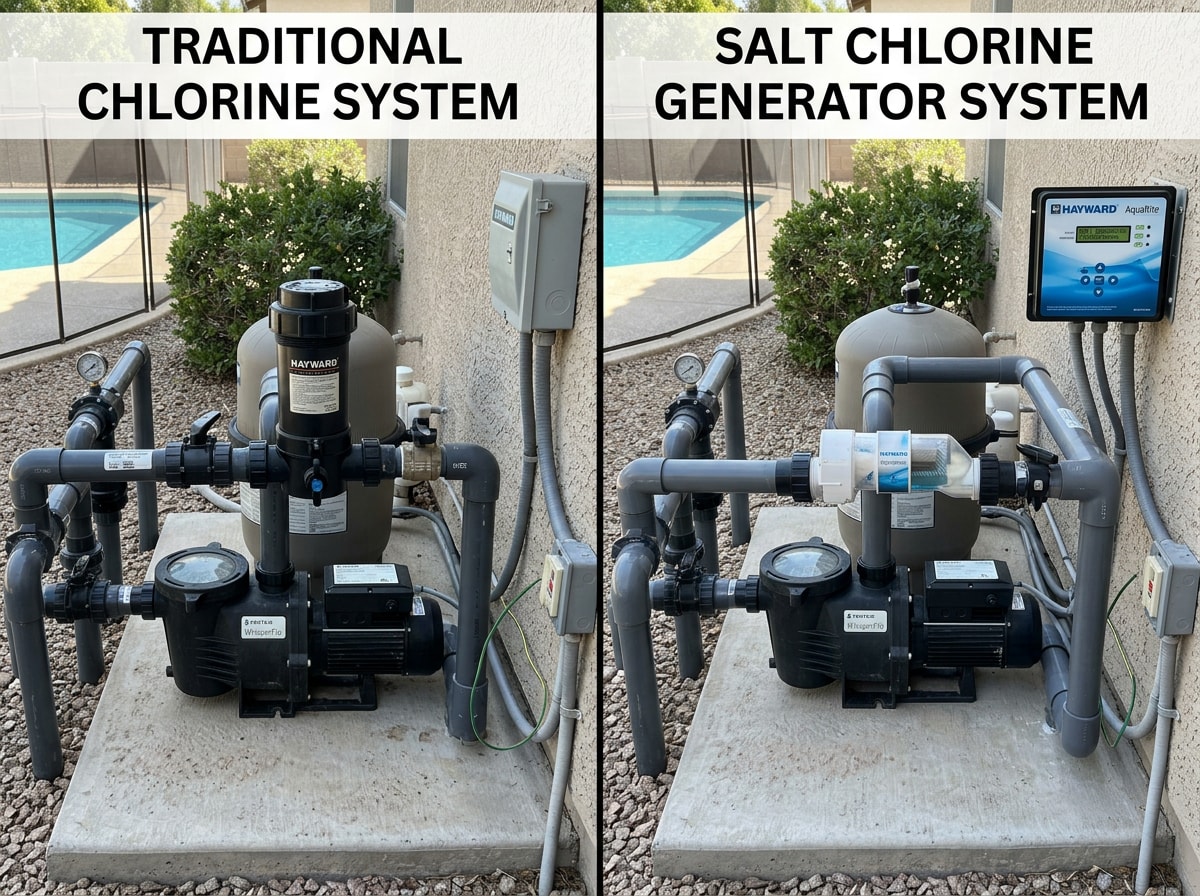
Converting an existing chlorine pool to saltwater involves installing a cell and control panel, adjusting plumbing to accommodate the generator, and adding the initial salt dose, usually several hundred pounds depending on pool size. Once balanced, the system maintains chlorine levels on its own from there.
One thing worth checking first: not every pool finish ages the same way under salt exposure. If your surface is older or already showing wear, it's worth timing a pool resurfacing alongside the conversion rather than adding salt to a finish that's near the end of its life. Whether a pool uses chemical sanitizers or electrical-generation devices, maintaining adequate sanitizer levels is still what prevents disease-causing microorganisms from building up , so the surface and the sanitizing method both matter for long-term results.
We serve pool owners throughout Winter Springs and the surrounding area, and every conversion starts with a look at your current equipment, not a one-size-fits-all package. Visit our homepage to see the full range of pool services we handle locally.
FAQ
Do I need to add chlorine to my pool in the winter?
Central Florida's mild winters mean pools rarely sit unused long enough to skip sanitation entirely. A salt chlorinator keeps generating chlorine automatically, so winter maintenance mostly means adjusting the run time downward rather than shutting the system off completely.
What is the best pool chlorinator system?
There's no single best chlorinator. The right system depends on your pool's gallon capacity, how heavily your household uses it, and your budget for upfront equipment versus long-term cell replacement. Matching output capacity to actual pool volume matters more than brand name alone.
What is the downside of a saltwater pool?
Saltwater systems cost more upfront than traditional chlorine setups, and the cell itself eventually needs replacement, adding to long-term costs. Salt can also accelerate corrosion on certain metal fixtures or unsealed surfaces if water chemistry isn't properly balanced.
How long does a salt cell last?
Most residential cells last several years under normal use, though exact lifespan depends on how well salt, pH, and stabilizer levels stay in range. Cells that run constantly because they're undersized for the pool tend to wear out faster than properly sized ones.
Can I convert my existing chlorine pool to saltwater?
Yes. Conversion involves adding a cell and control panel, tying into the existing plumbing and pump circuit, and dosing the pool with salt. Most residential conversions are completed in a single service day.
How much does it cost to winterize an inground pool?
Winterizing an inground pool typically runs a few hundred dollars depending on equipment and region, though Florida's mild climate means most pools skip full winterization altogether. Saltwater pool costs over winter tend to run lower than manually dosed pools, since the chlorinator still produces sanitizer without added chemical purchases.
---
This guide reflects installation and service practices used by the Swimm Solutions pool care team across Winter Springs and Seminole County. Have a question about your specific setup? Contact us for a free estimate.