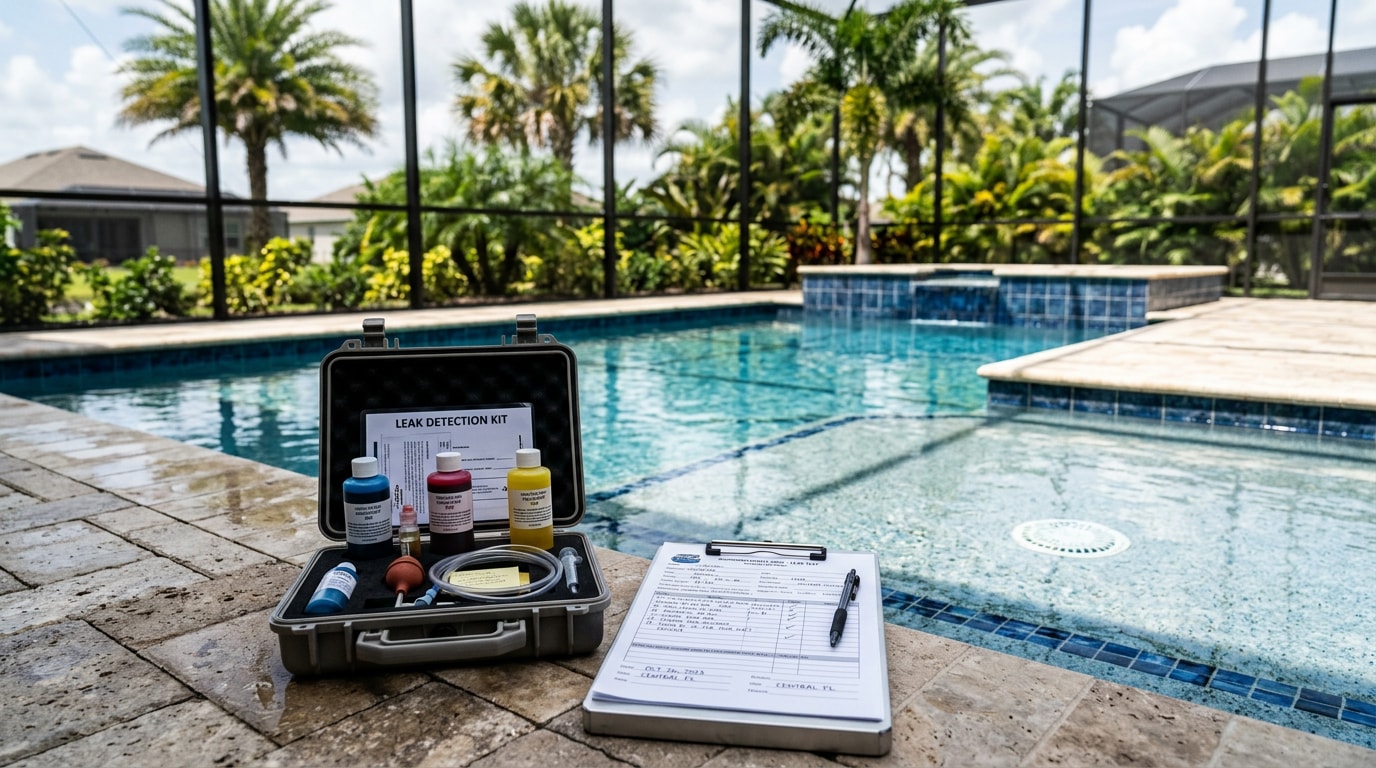
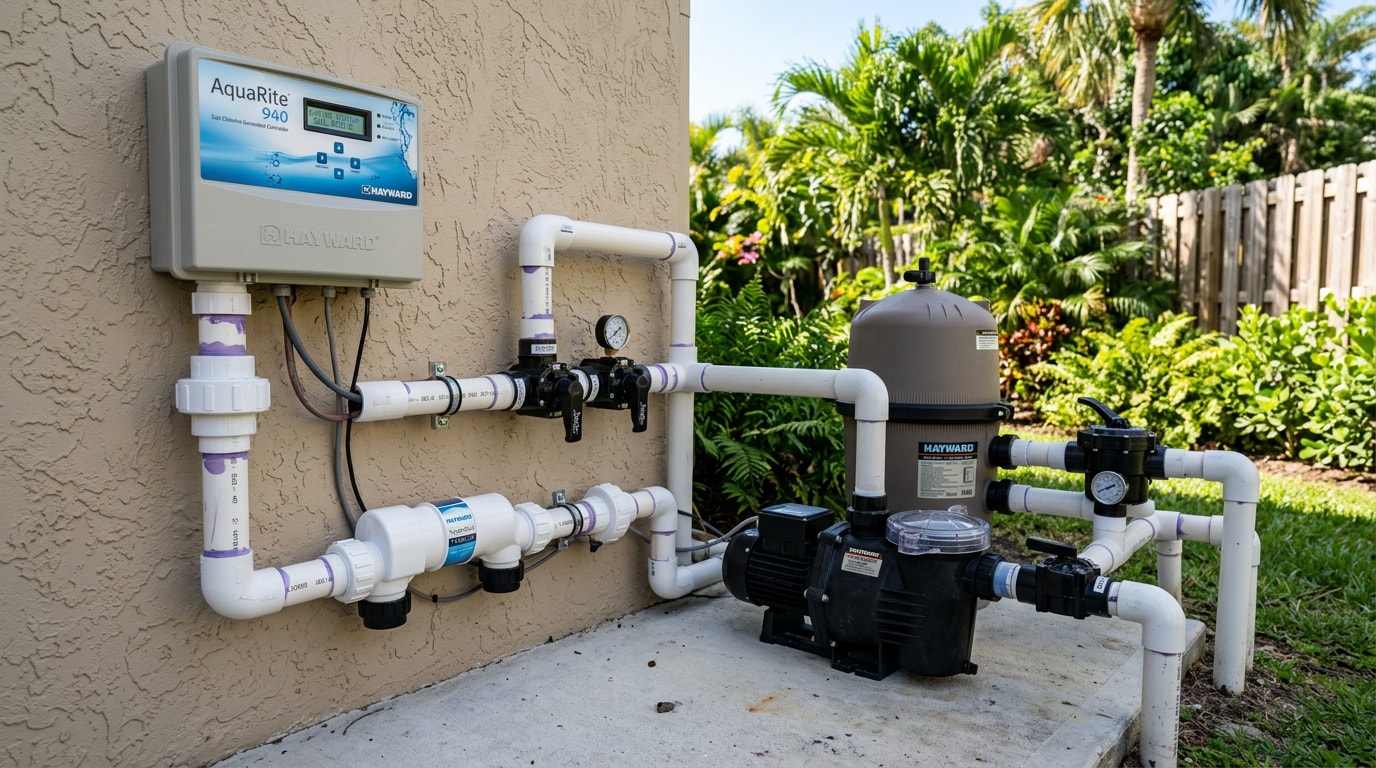
If you searched for a pool salt cell in Doctor Phillips, you're probably trying to figure out why your chlorine reading is low, how to clean the cell yourself, or what a replacement or new install actually costs nearby. This guide answers all three. We'll cover how the cell works, the exact cleaning steps, realistic cleaning frequency for Central Florida water, and installation pricing for a typical Doctor Phillips backyard.
What Is a Salt Cell and How Does It Work?
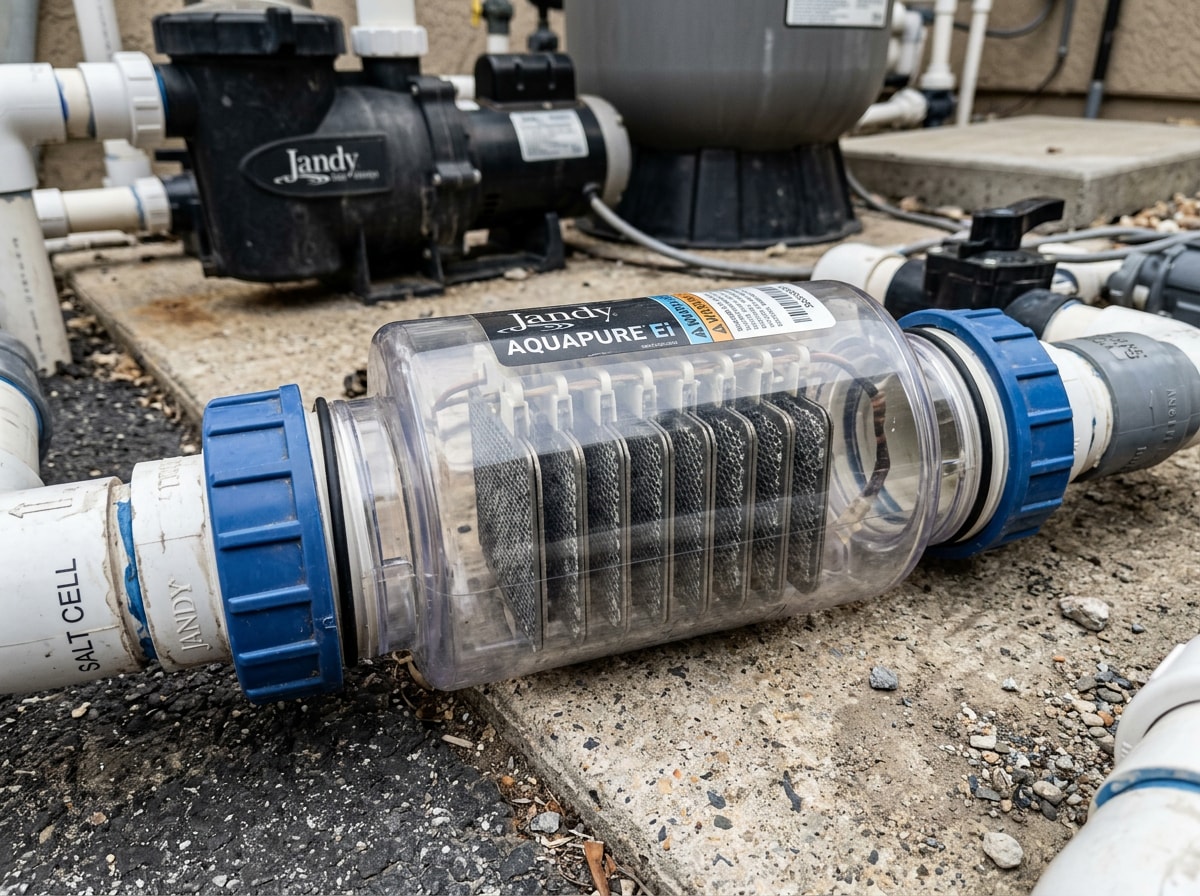
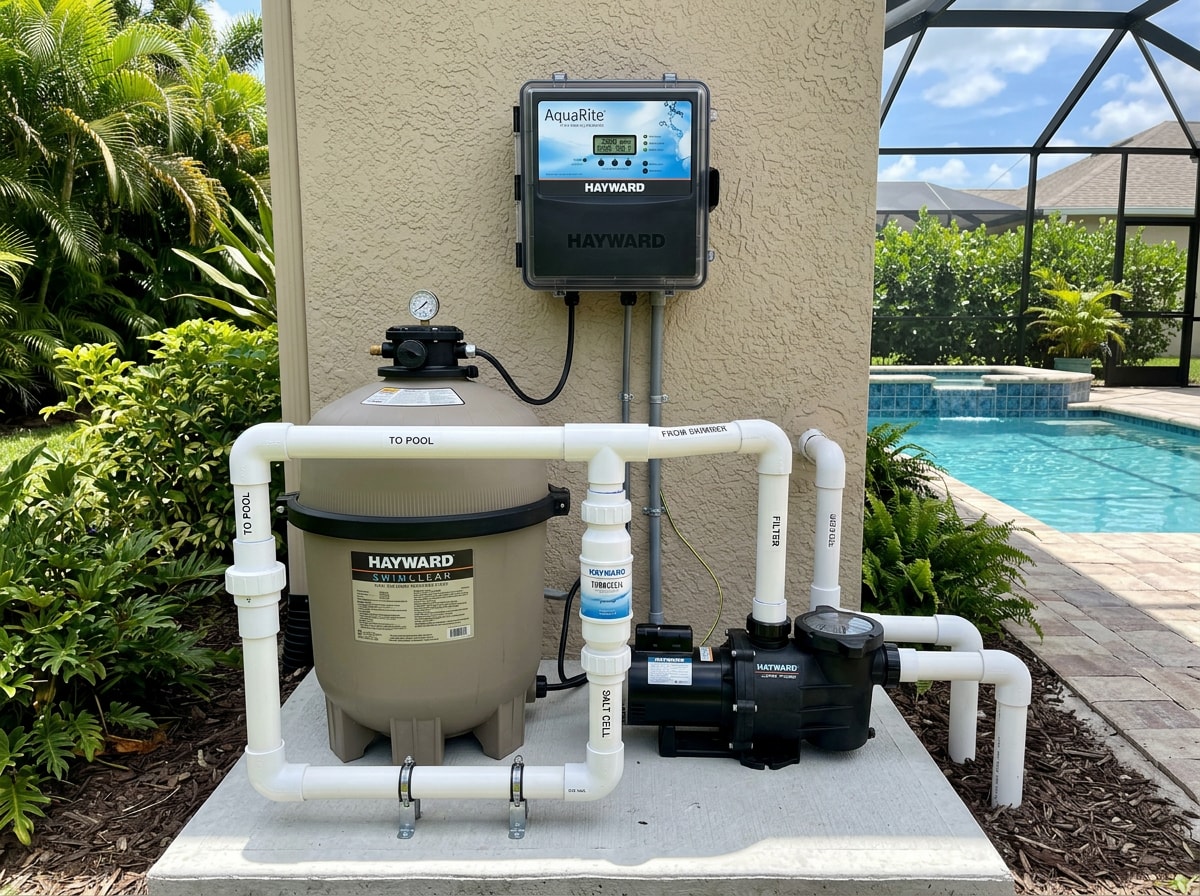
A salt cell is the working core of a salt chlorine generator. It's a sealed housing packed with titanium plates that sits inline with your pool's plumbing, usually right after the filter.
As salt water passes through, the cell runs an electrical current between the plates. That current splits the dissolved salt apart through electrolysis, producing chlorine that sanitizes the pool continuously.
Pentair describes this same basic process for its IntelliChlor line: common table salt flows through the generator cell and, through electrolysis, is converted into chlorine. No working cell means no chlorine production, which is usually why homeowners start Googling "pool salt cell Doctor Phillips" in the first place, suspecting theirs has stopped doing its job.
The controller mounted near your equipment pad reads flow rate and salt level, then sends the voltage that drives the reaction. If that controller shows a fault or your chlorine won't hold steady despite normal salt levels, the cell itself is the first thing worth inspecting.
How to Clean a Salt Cell (Step-by-Step)
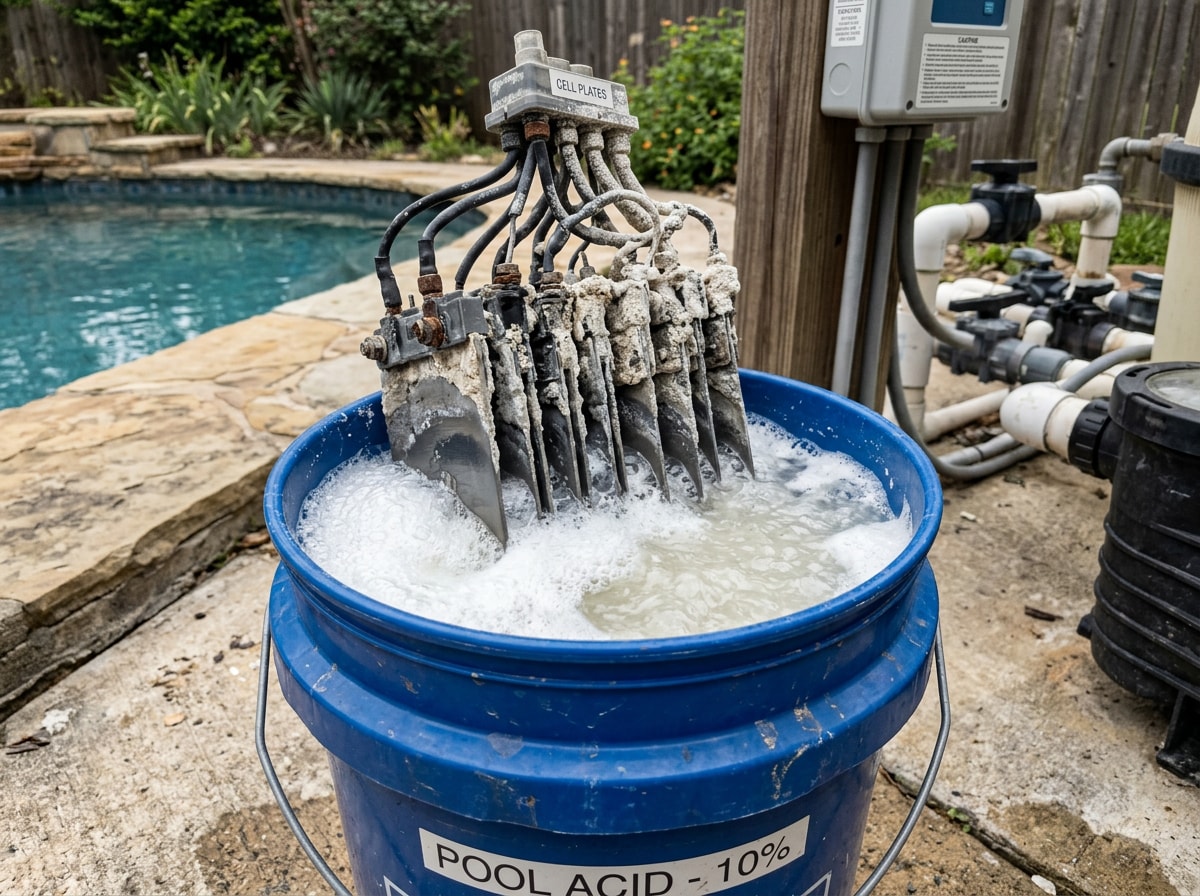
Cleaning a salt cell removes the chalky calcium scale that builds up on the titanium plates and chokes off chlorine production. The process itself is simple, but the wrong acid ratio or a metal scraper can ruin the plates permanently.
Here's the sequence most techs follow:
- Turn off power to the chlorinator and shut the valves around the cell.
- Remove the cell and hose off loose debris with plain water.
- Mix a diluted muriatic acid solution in a bucket or a dedicated cleaning stand. Always add acid to water, never water to acid.
- Soak the plates until the bubbling stops, usually 5 to 15 minutes.
- Rinse thoroughly and reinstall.
| Brand | Typical Dilution | Soak Time |
|---|---|---|
| Pentair | 1 part acid : 4 parts water | 5-10 min |
| Hayward | 1 part acid : 4 parts water | 10-15 min |
| Jandy | 1 part acid : 10 parts water | 15-20 min |
Always confirm ratios against your own manufacturer's manual, since specs vary by model. Doctor Phillips pools frequently deal with naturally hard well and municipal water, which is a known driver of scale buildup in Florida pool systems, so an acid wash every 2 to 3 months is common here rather than the generic "every 3 to 6 months" rule you'll see on national sites.
Never scrape the plates with a screwdriver or wire brush. It strips the titanium coating and shortens the cell's life for good.
Muriatic acid is a strong corrosive, and handling it carelessly is one of the more common causes of pool chemical injuries. In fact, in 2012, injuries from pool chemicals led to nearly 5,000 emergency room visits in the United States. Goggles, gloves, and outdoor ventilation aren't optional steps here.
How Often Should You Clean a Salt Cell?
Most manufacturers recommend inspecting a salt cell every 2 to 3 months, with a full acid wash whenever visible scale appears. Softer water, lower bather load, and well-balanced chemistry can stretch that interval toward 6 months. Hard water or heavy summer use shortens it.
Water balance matters more than any fixed calendar. High calcium hardness or a pH above 7.8 accelerates scale buildup on the plates, which is exactly the kind of imbalance Central Florida pools tend to face given local source water. A regular water chemistry balancing routine catches scale-causing imbalances before they hit chlorine output.
If your weekly care already gets neglected, pairing cell checks with routine pool maintenance or weekly pool cleaning keeps both the water and the equipment on the same schedule.
How Long Does a Salt Cell Last, and What Does Replacement Cost?
Titanium plates wear down gradually every time the cell runs, regardless of how well you maintain it. Most residential cells need replacement after several years of regular use, sooner if scale and corrosion go unchecked, longer with consistent cleaning and balanced water.
A replacement cell typically runs from a few hundred dollars up to roughly $700-900, depending on brand and the cell's rated gallon capacity. Larger pools need higher-output cells, which cost more than smaller residential units. If your current cell has already failed, swapping just the cell is almost always cheaper than replacing the whole system, so it's worth confirming the actual failure point before assuming you need an entirely new chlorinator.
Salt Chlorine Generator Installation Cost in Doctor Phillips
A new salt chlorine generator installation typically takes a few hours once sizing and plumbing layout are confirmed, since the unit ties into your existing circulation equipment rather than requiring major rework. Cost depends mostly on cell capacity, pool volume, and whether a new controller or automation upgrade gets bundled in.
For homeowners comparing a full salt system against ongoing manual chlorination, the math usually favors salt within a year or two, especially given Florida's near year-round swim season. Our techs who install salt systems around Doctor Phillips and Windermere generally see the payback show up faster on pools that run 8+ months a year, which describes most backyards in this part of Orange County.
If plumbing modifications are needed, or you're bundling in a pool equipment upgrade alongside the chlorinator, an on-site visit gets you an accurate number faster than a phone quote ever will.
The Corrosion Trade-Off Nobody Mentions at the Sales Pitch
Salt water conducts electricity better than fresh water, and that conductivity is exactly what makes galvanic corrosion worse around ladders, light housings, and unbonded metal fixtures. This isn't unique to backyard pools.
Metals with high voltages, like magnesium, zinc, and aluminum, are referred to as active metals, ones that corrode easily when paired with less active metals in a saltwater-conductive environment, a dynamic Oregon State University's extension engineering program has documented in marine and industrial settings for decades. In a pool, that means unbonded ladders, rails, and light rings are the parts most likely to show pitting first.
Proper bonding of metal equipment, rinsing fixtures after splash-out, and choosing salt-rated hardware cuts most of this risk down to a manageable maintenance item rather than a dealbreaker.
FAQ
How Do I Know If My Cell Needs Cleaning?
Your cell needs cleaning when the equipment pad shows a check-cell light or scale indicator, or when you pull the cell and see white, chalky buildup on the plates. Low or inconsistent chlorine readings despite normal salt levels are another sign worth a visual check.
Are Salt Cells Self-Cleaning?
Many modern cells use reverse polarity to flip voltage direction periodically, knocking loose some scale automatically. A self-cleaning cell still needs manual inspection every few months, since reverse polarity reduces scale buildup, it doesn't eliminate it.
How Much Is a New Salt Cell for a Saltwater Pool?
A new salt cell typically runs a few hundred dollars up to around $700-900, depending on brand and the cell's rated capacity for your pool's gallons. Larger pools need higher-output cells, which generally cost more than smaller residential units.
How Long Does a Pool Salt Cell Last?
Most residential cells last several years of regular use before the titanium plates wear down enough to need replacement. Consistent acid cleaning and balanced water chemistry stretch that lifespan; neglected scale and high pH shorten it.
What Is the Downside of a Salt Water Pool?
Saltwater pool downsides include higher upfront equipment cost and periodic salt cell replacement, plus the salt itself can accelerate corrosion on certain metal pool fixtures, ladders, and nearby hardware over time if bonding isn't done correctly. Weighing these trade-offs against reduced manual chlorine handling is worth doing before switching systems.
Is 7.8 pH Too High for a Salt Water Pool?
A pH of 7.8 sits at the upper edge of the ideal range, and salt systems naturally tend to drift pH upward over time because of the electrolysis process itself. CDC recommends pH 7.0 to 7.8 and a chlorine concentration of at least 1 ppm in pools , so 7.8 isn't alarming on its own, but it's worth correcting before it climbs past that range.
If you'd rather have a professional confirm your cell is actually the problem before you buy a replacement or spend an afternoon with acid and a bucket, our team covers salt system diagnostics, cleaning, and installs throughout Doctor Phillips and the surrounding area. For a deeper look at keeping a Central Florida pool running right year-round, see our guide to swimming pool management in Windermere, FL. You can also browse recent work on our projects page, check our full pool equipment repair services, or visit {{SITE_URL}}/ to see everything we handle. Ready for a straight answer on your situation? Get a free estimate and we'll walk the equipment pad with you.