
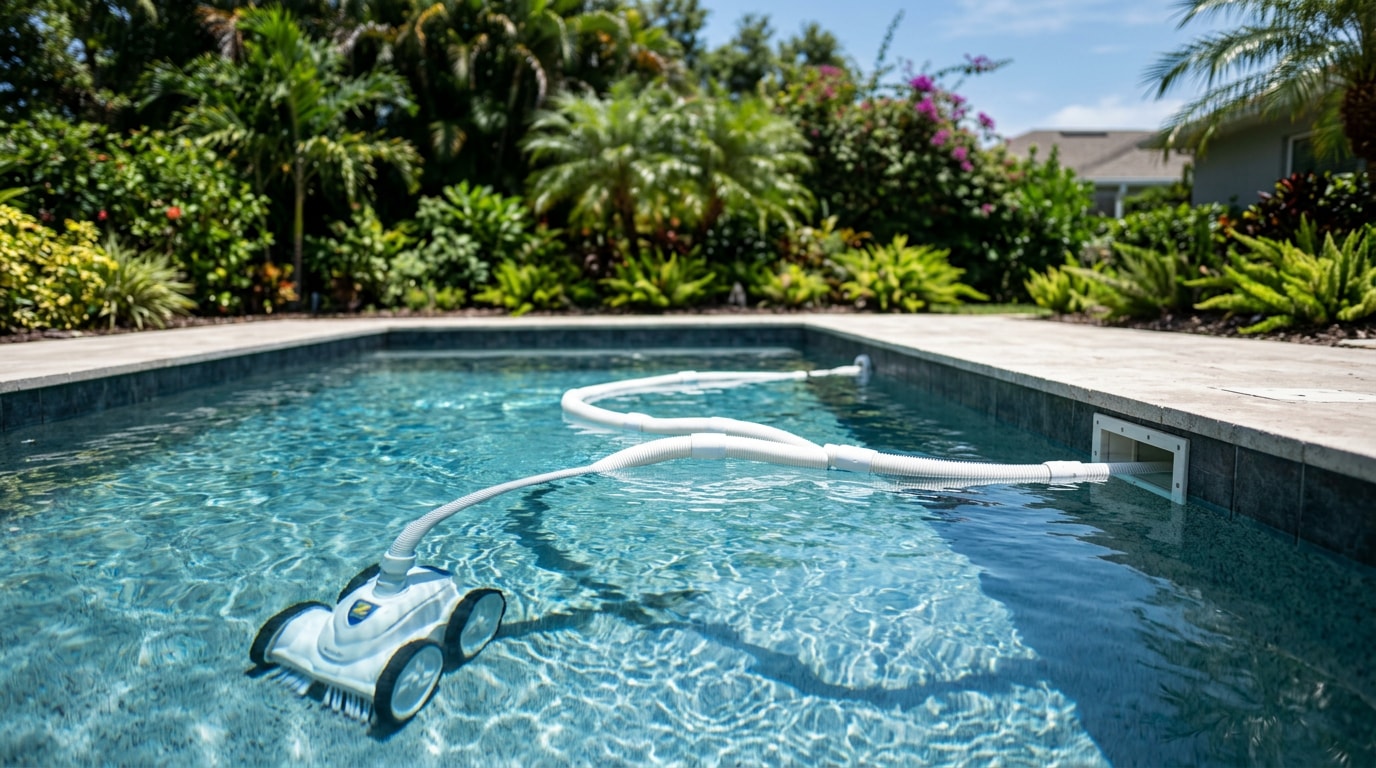
A failing pool cleaner hose in Winter Garden, FL is almost always the real reason your automatic cleaner drags, stalls, or spits air bubbles, not a broken cleaner unit. Winter Garden's long swim season and intense Central Florida sun put more UV and chemical stress on a hose than most climates ever will. This guide shows you how to diagnose the problem, buy the right replacement, and fix it yourself in under an hour.
What Is a Pool Cleaner Hose?
A pool cleaner hose is the flexible tube that connects an automatic pool cleaner to the pool's circulation system. It carries suction or pressurized water so the cleaner head can move across the floor and walls.
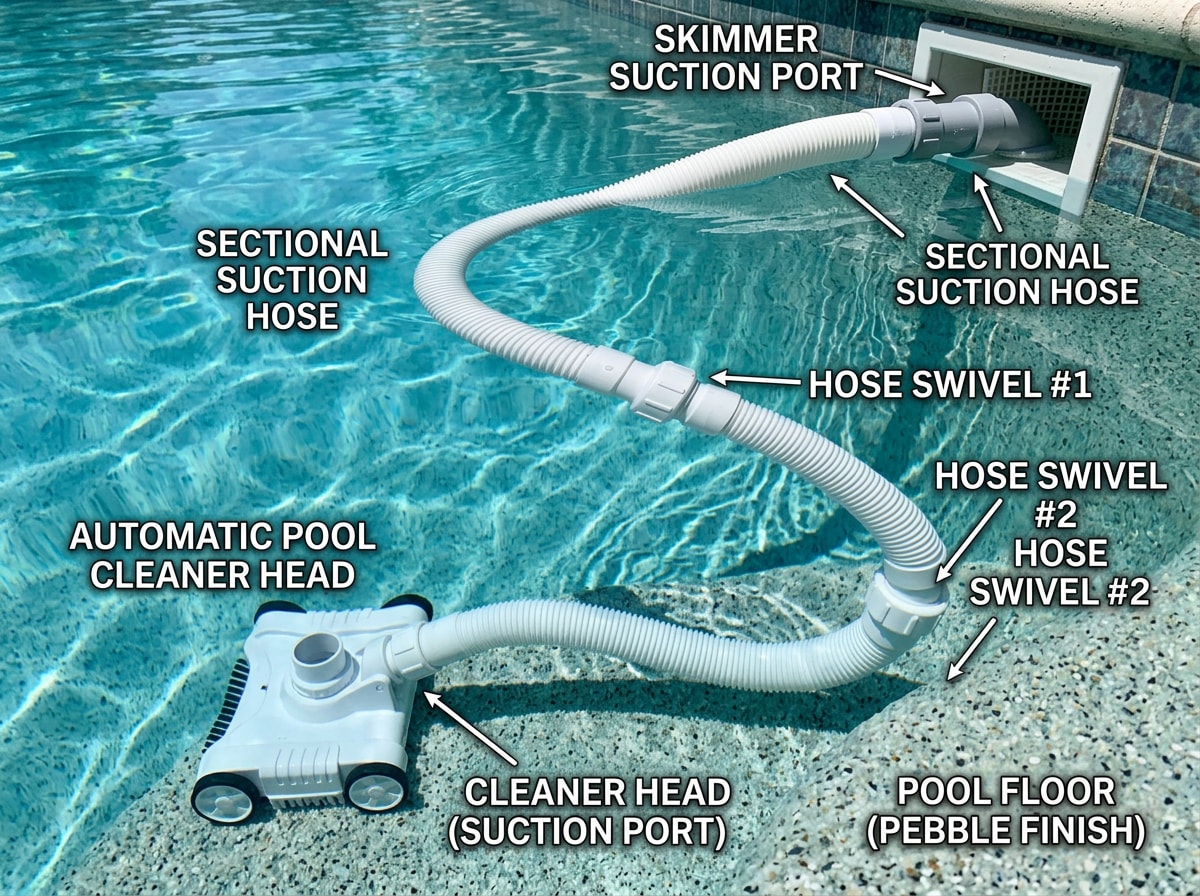
On suction-side setups, the hose links the cleaner head to the skimmer or a dedicated wall fitting. The pump pulls debris-laden water through the hose and out through the filter.
Winter Garden's long swim season means these hoses run nearly year-round. That extra runtime speeds up wear compared to pools used only a few months a year.
On service calls across Winter Garden and West Orange County, our technicians at SWIMM Solutions see cracked suction hoses as one of the most common reasons homeowners call for same-day equipment repair, especially after pollen season coats the pool deck in fine grit that works its way into every hose joint.
When Do You Need a Pool Cleaner Hose Replacement?
Most hose failures fall into a handful of repeatable patterns. Recognizing them early keeps a cleaner from quitting mid-swim season.
Watch for these warning signs:
- Hairline cracks or stiff, brittle segments anywhere along the hose
- Visible leaks or seeping at connection points and swivels
- A hose that feels rigid instead of flexible when you pick it up
- Tangling or coiling that starts happening more often than it used to
- Weak suction even after cleaning the skimmer and pump baskets
The Hose Is Cracked, Leaking, or Brittle
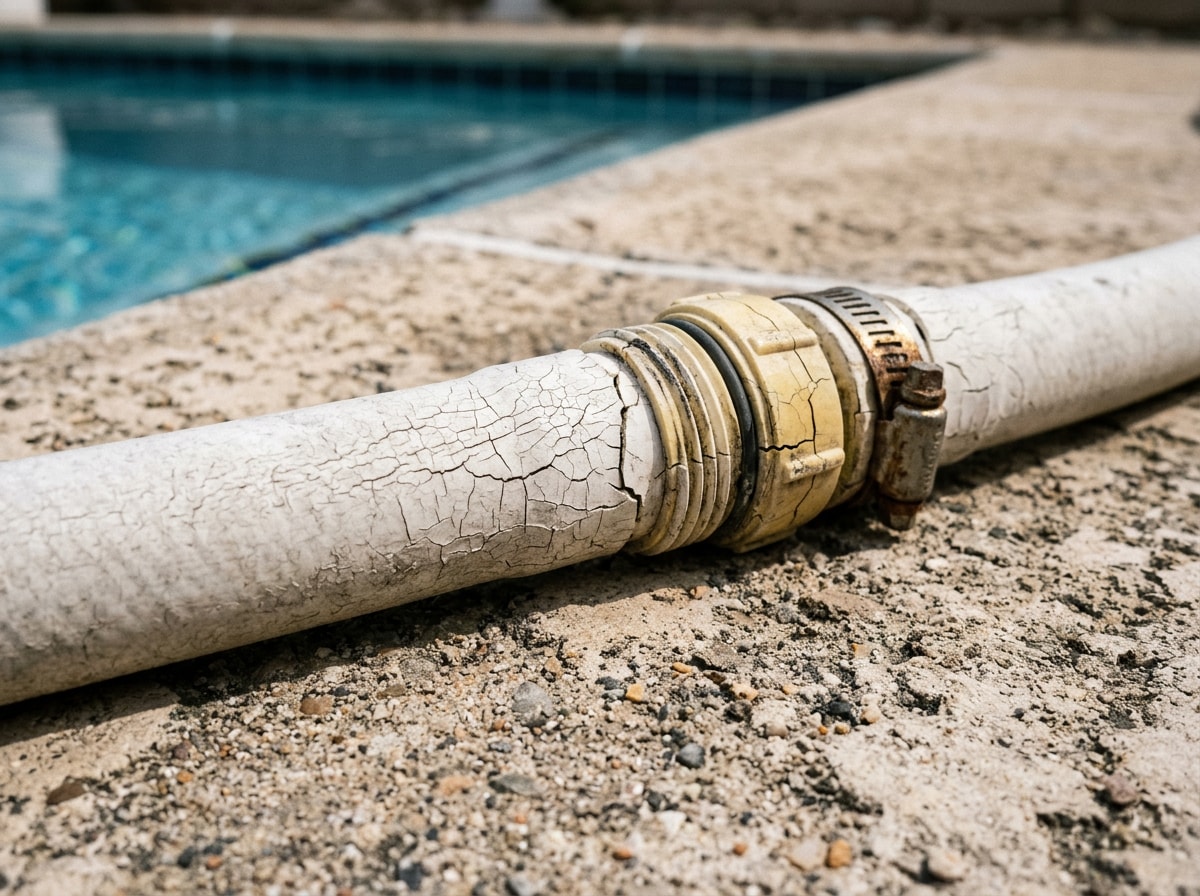
A pool cleaner hose typically needs replacement once it shows hairline cracks, stiff segments, or leaks at the connection points. These are signs that UV exposure and chlorine have broken down the material's flexibility over time.
Florida sits in a region where the EPA's UV Index guide lists midday readings in the "Very High" to "Extreme" range for much of the year. That sustained exposure, combined with chlorinated water and constant pressure cycling, ages a hose faster than it would in a milder climate.
Inspect the hose by hand every few months, paying close attention to the swivel joints. Cracks there are usually the first visible warning before a full split.
If you'd rather have a technician handle the diagnosis, our Pool Equipment Repair team covers hose and swivel repairs for pools throughout the area.
What Length Pool Cleaner Hose Do I Need?
The right hose length lets the cleaner reach the farthest point of the pool from the skimmer or wall fitting, with a bit of slack left over. Most residential pools use a standard 1.5 inch diameter hose, though some models vary by brand.
Before buying a replacement, measure the longest diagonal distance across your pool. Compare that number against your cleaner's manual specifications.
Manufacturer guidance, such as Polaris's official hose-length instructions, generally recommends extending the hose to the farthest point of the pool and keeping it within about six inches of that mark. Too short and it won't cover the floor; too long and it tangles.
Things to Consider Before Buying a Pool Cleaner Hose
Beyond length and diameter, two factors separate a hose that lasts from one that fails within a season.
| Feature | Why It Matters | Red Flag to Avoid |
|---|---|---|
| Material | Resilient PVC or EVA-blend hoses resist kinking, leaking, and sun damage better than thin vinyl | Hose feels stiff or shiny-brittle right out of the package |
| Detachability | Sections that pull apart let you rinse out trapped sand and leaves | No visible swivel or union between sections |
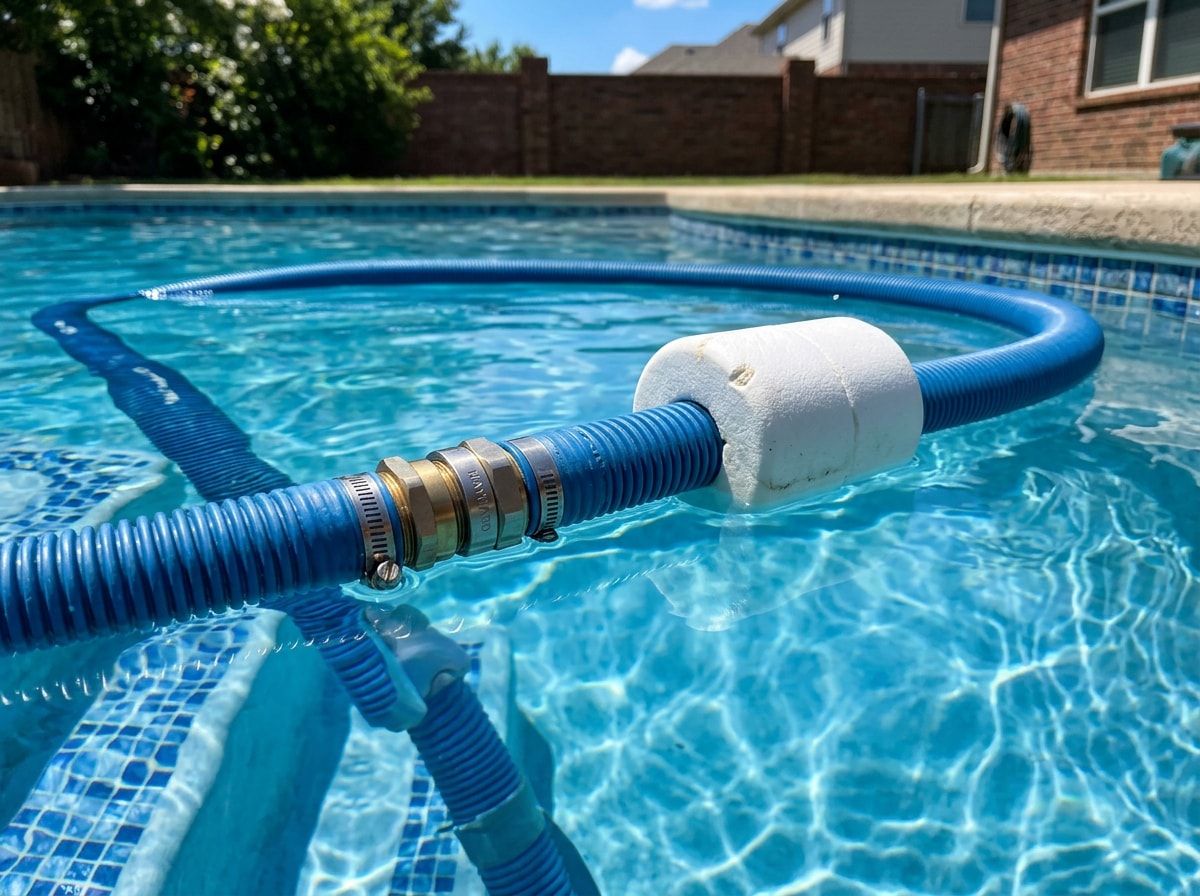
| Float spacing | Properly spaced floats keep the hose riding at the surface | Floats bunched at one end or missing entirely |
| Swivel action | Free-turning swivels prevent the hose from winding itself into knots | Swivel feels gritty or won't rotate by hand |
Material
Look for hoses made from resilient PVC or EVA plastic blends. These resist the leaks, kinking, and tangling that cheaper vinyl hoses develop within a year or two.
Spending a little more upfront on better hose material usually costs less over time than replacing a cracked budget hose every season, especially in a climate as demanding as Central Florida's.
Detachability
A detachable hose lets you pull sections apart to rinse out trapped leaves, sand, and debris. Hoses that don't come apart easily trap grime that restricts water flow and encourages tangling.
Easy-to-clean sections also make seasonal maintenance faster, since you can rinse each piece separately instead of flushing the whole assembly at once.
How to Replace a Pool Cleaner Hose Step by Step
Replacing a damaged hose section is a short job most pool owners can finish in under an hour, with no specialty tools beyond a basic pool maintenance kit.
Step 1: Turn Off the Pool Pump
Turn off the pool pump and any booster pump before touching a hose connection. Residual pressure in the line can cause unexpected spray or a hose whipping loose.
Wait a minute or two after shutoff to let pressure fully release. This matters even for small jobs, since a pressurized line can still hold force after the pump stops.
Step 2: Remove the Damaged Section
Disconnect the damaged section at its nearest swivel or connector. Twist gently rather than pulling, to avoid stressing the adjacent hose length.
Inspect the removed piece for cracking, splitting, or stiffness. If only one segment shows damage, you can usually replace just that section and reuse the rest.
A swivel that's cracked or won't turn freely should be replaced at the same time. A stiff swivel is often what caused the strain in the first place.
Step 3: Install the New Section and Reconnect
Match the replacement section's diameter to the rest of the hose before installing it. Seat each connector fully and hand-tighten any hose nuts until snug, not over-torqued.
Loose suction fittings anywhere in a pool's plumbing are worth taking seriously beyond just performance. The CPSC's pool safety program flags suction entrapment at drains and fittings as a recognized hazard, which is one reason technicians fully seat every suction connection before restarting the pump.
Step 4: Restart the Pump and Test
Turn the pump back on and watch the hose for a full cleaning cycle. Check every joint you touched for leaks or air bubbles.
If the cleaner moves evenly and the hose stays submerged without sinking or kinking, the job is done. If something feels off, our Pool Equipment Repair team can finish the job same-day for pools in Winter Garden and the surrounding area.
Why Pool Cleaner Hoses Tangle
Hose tangling usually comes from three overlapping causes: hose memory from being coiled in storage, an erratic movement pattern from the cleaner itself, and return-jet circulation pushing the hose into loops as the cleaner moves. A hose stored coiled for winter often "remembers" that curled shape even after being reattached.
If you're still asking why a new hose tangles, check whether the return jets are aimed in a way that pushes water, and the hose, toward one side of the pool repeatedly. That consistent push, paired with hose memory, is often enough to create a knot within a single cleaning cycle.
How to Stop a Pool Cleaner Hose From Tangling
Work through these fixes in order:
- Relax the coil memory. Lay the full hose length flat in direct sun for an hour or two before reattaching it. This relaxes the coiled shape enough that it lies straighter in the water.
- Recheck the length. An oversized hose has more slack available to loop and knot. Compare it against your cleaner's manual specifications.
- Replace warped sections. Don't work around a visibly kinked segment; swap it out.
- Confirm every swivel rotates freely. A stuck swivel is a common, instant fix for tangling once corrected.
- Space floats correctly. Floats should sit at the manufacturer's recommended spacing. A misplaced float can make the hose sink or drag instead of floating evenly.
- Clear skimmer and pump baskets. A clogged basket reduces flow, which makes floats sit unevenly and worsens tangling.
Troubleshooting Suction Side Cleaners
When the hose looks intact and fully connected but the cleaner still underperforms, the issue usually traces back to one of two problems: the cleaner not moving at all, or air bubbles at the return line.
Suction Side Cleaner Does Not Move
Start by confirming the hose is securely attached to both the cleaner head and the suction line fitting. A loose connection kills suction before it ever reaches the cleaner.
Next, inspect each hose section for small air leaks. A leak reduces the draw needed for movement even if the connection looks fine.
Closing other suction lines temporarily, like a second skimmer, can concentrate suction through the cleaner's line and confirm whether weak flow is the actual problem.
Air Bubbles at Return Line
Air bubbles at the return line usually point to a loose vacuum connection or a small puncture somewhere along the hose. Check every joint for a tight seal first, since a loose fitting is the easiest fix.
If the seal looks fine, run your hand along the full hose length feeling for punctures. Small leaks can often be sealed with silicone or rubber cement, while a worn O-ring at a connector should simply be replaced rather than patched.
If flow problems persist after checking the hose, the issue may be upstream in the filter. Our guide to pool filter cartridges in Winter Springs covers how a dirty or worn cartridge can mimic hose-related suction problems.
FAQ
How Do I Connect a Pool Cleaner Hose?
Attach one end to the cleaner head and the other to the skimmer basket or a dedicated wall fitting. Fill the hose with water before switching the valve to intake mode. Filling it first prevents an air lock that would otherwise stall the cleaner on startup.
How Long Should My Pool Cleaner Hose Be?
Extend the hose to the farthest point of your pool from the wall fitting or skimmer, staying within about six inches of that mark. Too short and the cleaner can't reach the whole floor; too long and the extra slack causes tangling.
Why Does My Pool Cleaner Hose Sink Instead of Float?
A sinking hose usually means waterlogged floats or floats spaced too far apart. Replace any float that feels heavy or saturated, and reposition the rest at the manufacturer's recommended intervals.
How Often Should I Replace a Pool Cleaner Hose in Florida?
There's no fixed replacement schedule, since wear depends on sun exposure, chemical levels, and how often the cleaner runs. In Central Florida's climate, inspect the hose every few months and replace sections as soon as they show cracking or stiffness, rather than waiting for a full failure.
Is It Worth Repairing an Older Pool Cleaner?
Usually yes, when the problem is isolated to one inexpensive part, like a hose section or a swivel. If several components are failing at once (motor, hose, and float all showing wear), replacement often costs less long-term than repeated repairs. For an honest repair-versus-replace assessment, get a free estimate from our team.
What Are the Common Signs That the Hose Swivel or Hose Nut Needs Replacement?
Common signs include leaking at the connection point, a hose that feels stiff instead of flexible while the cleaner runs, tangling or coiling during operation, and visible cracking on the swivel or nut housing. Any one of these on its own usually means a simple swivel or nut swap rather than a full hose replacement.
About the Author
This guide was written by the service team at SWIMM Solutions, a licensed pool contractor serving Winter Garden, Orlando, and the surrounding Central Florida area. Our technicians handle hose, swivel, and equipment repairs on residential pools every week and bring that field experience to every guide we publish. Questions about a specific hose or cleaner problem? Get a free estimate and we'll take a look.