A pool ionizer in Windermere, FL adds copper and silver ions to circulating water so you can run less chlorine without losing algae and bacteria control. Central Florida's long swim season puts extra strain on sanitizing systems, which is why more local owners ask whether an ionizer actually earns its keep. This guide covers how ionizers work, what they cost in 2026, and who should (and shouldn't) install one.
What Is a Pool Ionizer?
A pool ionizer is a sanitizing add-on that uses low-voltage electricity to release metal ions into circulating pool water. It installs alongside your existing filtration and chlorine system rather than replacing it.
A pool ionizer typically uses copper (Cu) and silver (Ag) ions to eliminate bacteria and algae in the water, with silver ions more instrumental in removing bacteria while copper ions play a bigger role in preventing algae. Together, they lighten the sanitizing load your chlorine would otherwise carry alone. It functions as a chlorine-reduction tool, not a chlorine replacement; pools still need some residual sanitizer on hand.
How Does a Pool Ionizer Work?
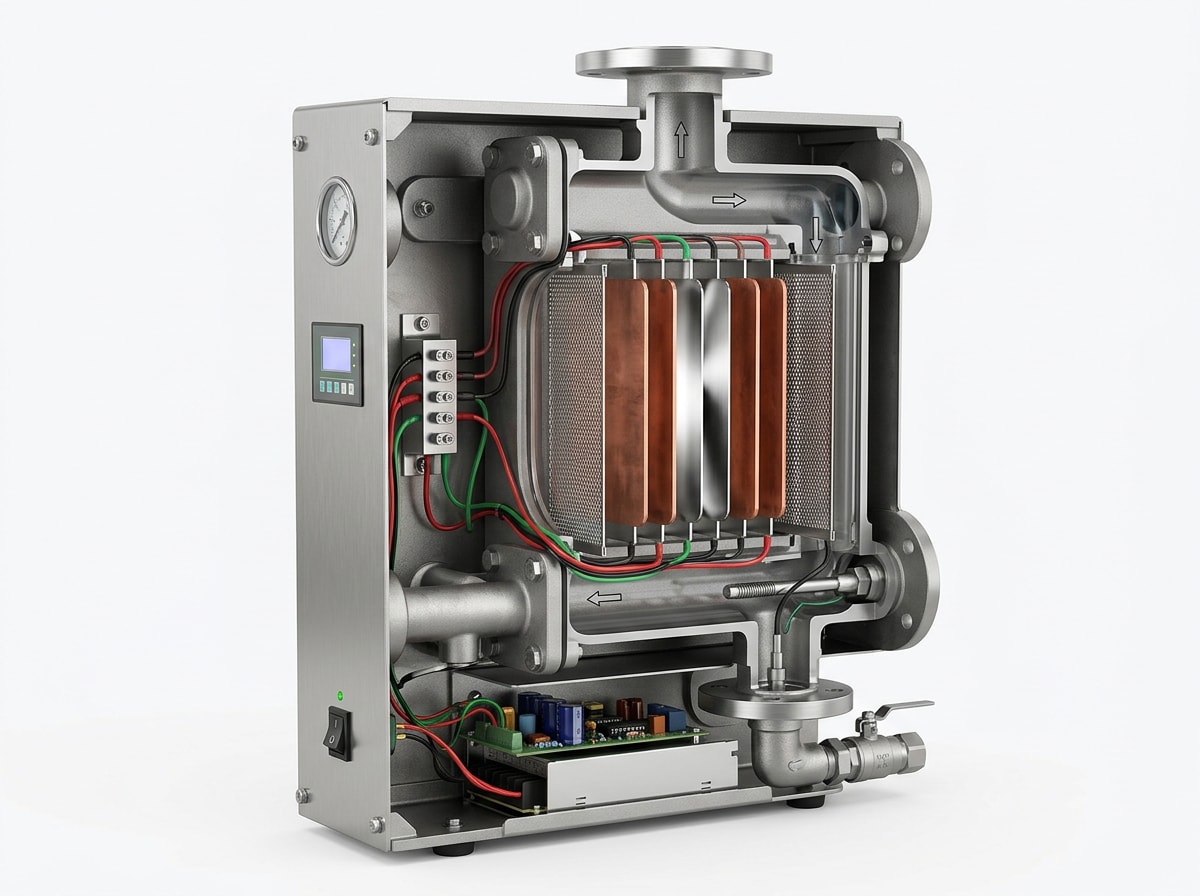
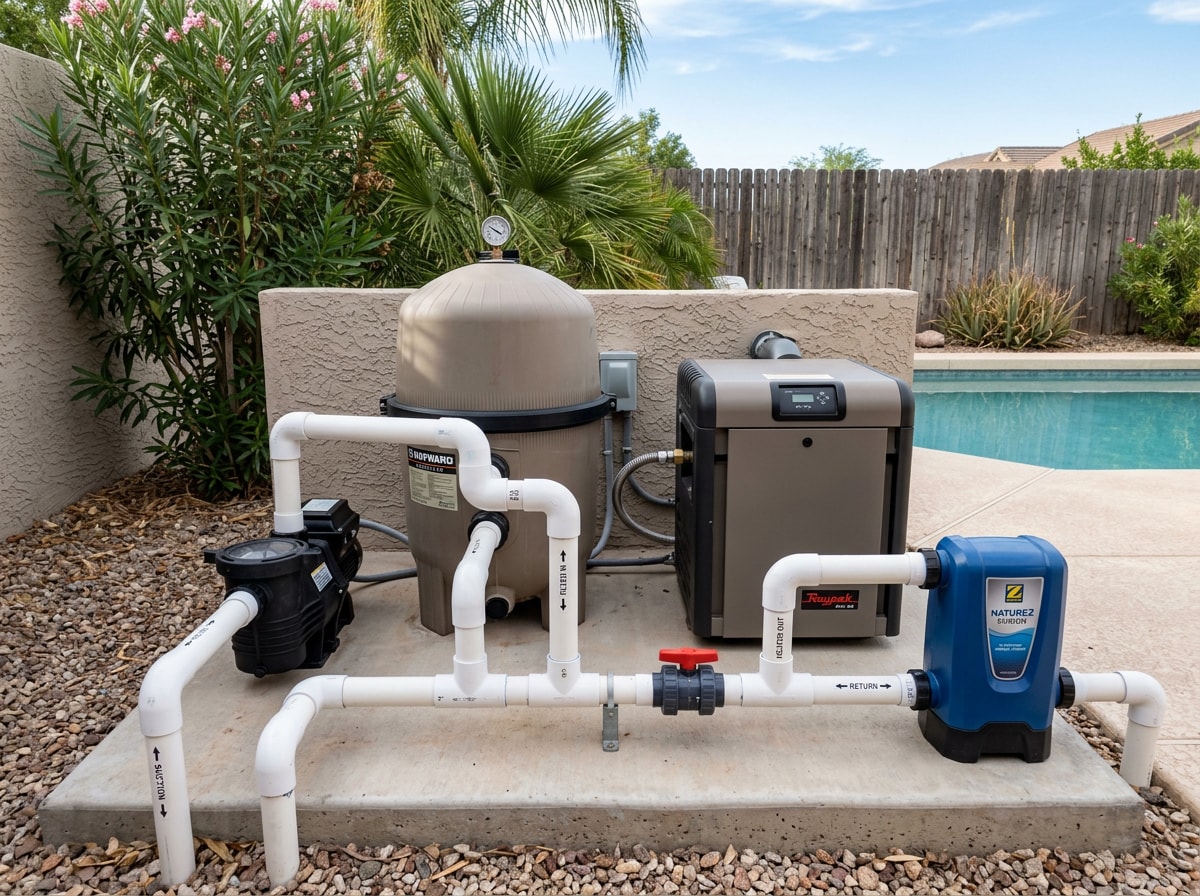
A pool ionizer works through electrolysis. A low-voltage current passes over copper and silver electrodes inside an ionizer chamber, releasing positively charged metal ions into the water as it flows past. The electrodes sit next to each other where the water exits the ionizer and enters the return pipe.
Follow the water through a full cycle:
- It leaves the pool through the skimmer
- It moves through the pump
- It passes through the filter
- It runs through the heater, if one is installed
- It enters the ionizer chamber, where the electrodes charge the water
- It exits through the return jets, carrying fresh ions back into the pool
Every full cycle adds another dose of ions to circulation. Those ions attach to algae cells and bacteria and slow their growth, which is the same underlying chemistry used in copper-silver ionization systems that hospitals and large facilities have relied on for Legionella control for decades.
Solar vs. Inline Pool Ionizers
Ionizers come in two main formats, and the choice affects both upfront cost and day-to-day consistency.
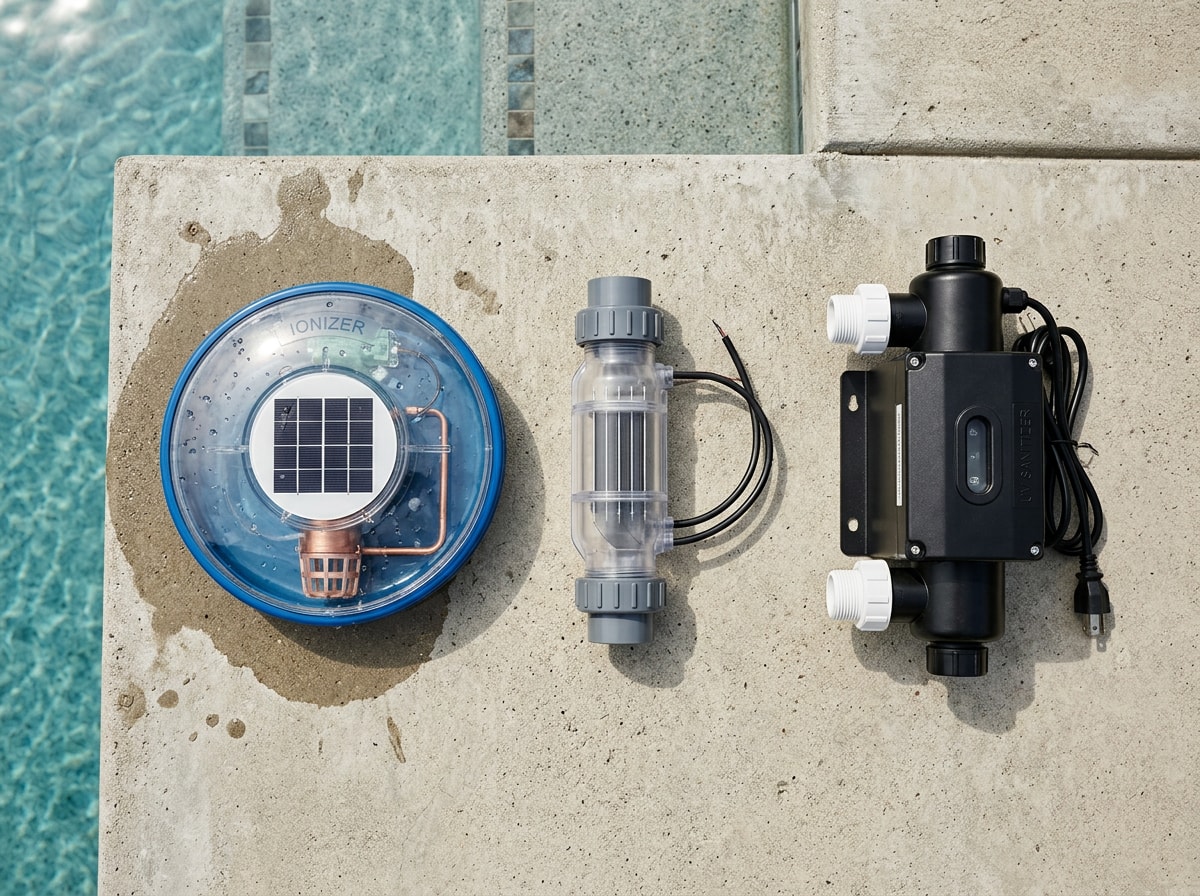
Solar (floating) ionizers drift on the water's surface and use an onboard solar panel to charge the electrodes. They need no plumbing, which makes them the cheaper, faster option to try. Since they depend on sunlight, output drops during overcast stretches, so keeping a backup chlorine dose on hand during Florida's cloudier rainy-season weeks is a reasonable precaution.
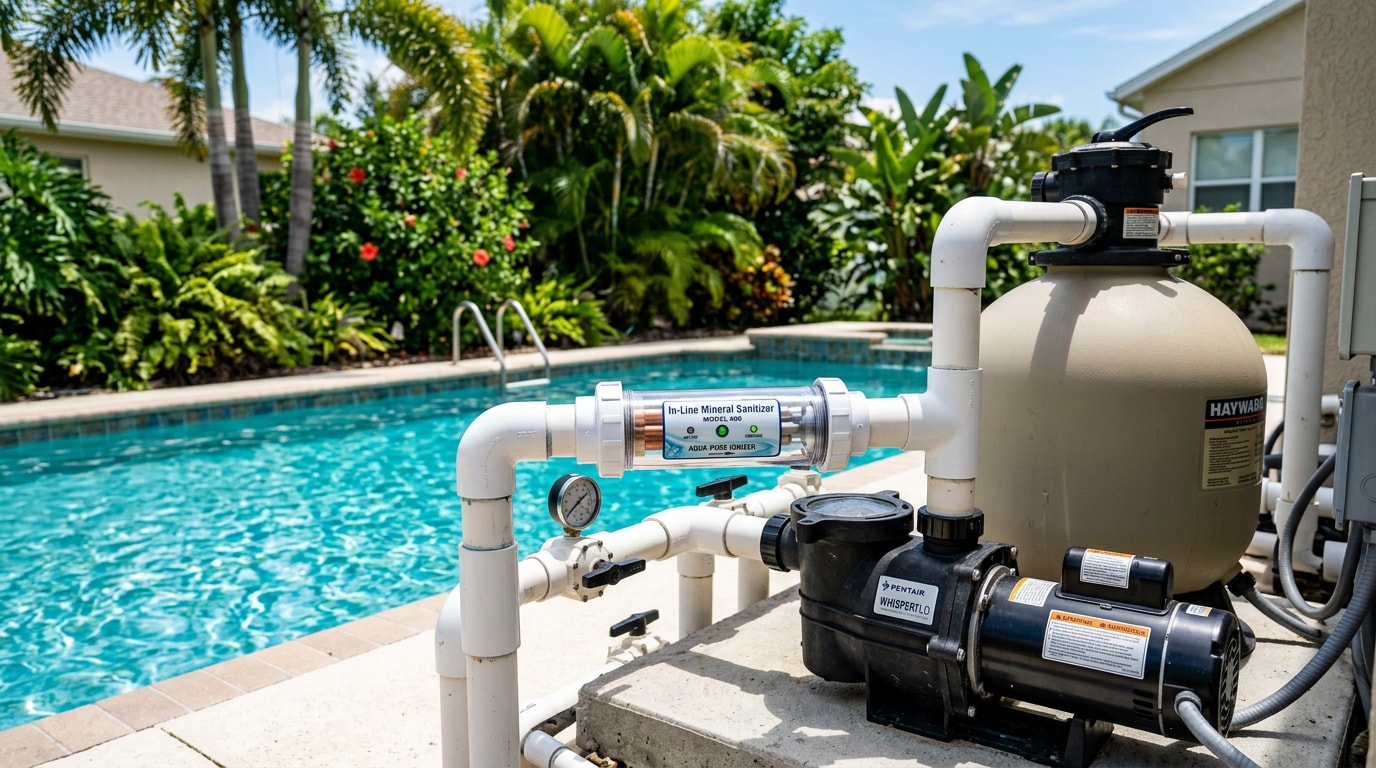
Inline ionizers plumb directly into the circulation line, tied into the existing pump and filter system by a professional. They deliver ions on a steadier schedule since they're not weather-dependent, which matters more for pools that see heavy year-round use.
How Much Does a Pool Ionizer Cost in 2026?
Cost is usually the deciding factor. Solar pool ionizers run significantly less expensive, generally $100 to $300.
An electric, inline ionizer for an inground pool typically costs around $700 to $1,500 and up, installed.
Electrodes need replacement every few months to every few years and run $70 to $200 and up each time.
| System | Upfront Cost (2026) | Ongoing Cost | How Chlorine Factors In |
|---|---|---|---|
| Solar Pool Ionizer | $100–$300 | Low (anode swaps, ~$20–$40) | Still needs a low chlorine residual |
| Inline Pool Ionizer | $700–$1,500 installed | Moderate (electrode, $70–$200) | Still needs a low chlorine residual |
| Salt Chlorinator | $800–$1,800 | Moderate (salt, cell every 3–5 yrs) | Generates its own chlorine |
| UV/Ozone System | $600–$2,500 | Low-moderate | Still needs a chlorine residual |
The most expensive and sophisticated pool ionizer still costs less than most other "alternative sanitizers," such as UV and Ozone, and ionizers are also less expensive than salt chlorinators. If you're comparing this against a full equipment overhaul, it helps to review the full lineup of options with a pool equipment upgrade specialist before committing.
Do Pool Ionizers Actually Work?
Yes, within limits. Ionizers suppress algae growth and reduce how much chlorine a pool needs day to day, but as a complementary disinfectant to chlorine, copper-silver ionization is meant to lower the amount of chlorine used in pools, not eliminate it.
Here's the information most buying guides skip: a 2021 peer-reviewed study on indoor and outdoor pools found that emerging disinfection byproduct concentrations decreased by as much as 80% and cytotoxicity decreased as much as 70% when a lower chlorine residual combined with copper-silver ionization was used , compared to chlorine-only treatment. That's a meaningful data point for anyone weighing air and water quality, not just algae control, against an ionizer purchase.
Owners who treat an ionizer as a supplement, not a standalone sanitizer, get the best results. Skipping chlorine altogether is where most algae suppression failures happen, since ions alone can't break down organic waste fast enough in a heavily used pool.
Giving Your Ionizer a Sanitizing Boost
Even with an ionizer running, a pool still needs supplemental chlorine. Metal ions slow algae and bacterial growth, but they don't oxidize waste the way chlorine does. Most manufacturers recommend keeping a reduced but steady chlorine residual, commonly in the 0.4 to 1 ppm range, rather than eliminating chlorine entirely.
Benefits of Using a Pool Ionizer
- Less chlorine odor and lower skin and eye irritation
- Softer-feeling water at normal ion dosing
- Lower ongoing chemical spend over a full swim season
- A lower overall equipment and maintenance cost than UV/ozone systems
These advantages add up most for households with sensitive swimmers or pools that see heavy daily use. Pairing an ionizer with a routine pool maintenance plan keeps both the water chemistry and the equipment in good working order.
Pool Ionizer Drawbacks and Side Effects
Staining is the most common issue pool owners run into with ionizers, and a pool surface can develop stains when the ionizer is configured improperly and releases too many ions for the pool's volume. Floating solar units also lose effectiveness on overcast days, and electrodes wear down and need periodic replacement regardless of type.
None of these are dealbreakers, but an ionizer isn't a "set it and forget it" device. It still needs occasional attention.
Are Pool Ionizers Safe?
Pool ionizers are generally considered safe when copper and silver ion levels stay within recommended ranges. The EPA's drinking water action level for copper sits at 1.3 mg/L , and ionizer manufacturers typically target ion concentrations well under that threshold. The EPA's separate secondary guideline sets copper at 1.0 mg/L, the level associated with metallic taste and blue-green staining rather than health risk. That secondary number is the one that matters most for pool owners worried about stained plaster, not drinking-water safety.
Compared with chlorine, ion exposure at normal dosing levels tends to cause less skin and eye irritation. Problems typically arise only when copper levels run high for extended periods, which is why routine testing matters.
Balancing Water Chemistry with an Ionizer
An ionizer only performs well when the surrounding water chemistry is in range. Keeping pH between 7.4 and 7.6 and alkalinity in check helps ions disperse evenly and reduces the odds of staining. Checking levels weekly is a simple part of routine ionizer upkeep, and it's worth pairing with a broader water chemistry balancing service if you'd rather not test weekly yourself.
Who Should Use a Pool Ionizer in Windermere, FL
Ionizers tend to fit best with:
- Chlorine-sensitive bathers (less odor, less irritation)
- Pools in algae-prone, shaded areas
- Owners looking to lower their ongoing chemical spend
- Households that already run a tight weekly testing routine
If any of that describes your household, it's worth a conversation before you buy. Get a free estimate from our team and we'll walk through whether an ionizer, a salt system, or a simple equipment upgrade makes more sense for your specific pool and bather load. We've installed and serviced sanitizing equipment across Central Florida pools, including plenty around Windermere, and the honest answer depends on your water source, your pool surface, and how much testing you're willing to do.
For a broader look at year-round upkeep in this climate, our guide to swimming pool management in Windermere, FL covers the maintenance routine an ionizer fits into.
FAQ
What's the Difference Between a Pool Ionizer and a Mineral System?
A pool ionizer generates ions electrically through an ionizer chamber. A mineral system relies on a cartridge that slowly erodes minerals into the water as it flows past. Ionizers offer more controllable ion generation; mineral cartridges are simpler but need regular replacement.
Will a Pool Ionizer Cause Metal Staining?
Copper ions can stain pool surfaces if levels climb too high or pH drifts out of balance. Keeping dosage controlled and pH between 7.4 and 7.6 significantly lowers that risk.
Why Does My Pool Builder or Pool Store Dislike Ionizers?
When you use a pool ionizer you need less chlorine, and when you buy the ionizer itself you typically pay much less over time than what a builder or pool store earns selling ongoing chemicals. That reduced recurring revenue is a real incentive to keep in mind when weighing their advice, though it doesn't automatically make their safety concerns wrong.
How Long Does a Pool Ionizer Last?
Inline electronic units typically last 5 to 10 years with proper care, while copper and silver electrodes usually need replacement every one to three years depending on pool usage. Lifespan varies with water chemistry and how consistently the unit is maintained.
Is a Copper Pool Ionizer Safe for All Pool Surfaces?
Copper ionizers generally work fine with plaster, vinyl, and fiberglass surfaces, though plaster and lighter finishes show staining more readily if copper levels run high. Extra caution with dosing and pH pays off on lighter-colored or more porous surfaces.
Can I Use a Pool Ionizer With a Saltwater Pool?
Yes. An ionizer can run alongside a salt chlorine generator, though most owners choose one or the other rather than paying for both systems' upkeep. If you already have a salt system, a pool equipment repair check is usually a cheaper first step than adding an ionizer on top.
Still deciding whether a pool ionizer fits your Windermere pool? Visit Swimm Solutions or get a free estimate and we'll help you weigh the costs against your water chemistry and usage patterns.