Shopping for a cordless pool robot in Winter Park, FL means weighing freedom of movement against raw cleaning power. A cordless unit runs on an onboard battery, so there's no cable to snag on ladders or drag across the deck. Here's what actually separates a smart purchase from a unit that sits in the garage by July.
Cordless vs. Corded Robotic Pool Cleaner: Which Fits Your Pool?
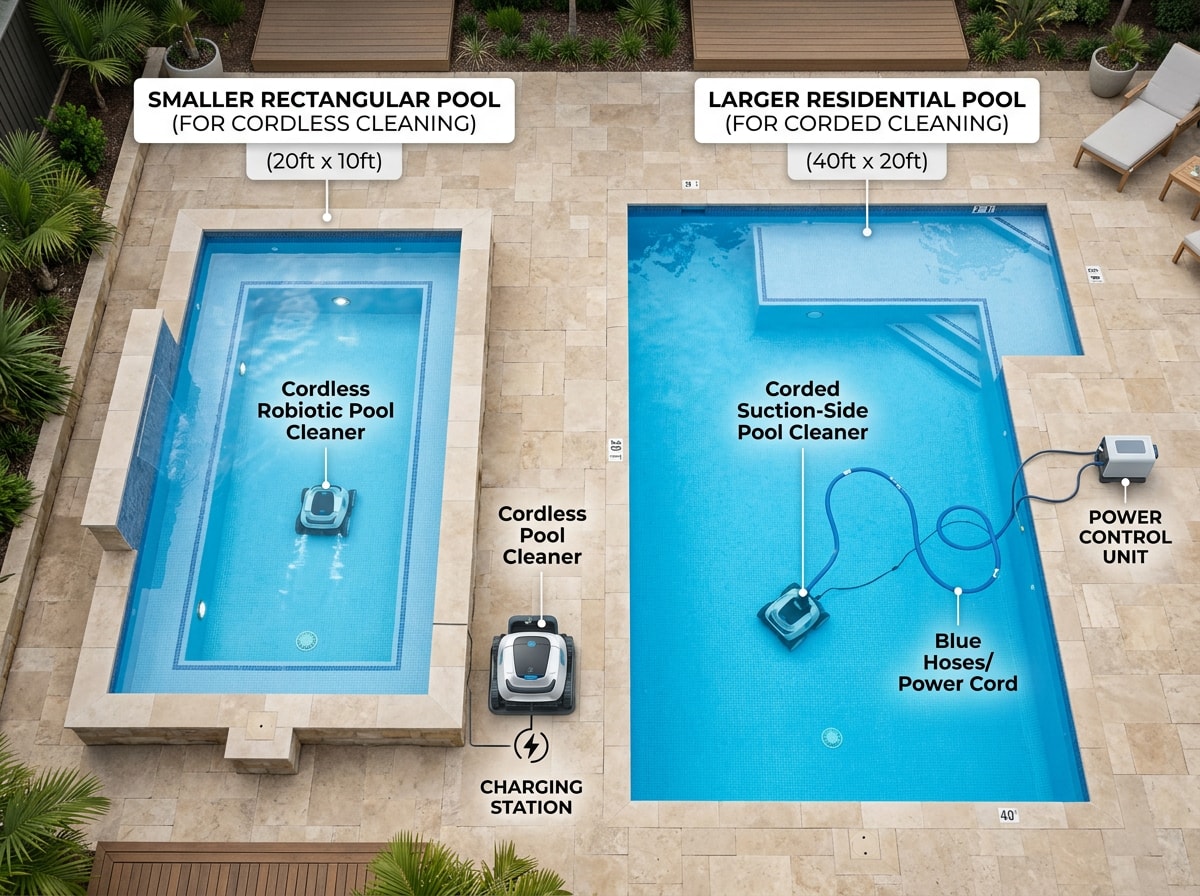
A cordless robot runs on a rechargeable battery with no cable to manage. A corded cleaner plugs into a transformer and draws continuous power, which generally means longer run times but a cord to thread through gates and chairs every session. Suction-side systems are a third, older category that relies on your pool's existing pump.
Winter Park's mix of screened lanai pools and open backyard pools matters here. Screened enclosures block windblown leaves but trap heat and shade, which can favor algae growth in corners a short-cycle cordless robot never reaches. Browse the Swimm Solutions homepage for a look at local pool services before you commit to a specific cleaner.
Pros and Cons of a Cordless Robotic Pool Cleaner
A cable-free pool vacuum offers real convenience: no cord to wrap, no tripping hazard on the deck, and easy portability between a spa and a smaller inground pool. You toss it in, press a button, and walk away.
The trade-offs are worth sitting with before you buy:
- Shorter cycles than most corded models
- Lower suction on budget units
- A battery that is a wear item and will eventually need replacing
Weighing these trade-offs against a corded cleaner really comes down to how much pool you need covered, and how often.
When a Cordless Cleaner Is Worth It
A cordless pool robot earns its keep when your pool is smaller, your outlet is far from the water, or you'd rather run shorter, frequent cleanings than one long weekly cycle. Pools under roughly 32 feet long, above-ground pools, and smaller inground rectangles are the best fit.
These figures shift by manufacturer, so check the current runtime and coverage specs on the model you're considering. An above-ground cleaner built for a 15-foot pool won't necessarily scale to a 30-foot inground one.
Which Pools Are Best Suited for a Cordless Pool Robot?
Pool size is the starting point, but it isn't the whole story. Inground pools in the roughly 650 to 1,075 square foot range are commonly cited as a sweet spot for cordless use, though manufacturer specs vary enough that this range should be treated as a guideline, not a guarantee.
Shape matters just as much as square footage. A narrow lap pool and a wide freeform pool of the same total area can produce very different results from the same cleaner, since navigation patterns and battery drain change with every turn.
Pool Surface and Wall Angle Affect Robotic Cleaner Selection
Surface material changes how well a cordless unit grips and climbs. Vinyl and fiberglass surfaces are smoother and easier on tracks, while gunite or concrete finishes are more abrasive and wear brushes faster over a season.
Steep wall angles test traction, too. Battery-powered units generally have less raw suction than corded models to hold a steep incline. If a fiberglass-rated cleaner advertises full wall-climbing, confirm that claim applies to your pool's actual wall slope, not just a flat test tank.
Cordless Pool Robot Runtime and Battery Life
Advertised runtime is a lab benchmark, not a promise your entire pool gets cleaned on one charge. Real-world coverage depends on pool size, obstacles, and how much floor-versus-wall cleaning you expect in that window.
| Category | Typical runtime | What you get |
|---|---|---|
| Budget cordless | 90–150 minutes |
budget robots land somewhere between 90 and 150 minutes per charge
| Mid-range cordless | 150–180 minutes |
iGarden K36 offers up to 150 minutes of full-pool runtime (220 minutes floor-only) ; Aiper Scuba S1 features a 180-minute runtime and app integration
| Premium cordless | Up to 4 hours |
Beatbot AquaSense 2 is cordless, with smart navigation, obstacle avoidance, a four-hour runtime and four powerful motors
|
Lithium-ion batteries degrade with normal charge cycles. Most manufacturers estimate a usable lifespan of roughly 300 to 500 cycles before capacity noticeably drops, and replacement batteries become a real ownership cost over several years.
Never leave a charging battery unattended for long stretches. General safety guidance from the CPSC advises always being present when charging, and never charging devices while sleeping or away from home , and that principle applies just as well to a pool robot's dock as it does to an e-bike.
Build a Cleaning Mission Budget Before You Buy
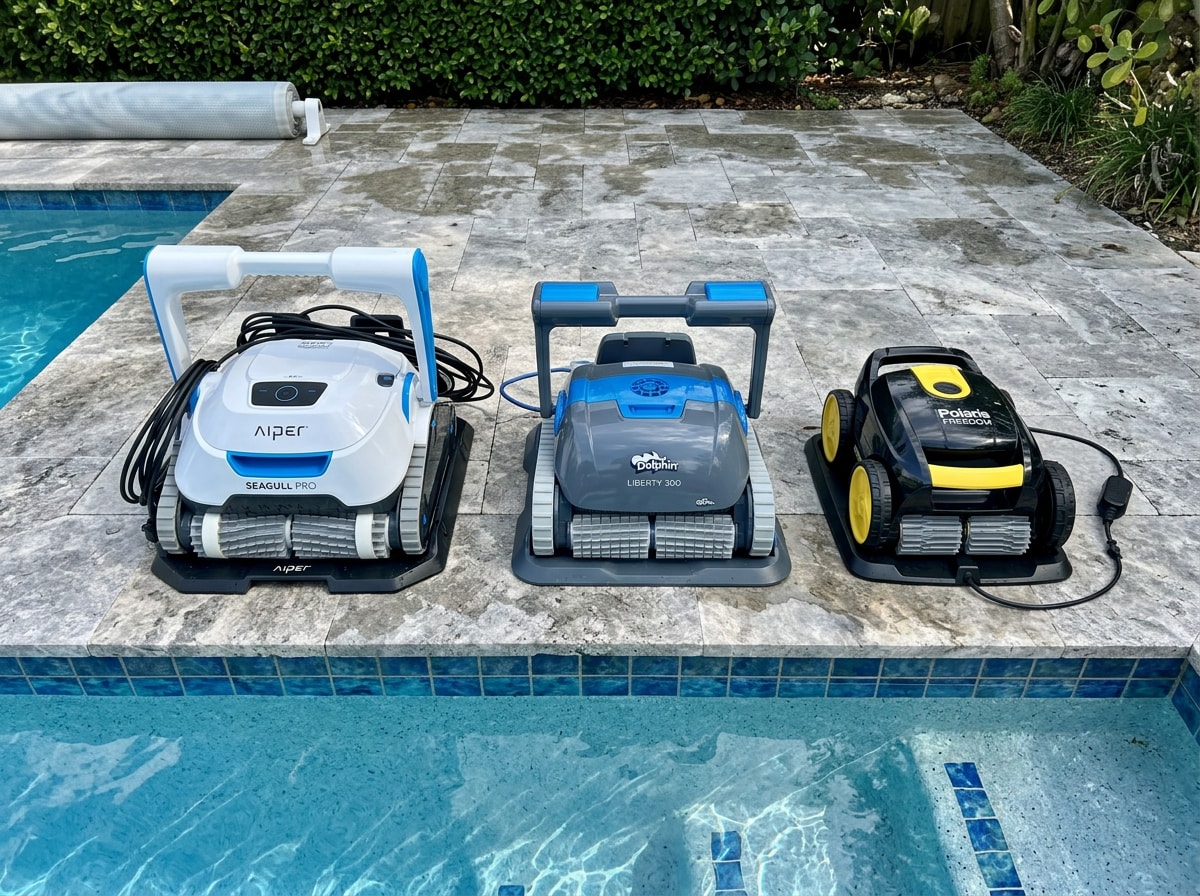
Map your pool's floor, wall, and waterline needs against the unit's verified runtime, not its marketing headline. A pool that needs a full floor pass plus waterline scum removal may need more minutes than a quick floor-only cycle.
If the math doesn't add up to full coverage on one charge, plan on two shorter cycles, or accept partial coverage per session. Buyers who skip this step are the ones most often disappointed that half the pool looks untouched.
How to Choose the Right Cordless Pool Robot (Buying Checklist)
A practical buying decision comes down to four comparison points:
- Filtration quality — finer filters catch more debris but need more frequent rinsing
- Navigation pattern — mapping versus random-pattern affects coverage speed
- Coverage area — match the rated square footage to your actual pool
- Price tier — tiers generally track with battery capacity, filtration grade, and app connectivity
Match the tier to what you'll actually use rather than paying for features your pool doesn't need.
Pool Compatibility & Versatility
Confirm the unit is rated for your pool type. Above-ground and inground cordless models aren't always interchangeable, since above-ground units are often lighter and built for shallower depths. Match the stated maximum pool length and depth to your actual dimensions, and double-check it handles your pool's shape, whether that's a rectangle, kidney, or freeform design.
Ease of Use & Retrieval
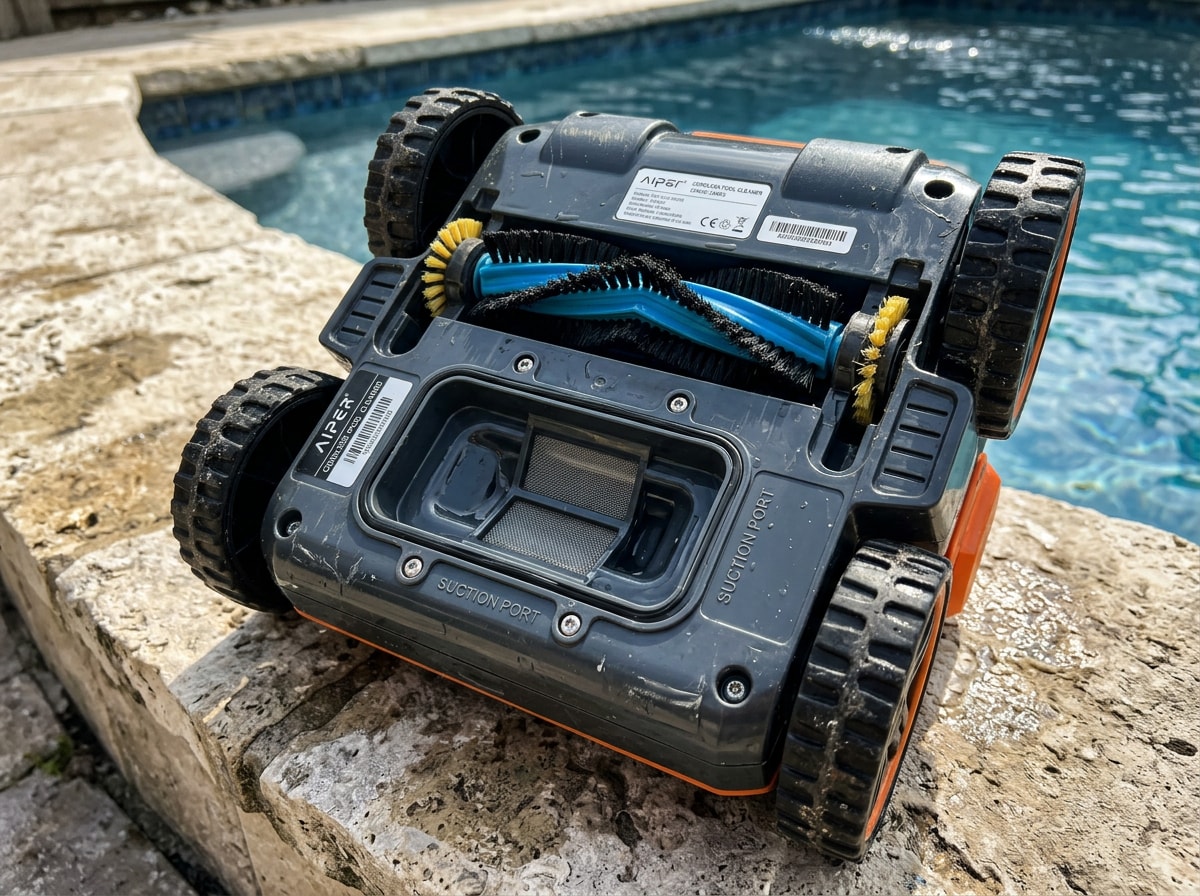
One-button operation, a lightweight body, and a quick-drain chassis make a real difference in whether you'll actually use the robot weekly. Some premium models, like the Polaris Freedom Plus, weigh 20 pounds, which makes it easy to move from a caddy to the pool .
Look for an ergonomic retrieval handle and a filter basket that pops out without tools. A unit that's awkward to lift out of the water tends to get used less often, regardless of how well it cleans.
Ownership Cost, Maintenance & How to Make a Cordless Pool Robot Last Longer
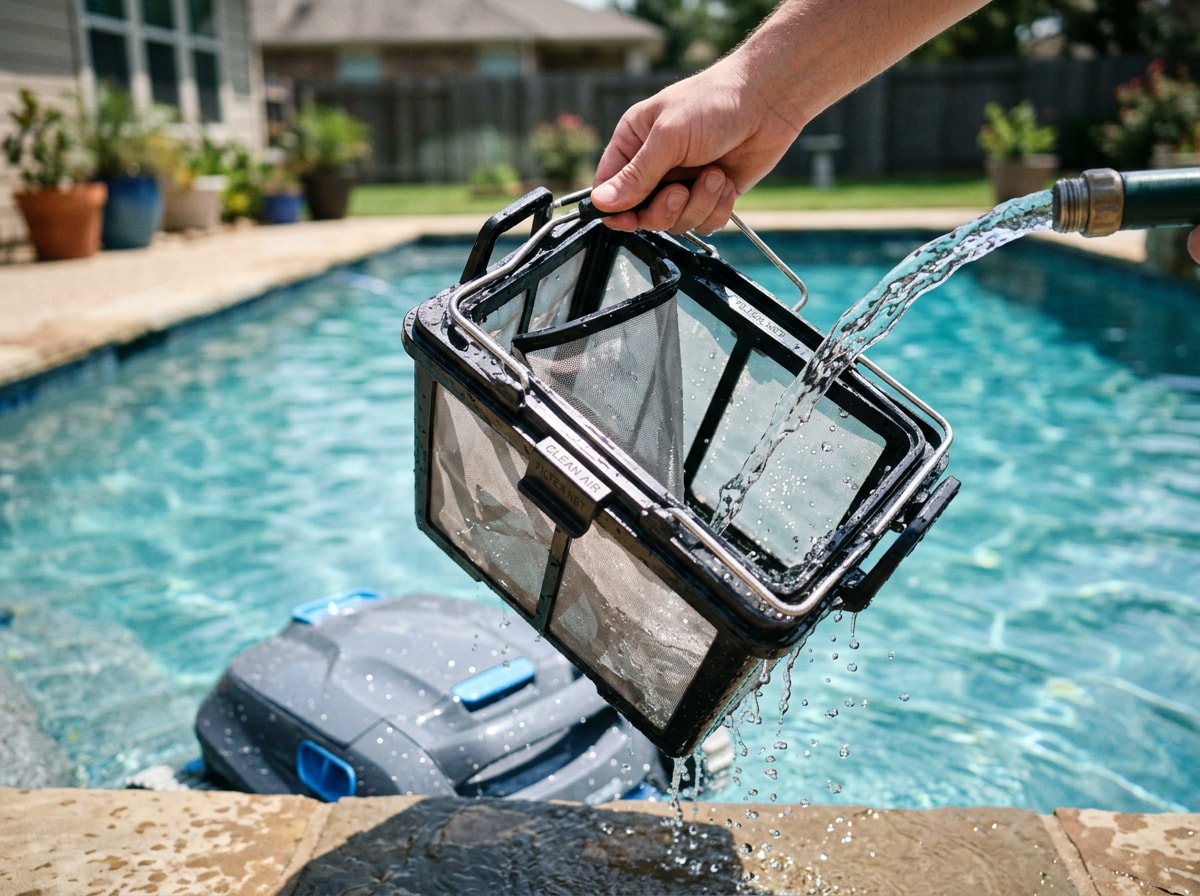
Keeping a cordless robot running well comes down to routine habits: rinse or empty the filter basket after every use, store the unit indoors away from direct sun, and avoid leaving it charging longer than the manufacturer recommends. These line up with the weekly pool maintenance basics the Pool & Hot Tub Alliance recommends: testing water chemistry, brushing walls and floors, and emptying skimmer and pump baskets as part of a normal routine.
Chemical exposure also affects seals and electronics. CDC recommends a pH of 7.0 to 7.8 and a chlorine concentration of at least 1 ppm in pools for normal operation, and running an electronic cleaner while levels are far outside that range isn't worth the risk to the unit's components. Let chemicals circulate and test before dropping any device back in.
In our experience servicing screened pools around Winter Park, oak leaf drop in late winter overwhelms most cordless units within a single cycle. When that happens, a weekly pool cleaning visit or a check from our pool equipment repair team covers the gap until the canopy clears.
Readers in Central Florida can review local service details on the Winter Park, FL page, and pair a cordless robot with a pool repair kit so a torn brush or cracked impeller doesn't take the whole cleaning schedule offline. For broader upkeep, our pool cleaning service page outlines what a professional visit covers versus what a robot handles on its own.
If you're still weighing options, get a free estimate and we'll walk through what fits your pool's size, surface, and shade pattern.
FAQ
Are Cordless Pool Cleaners Worth It Compared to Corded Ones?
It depends on pool size. For pools under roughly 32 feet with easy access, a cordless cleaner is usually worth it. For larger or heavily shaded pools needing longer cycles, a corded model often delivers more reliable full coverage.
How Long Should a Cordless Pool Cleaner Run on One Charge?
Most current models run 90 to 180 minutes per charge, with some premium units reaching up to four hours. Match that runtime against your pool's floor, wall, and waterline needs before assuming one cycle covers everything.
Which Pool Robot Should I Choose: Cordless or Wired?
Choose cordless for smaller pools, portability, and convenience. Choose wired for larger pools, steep walls, or when maximum suction and uninterrupted runtime matter more than cord-free movement.
How Long Does a Cordless Pool Robot Battery Last?
Under normal weekly use, most lithium-ion batteries last roughly two to four years, or about 300 to 500 charge cycles, before performance noticeably declines and replacement becomes worthwhile.
Is a Cordless Pool Robot Worth It Compared to a Weekly Pool Service?
It depends on how much hands-off coverage you want. A weekly pool service runs $150 to $300 per month , so a robot in the few-hundred-dollar range can pay for itself within a season, provided your pool's size and debris load fit what a cordless unit can actually handle.
How Much Does a Cordless Pool Robot Cost?
Entry-level models start under $200, mid-range units with app control and wall-climbing run $300 to $600, and premium four-motor models with multi-hour runtimes can run $900 or more. Price generally tracks with battery capacity and navigation smarts.