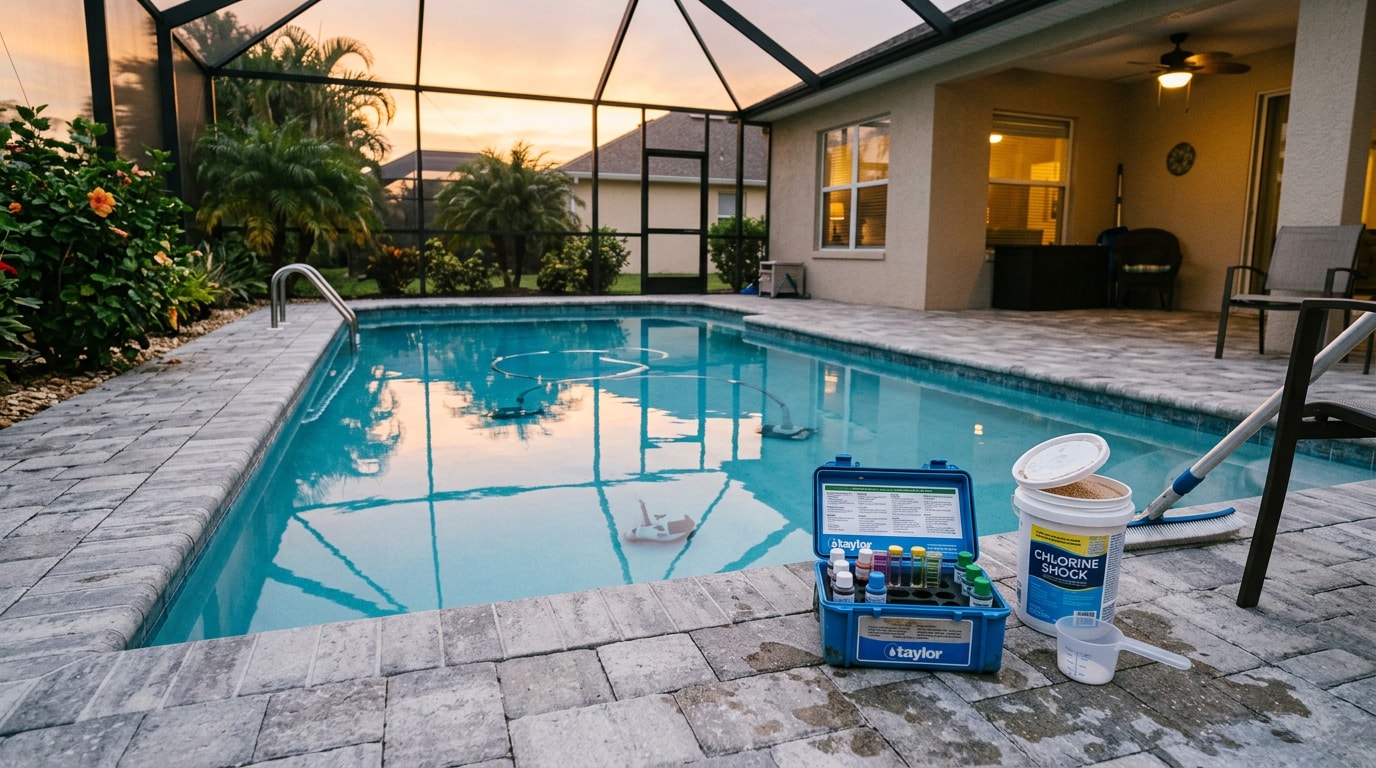
A pool shock calculator for Doctor Phillips pools turns your test strip readings into an exact dose, no guessing required. Between near year-round sun, heavy bather counts, and summer storm runoff, pools in this part of Orange County burn through chlorine faster than most generic dosing charts assume. Here's the math our technicians run on every service call, broken down so you can do it yourself.
How to Calculate Your Pool Shock Dose (4 Inputs)
An accurate shock dose depends on four numbers: pool volume, current chlorine readings, your shocking goal, and the label strength of the product you're using. Once you have those four, the rest is arithmetic.
Confirm Your Pool Volume
Measure length, width, and average depth, then use the formula: Length (ft) × Width (ft) × Average Depth (ft) × 7.5 = Total Gallons . Round or freeform pools need the circular version of that formula instead. A 10% error in gallon estimation creates significant dosage discrepancies , so it's worth measuring twice. If you'd rather not guess, our pool maintenance team can confirm your exact volume on a service visit.
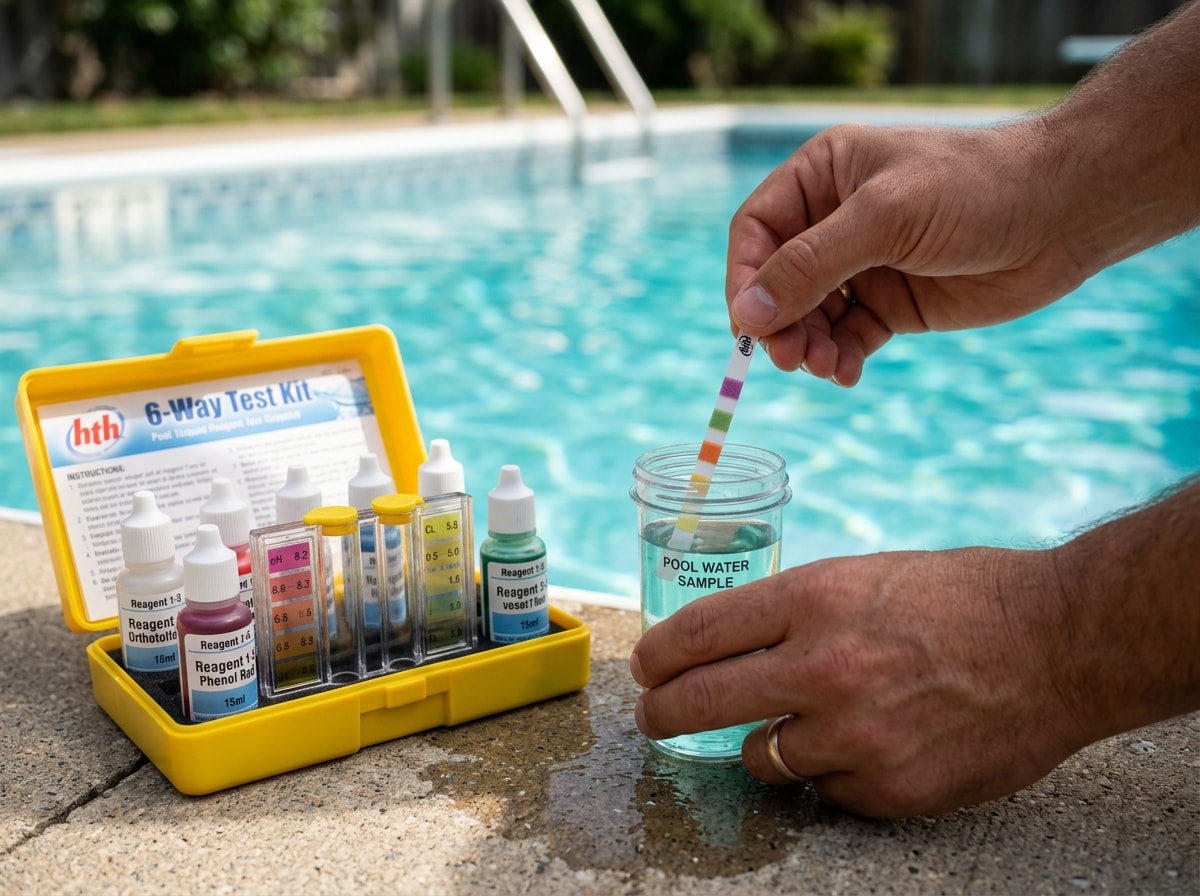
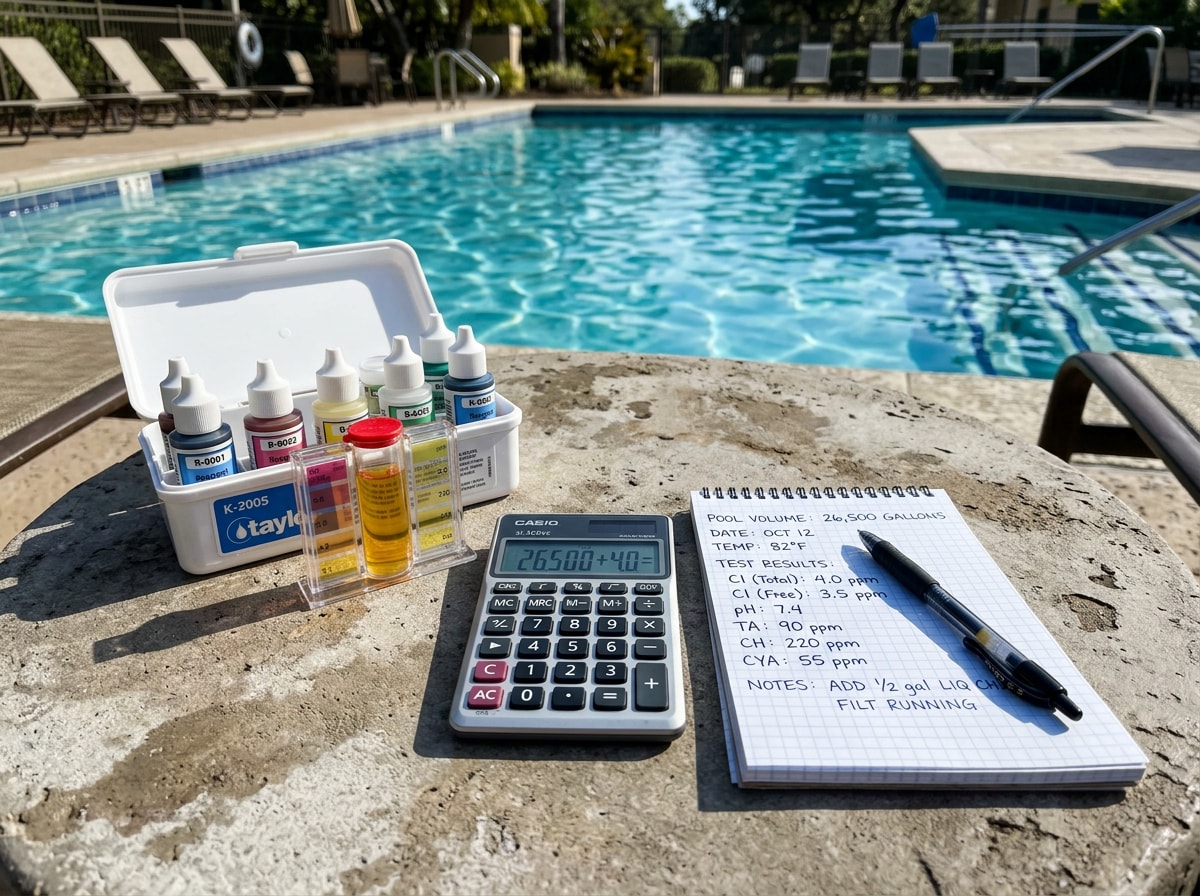
Test Free and Total Chlorine
Free chlorine is the active sanitizer still working in your water. Total chlorine is free plus combined chlorine. Test both with strips or a liquid kit before you calculate anything.
Pick the Shock Goal
Choose routine maintenance shock for weekly upkeep, breakpoint chlorination to clear a chemical odor, or algae recovery shock for green or cloudy water. Each goal changes your target number, and so does one factor most online calculators skip entirely: cyanuric acid. More on that below.
Read the Label Strength
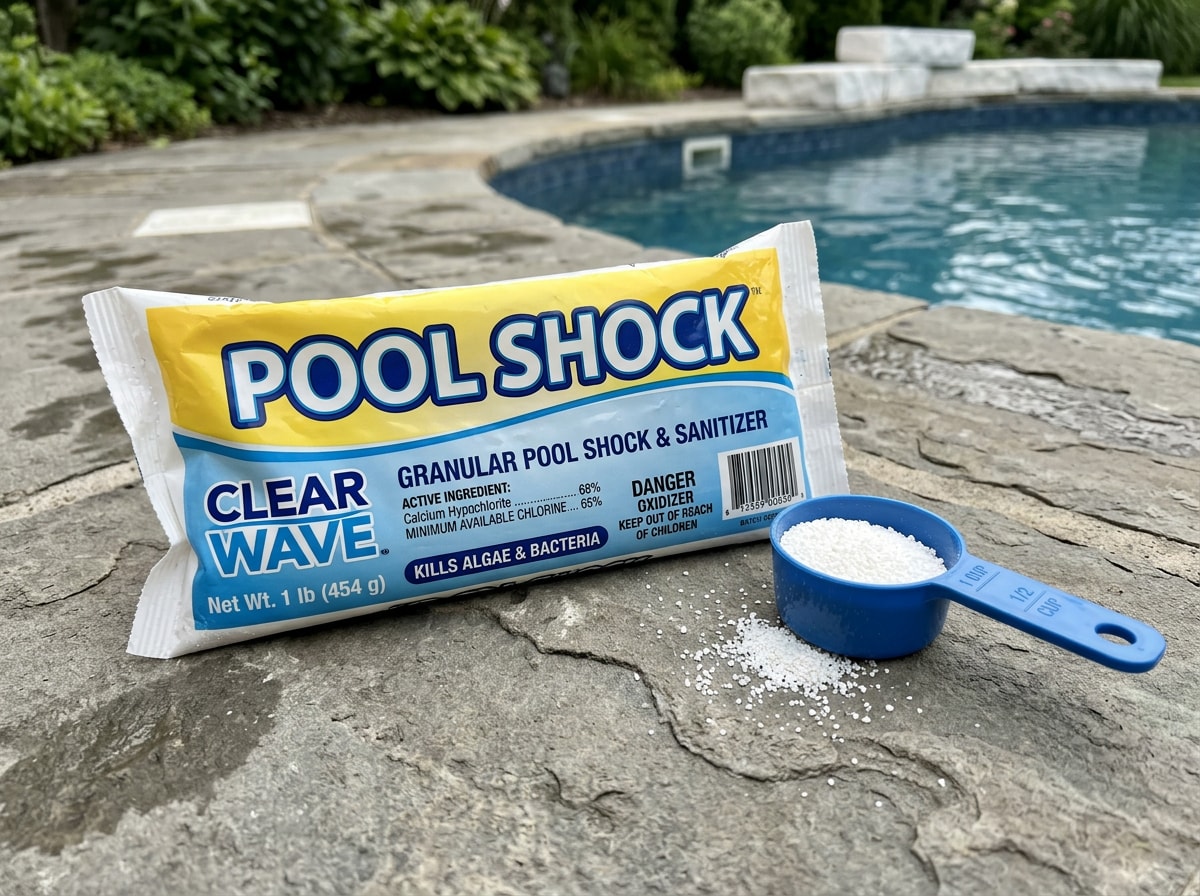
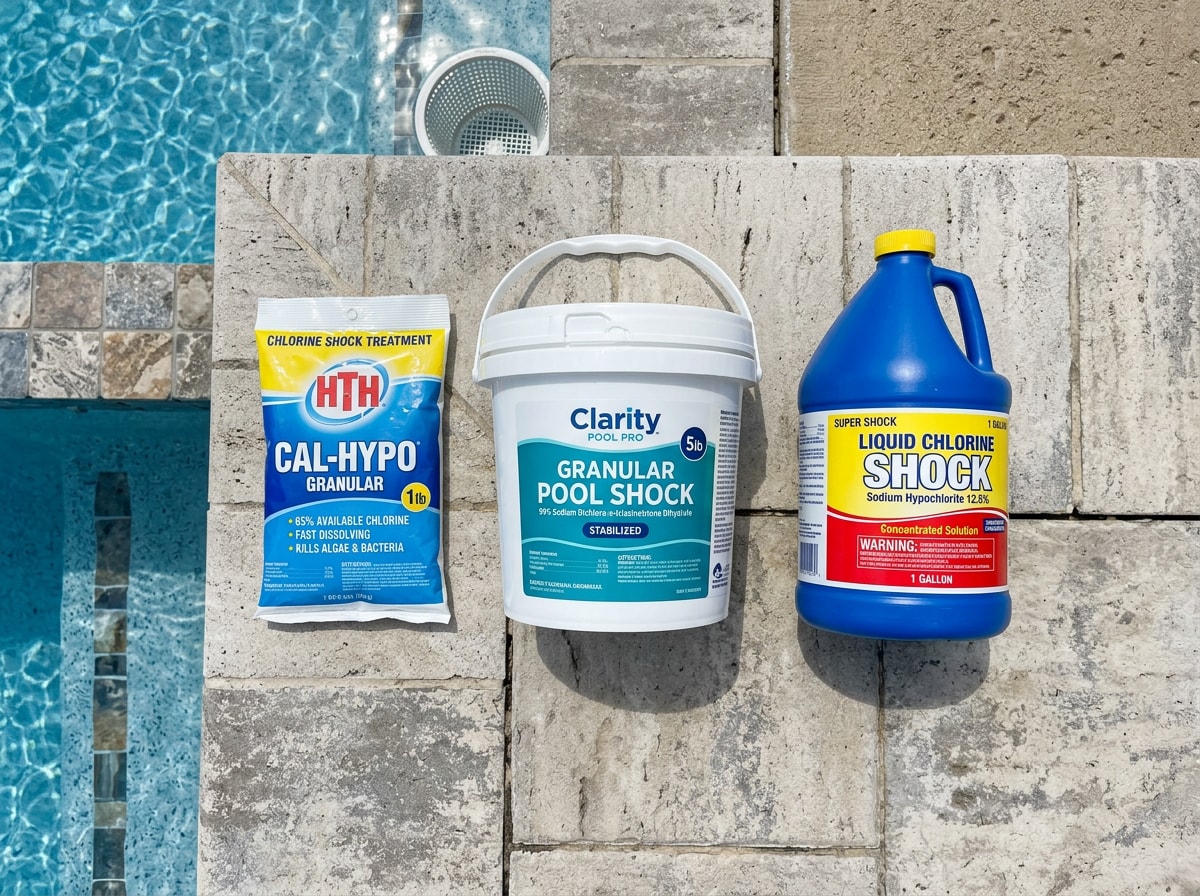
Calcium hypochlorite typically runs 65-75% available chlorine, sodium dichlor 55-62%, and liquid chlorine 10-12.5% . A lower percentage means you need more product to hit the same effective dose.
Worked Example: Dosing a 15,000-Gallon Doctor Phillips Pool
Most of the inground pools we service in this neighborhood run 14,000 to 16,000 gallons, so here's the math for a 15,000-gallon pool with a current free chlorine reading of 1 ppm and a cyanuric acid (stabilizer) level of 40 ppm, a common reading for a pool that's been running trichlor tablets for a season.
A flat "shock to 10 ppm" rule, the kind printed on most shock bags, would call for a 9 ppm increase. But at 40 ppm CYA, 10 ppm of free chlorine barely functions as a sanitizer. Using the CYA-adjusted target covered in the next section, this pool actually needs 16 ppm of free chlorine, a 15 ppm increase.
Pure available chlorine needed is roughly 8.5×10⁻⁶ lb × ppm increase × gallons :
| Target method | FC increase needed | Pure chlorine required | 73% cal-hypo needed |
|---|---|---|---|
| Flat 10 ppm rule | 9 ppm | 1.15 lb | 1.6 lb |
| CYA-adjusted (CYA 40) | 15 ppm | 1.91 lb | 2.6 lb |
Skipping the CYA check here under-doses the pool by about a pound of shock, enough that the chlorine demand from algae or chloramines never actually clears. If running these numbers isn't how you want to spend a Saturday, get a free estimate and we'll test, dose, and balance it for you.
How Cyanuric Acid Changes Your Shock Target
CYA protects chlorine from UV degradation but also reduces its effectiveness, so higher CYA levels require proportionally higher free chlorine levels to achieve the same sanitizing power, using the industry-standard formula Target FC = CYA × 0.4 for routine shocking . A county health department fact sheet on pool chemistry puts it plainly: by forming temporary bonds with free chlorine, cyanuric acid reduces the overall effectiveness of chlorine .
| CYA Level (ppm) | Routine Shock Target FC (ppm) |
|---|---|
| 20 | 8 |
| 30 | 12 |
| 40 | 16 |
| 50 | 20 |
| 60 | 24 |
| 70 | 28 |
If your CYA exceeds 100 ppm, shocking becomes ineffective and expensive , and partial drain-and-refill is usually the only fix. Most Doctor Phillips pools that run on tablets sit in the 40-60 ppm range by mid-summer, which is exactly why a flat 10 ppm target undershoots so often.
Common Shock Doses by Pool Size
Here's a practical reference for a 10,000-gallon pool once you've picked a goal:
| Shock Goal | Cal Hypo (68% available chlorine) | Liquid Chlorine (10-12%) |
|---|---|---|
| Routine maintenance | 1 lb | 1 gallon |
| Breakpoint chlorination | 2-3 lbs | 2-3 gallons |
| Algae/green pool recovery | 4-6 lbs | 4-6 gallons |
Weekly maintenance shocking at about one pound of shock per 10,000 gallons is standard practice for routine upkeep . Algae changes that math fast. Teal green water, a smaller or newer bloom, calls for double shock at two pounds per 10,000 gallons, while dark green water that's had time to establish needs triple shock at three pounds per 10,000 gallons .
These are starting points, not fixed rules. Actual needs shift with CYA, water temperature, and how long algae has been established, which is why the worked example above matters more than a flat chart.
How This Calculator's Math Works
Breakpoint Chlorination and Combined Chlorine
Breakpoint chlorination destroys chloramines by adding enough chlorine to reach 10 times the combined chlorine level, where combined chlorine equals total chlorine minus free chlorine . That sharp "pool smell" people blame on too much chlorine is actually the opposite problem. Chlorine combines with sweat, dirt, and pee to create chemical irritants called chloramines , and if you smell "chlorine" at the place you swim, you are probably smelling chloramines, not the sanitizer itself . Our water chemistry balancing service can confirm your combined chlorine reading if your test kit results look off.
Clearing Algae
Green or cloudy water needs a much larger dose than routine maintenance shock, since algae consumes chlorine rapidly as it dies off. Under-dosing just stalls the cleanup and wastes the shock you already bought.
Non-Chlorine Shock
Potassium monopersulfate oxidizes contaminants without adding chlorine, so swimmers can often return to the water sooner. It doesn't sanitize, though, so it works alongside a chlorine-based residual, not instead of one. If your system uses a salt chlorine generator instead of liquid or granular products, shocking still matters: our pool salt cell guide for Doctor Phillips covers how cell output and shock dosing interact.
Signs Your Pool Needs Shocking
A pool needs shock when free chlorine drops below 1 ppm, water looks cloudy, or a strong chemical odor shows up. Test strips confirm the gap between free and total chlorine fast, telling you whether shock is overdue.
- Free chlorine reads low while total chlorine reads noticeably higher: that gap is combined chlorine.
- Water looks hazy or dull even after brushing and filtering.
- Swimmers complain of eye or skin irritation despite a chlorine reading that looks fine on paper.
5 Steps to Shock a Pool Safely
- Test current free and total chlorine so your numbers are accurate before you calculate anything.
- Calculate the dose using volume, chlorine readings, goal, and label strength.
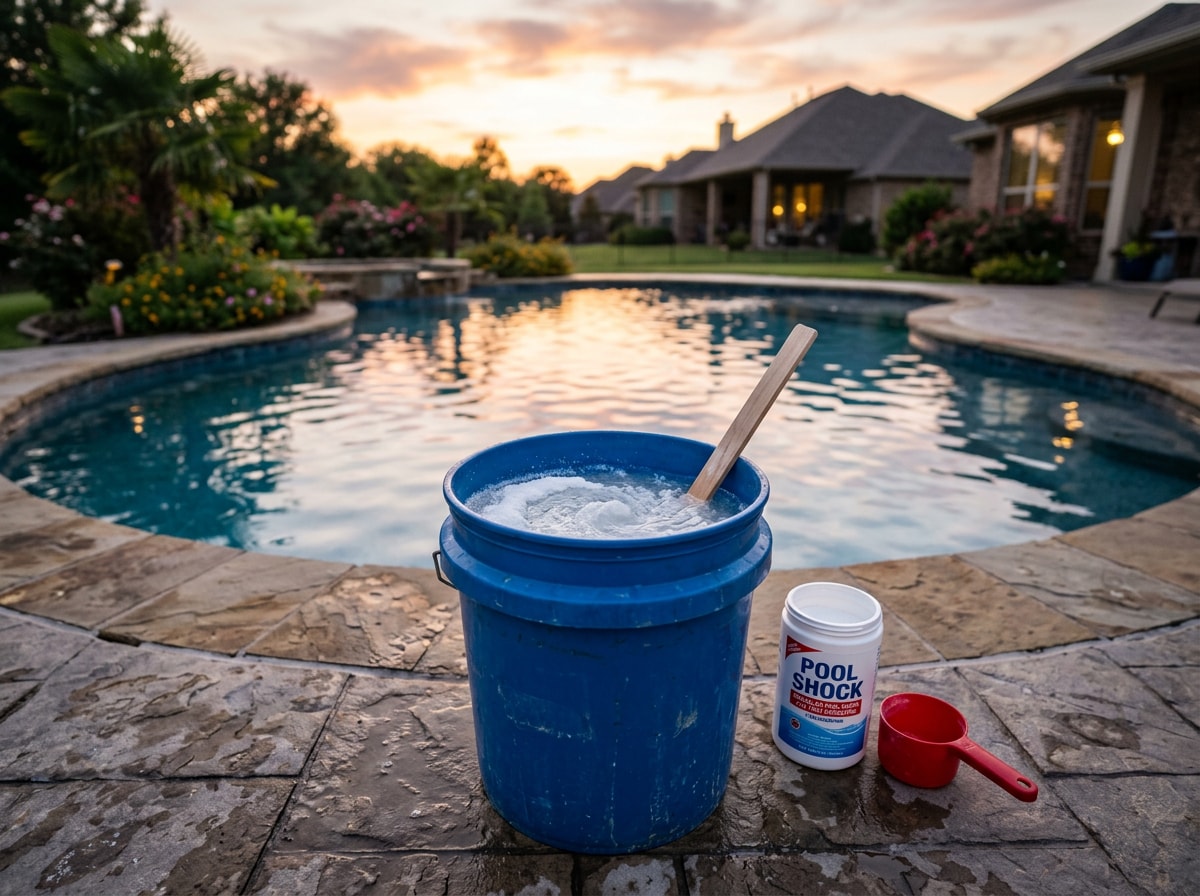
- Pre-dissolve granular shock in a bucket of water only if the label specifically says to.
- Add the dose at dusk, since sunlight burns off unstabilized chlorine quickly.
- Run the filter for several hours and brush the pool to distribute the treatment evenly.
How Often Should You Shock a Pool?
Most residential pools do fine with a weekly or biweekly maintenance shock during swim season. Situational shocking is separate: add it after heavy bather loads, storms, visible algae, or when opening and closing for the season. Our weekly pool cleaning service handles this cadence automatically if testing every week isn't realistic for your schedule.
How Long After Shocking Can You Swim?
There's no fixed wait time. It depends on how fast free chlorine drops back into a safe swimming range. Test before swimming rather than guessing by the clock. A heavy breakpoint dose on a hot Florida afternoon settles slower than a light routine shock on a mild day.
Can You Shock a Pool Too Much?
Over-shocking doesn't clear algae any faster and risks bather eye and skin irritation, bleached liners, and faded pool toys or swimwear. It also wastes chemical cost without real benefit. Sticking to a CYA-adjusted calculated dose beats rounding up "just in case."
Safe Handling and Storage
Always add shock to water, never water to shock, and never mix different pool chemicals in the same container. An EPA chemical safety alert reviews the hazards of swimming pool chemicals and the protective measures pool owners should take to prevent fires, toxic vapor releases, and injuries . For storage specifically, keep the chemical storage area well-ventilated and store each pool chemical separately in a dedicated location . Keep the pump running during and after treatment, and dose at dusk to protect the chlorine from UV loss.
FAQ
What Is Pool Shock?
Pool shock is a concentrated dose of oxidizer, usually chlorine-based, added periodically to break down contaminants and chloramines. It's a much larger dose than the small, steady amount used for daily sanitizing.
How Does Cyanuric Acid Affect How Much Shock I Need?
Higher CYA means you need a higher free chlorine target to get the same disinfecting power. Use Target FC = CYA × 0.4 for routine shocking, and check the table above for common CYA readings.
Is Non-Chlorine Shock Enough on Its Own?
No. Non-chlorine shock oxidizes contaminants but doesn't sanitize the water, so it needs to work alongside a chlorine-based product rather than replace one.
Can I Shock a Pool with Trichlor Tablets?
Trichlor tablets dissolve too slowly and raise cyanuric acid levels over time, making them a poor shock choice. Granular or liquid chlorine delivers a faster, cleaner breakpoint dose.
What Happens If You Put Too Many Chlorine Tablets in a Pool?
Excess tablets build up cyanuric acid, which weakens chlorine's effectiveness over time, and can bleach surfaces or corrode metal fixtures near the feeder or skimmer.
Will Bleach Turn a Green Pool Clear?
Plain, unscented bleach can shock a green pool if dosed at the correct available-chlorine strength for your exact volume. Accuracy matters more than which chlorine type you use.
Running these calculations is straightforward once you have accurate numbers, but accurate testing is where most DIY shock jobs go wrong. If you want a second set of eyes on your readings or just want it handled, Swimm Solutions services pools throughout Doctor Phillips and the greater Orlando area. Get a free estimate and we'll test your water, run the numbers, and get your pool swimmable again.