If you're searching how to get rid of algae in a pool in Apopka, FL, you're probably staring at green or cloudy water right now and want it gone today. Central Florida's heat and humidity turn a light algae film into a full bloom in days, not weeks. Below is the exact brush-shock-filter sequence that clears most residential pools in a single treatment cycle, plus how to tell which algae type you're actually fighting.
How to Get Rid of Algae in Your Pool: Step by Step
The removal process follows the same core sequence no matter which algae type you're dealing with. Severity and algae type change how many rounds you need, not the order of operations.
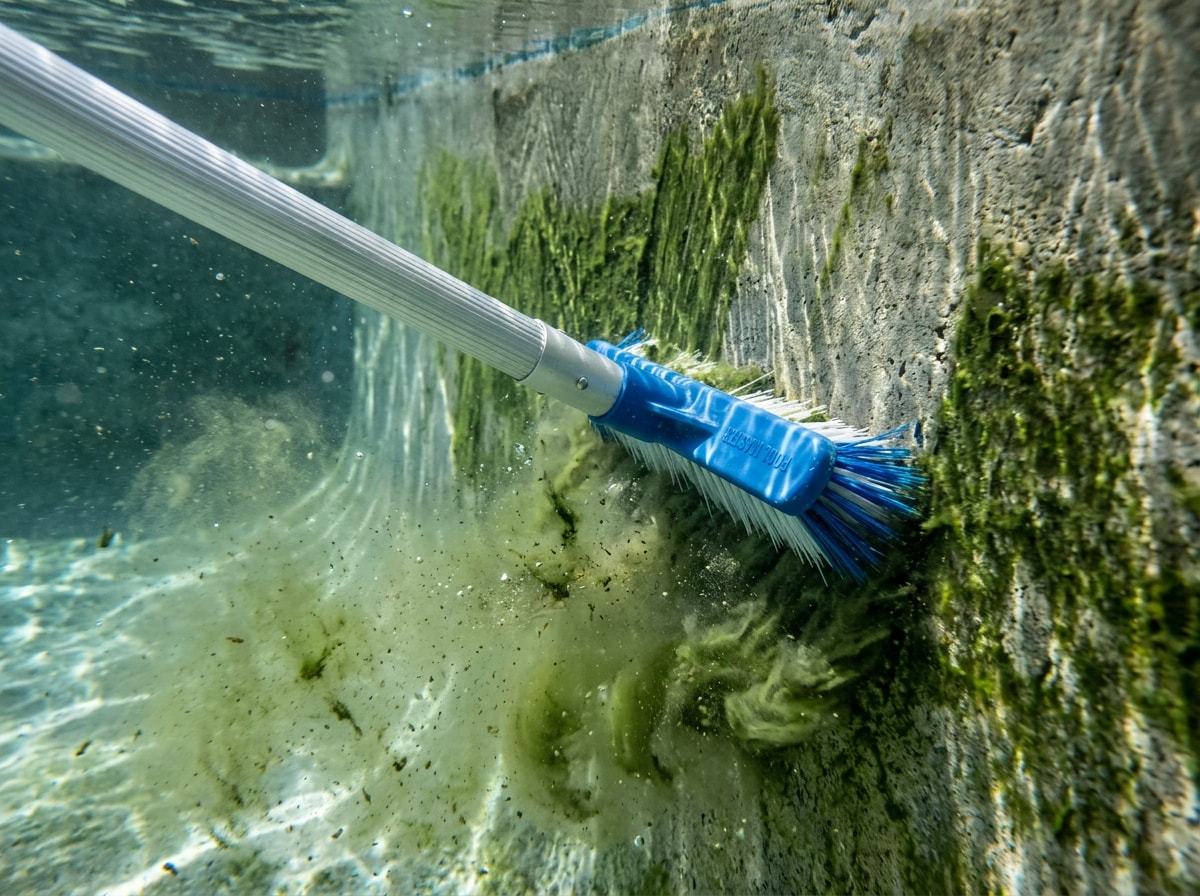
- Brush every surface first. Use a stainless steel brush on plaster or concrete, or a nylon brush on vinyl and fiberglass to avoid scratching. Brush in overlapping strokes to break up the biofilm that chemicals alone struggle to penetrate.
- Vacuum the loosened debris. Skipping this step lets dead algae settle and decompose, which can feed a new bloom even after you've treated the water.
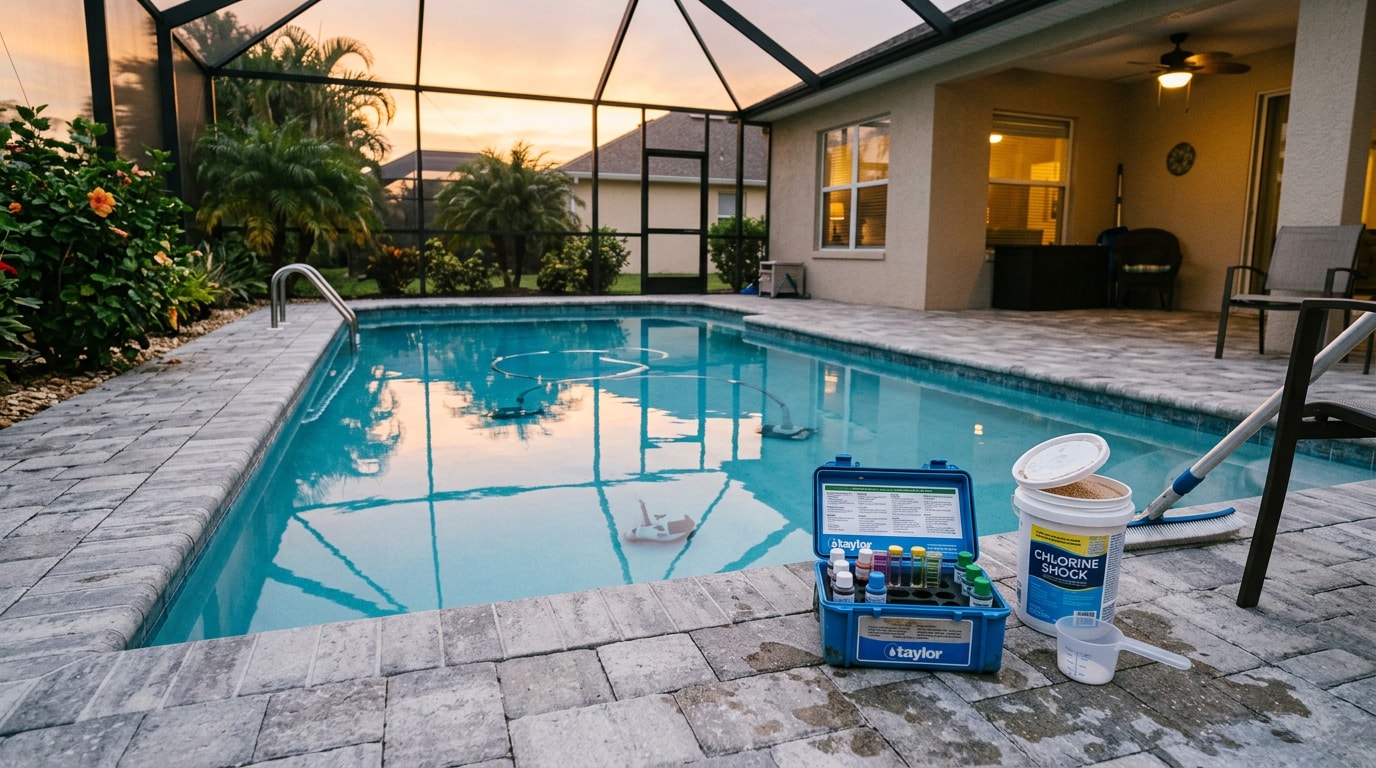
- Test and balance before shocking. Confirm pH and chlorine before adding anything else. Imbalanced pH makes chlorine far less effective at killing algae, even when you're adding plenty of it.
- Shock the pool. A standard chlorine shock dosed to the product label handles most green algae on its own once you've brushed thoroughly. Add shock in the evening to avoid UV burn-off, and hold off on swimming until chlorine drops back into a normal range.
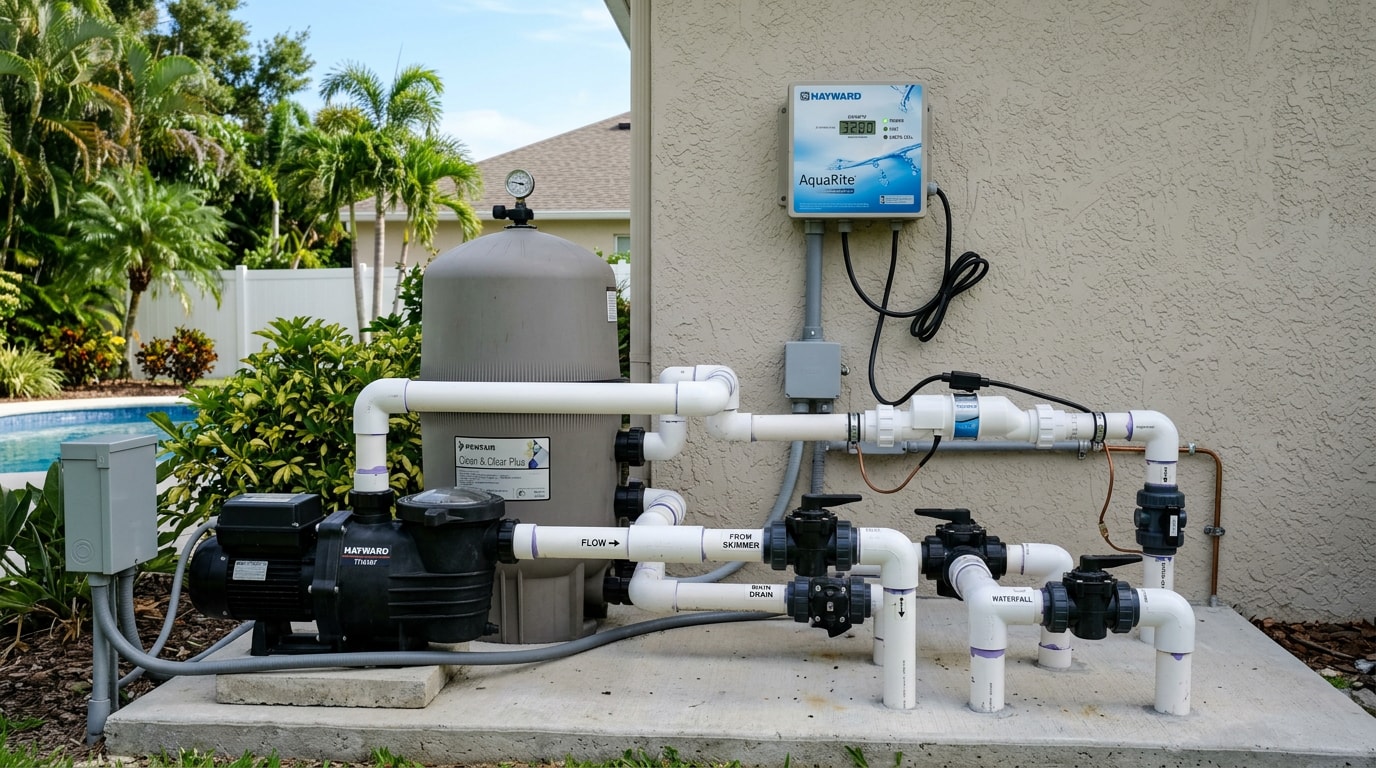
- Run the pump and filter for 24 to 48 hours straight. Continuous filtration pulls dead algae out of the water column before it has a chance to settle back down and cloud the pool again.
- Backwash or rinse the filter, then retest. Dead algae clogs filtration media quickly, and clear-looking water can still carry elevated spore counts if chlorine hasn't stabilized.
Algaecide earns its place as backup for mustard algae, black algae, or blooms that have already returned once. It's not a replacement for brushing and shocking, it's a supplement for the stubborn cases. If you'd rather hand the whole cycle to someone else, schedule a free inspection and we'll walk your pool before you spend money on chemicals you may not need.
Identify Your Algae Type Before You Treat
Treatment depends heavily on which algae species you're dealing with, since each responds differently to chlorine and brushing.
| Algae Type | Appearance | Where It Hides | Typical Clear Time |
|---|---|---|---|
| Green | Cloudy green tint, slick coating | Floor, walls, open water | 24–48 hours |
| Mustard | Sandy, yellow-brown | Shaded walls, corners, filters, toys | 2–4 days |
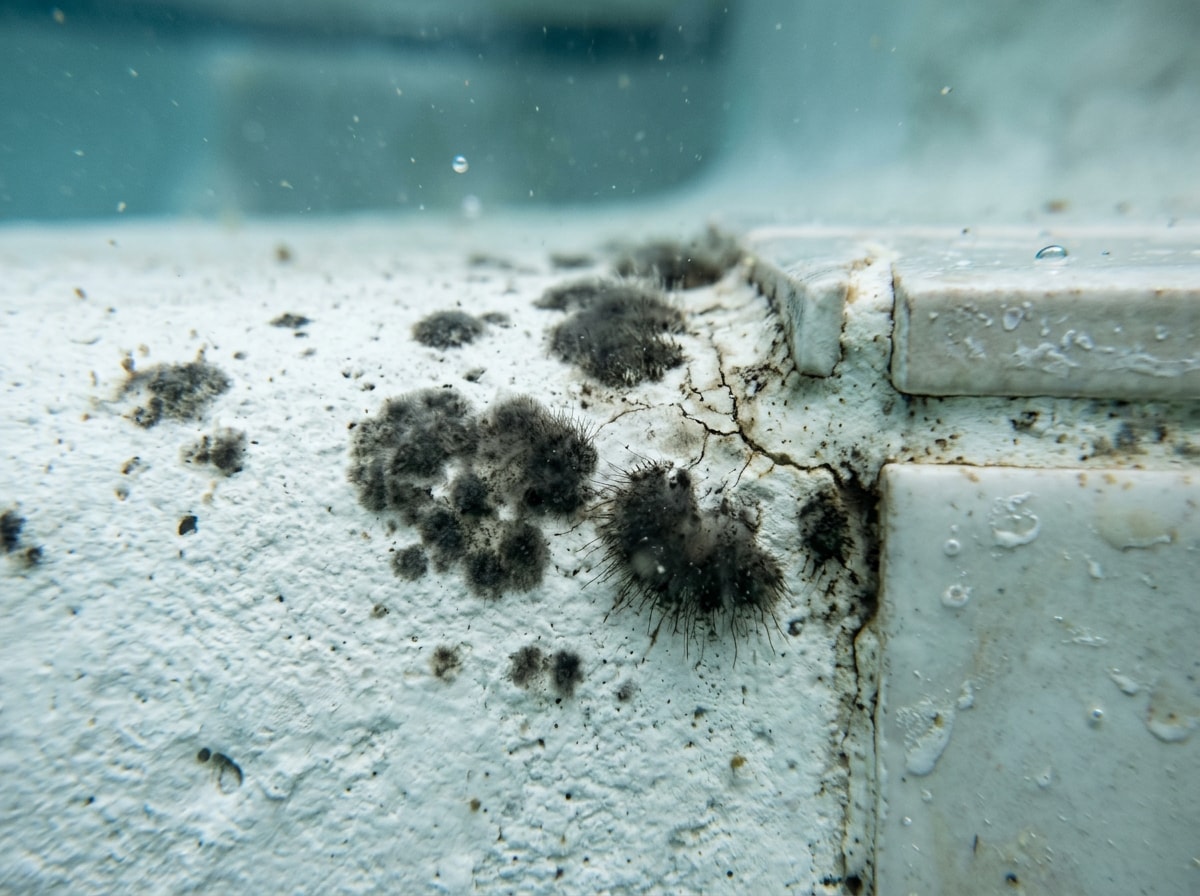
| Black | Dark spots with visible roots | Plaster and grout lines | 5–7+ days |
| White/Floating | Small white clumps | Drifting near the surface | Varies, tied to filtration fix |
Green algae is the most common type in Apopka pools and the easiest to treat, since it has no protective layer. Mustard algae clings to shaded corners and often reappears within days if you don't clean filters, toys, and brushes along with the pool itself. Black algae forms roots that bore into plaster or grout, which is what makes it genuinely resistant to a standard chlorine dose, requiring vigorous brushing before chemicals can reach the roots. White or floating algae usually points to a filtration problem rather than a specific species, since poor circulation lets dead algae and debris accumulate instead of getting filtered out.
Why Apopka Pools Turn Green So Fast
Warm water speeds up photosynthesis, and algae spores use sunlight and heat to multiply quickly once they land in untreated or under-chlorinated water. Apopka's subtropical climate keeps pool water warm most of the year, giving algae spores far more opportunity to establish than they'd get in cooler climates.
There's a local wrinkle here most national pool guides never mention. Apopka sits next to Lake Apopka, a water body with a well-documented algae history: runoff from agriculture, sewage and even a peat mine led to the lake's first major algae bloom in the late 1940s , and the lake was considered one of Florida's most polluted for decades afterward. That history is a reminder that this area's soil, stormwater, and fertilizer runoff carry real nutrient loads, the same phosphates and nitrates that feed pool algae once they wash into a backyard pool during Central Florida's rainy season.
Algae do more than make a pool look uninviting, either. The most common swimming-related illnesses are diarrhea, skin rashes, swimmer's ear, pneumonia or flu-like illness, and irritation of the eyes or respiratory tract , and cloudy or discolored water is one of the warning signs health officials point to. Avoid unusually cloudy water. Cloudy water can be a warning that there are more germs in the water than normal. Clear, balanced water isn't a cosmetic upgrade, it's the baseline for safe swimming.
The earliest sign is usually a faint green or yellow tint along the walls, or steps that feel slightly slippery before any color change is obvious. Test and treat at that first sign. Waiting even a day or two can turn a light tint into a full bloom that takes far longer to clear.
Removing Algae from Specific Pool Areas
Algae doesn't distribute evenly through a pool. Floors, walls, saltwater systems, and the surface each need a slightly different approach.
- Pool floor: Settled algae usually needs a direct vacuum-to-waste pass rather than filtering it back through the system, since that just recirculates spores. Follow with floor-focused brushing in small sections.
- Pool walls: Wall algae collects in corners, behind ladders, and along steps where water movement is weakest. Brush at an angle that follows the wall's texture, which dislodges more per pass than straight up-and-down strokes.
- Saltwater pools: Don't overdrive your salt cell to compensate. That can damage the cell without boosting chlorine output fast enough. Add liquid chlorine manually to reach shock levels while the cell keeps running its normal production.
- Floating white algae: Skim clumps off the surface by hand or net before they reach your filtration system, then pair that with a filter inspection since this type usually signals a circulation issue, not a chemistry gap.
For homeowners managing a chlorine generator, our Pool Salt System page covers the maintenance specifics worth understanding before your next algae event. And if your water chemistry keeps drifting no matter how often you test, our Water Chemistry Balancing service digs into what's actually causing the swing.
How Long Does It Take to Get Rid of Algae?
Light green algae typically clears within 24 to 48 hours of brushing, shocking, and running the filter continuously. Mustard algae usually takes two to four days because of the extra brushing and repeated treatment it requires. Black algae and severe, long-neglected blooms can stretch past a week, particularly if filtration equipment needs cleaning along the way.
DIY or Call a Pro? When Algae Is Beyond a Weekend Fix
Most light-to-moderate blooms respond well to the steps above. A few signals mean it's time to call in help instead of running another treatment cycle on your own:
- Algae returns within a few days despite proper brushing and balanced chemistry, which usually points to a filtration or circulation problem rather than a chemistry issue.
- Black algae has spread extensively into plaster or grout and needs professional-grade treatment to eliminate the roots. Our Acid Washing Services page covers what that process involves for surfaces that brushing alone can't reach.
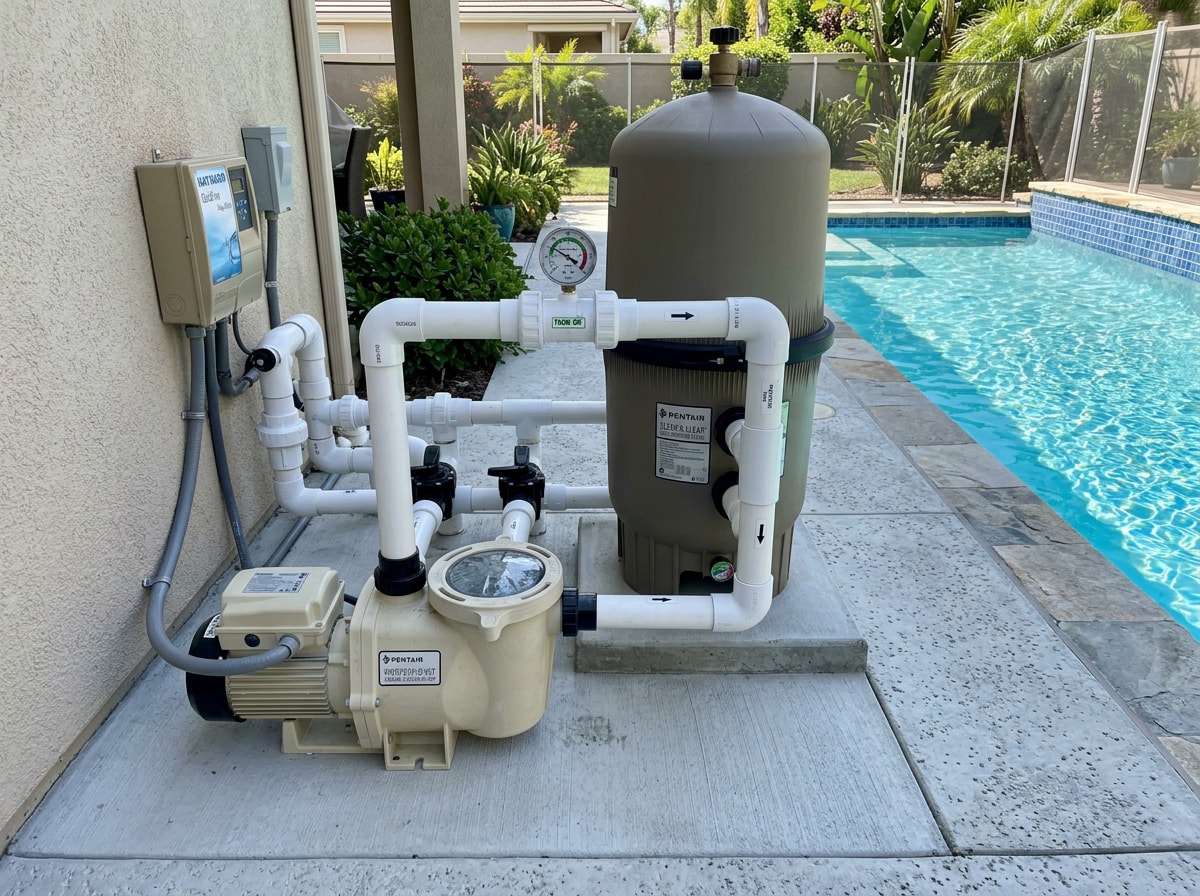
- Pump, filter, or salt cell performance issues show up alongside the algae. Those mechanical problems need diagnosis before more chemical treatment will stick.
Our Green Pools and Green To Clean services outline what a professional green-to-clean turnaround typically involves if your pool has reached that point. Schedule a free inspection and we'll tell you honestly whether it's a weekend DIY job or something that needs equipment-level attention.
Best Ways to Prevent Future Algae Growth
Clearing algae once is only half the work. Keeping it from coming back means building a few habits into your routine.
- Keep chlorine and pH stable. Test two to three times a week, more during peak summer, since Florida's heat burns off chlorine faster than milder climates allow. Before you treat anything, confirm your actual readings with a reliable local water-testing routine rather than guessing.
- Optimize circulation. Run your pump long enough each day to turn over the full pool volume at least once, typically 8 to 12 hours depending on pump and pool size. Clean filters regularly so dead zones don't become the spot where algae gets its first foothold.
- Brush and vacuum weekly. Focus on corners, steps, and shaded walls where spores colonize first.
- Use algaecide strategically, not reactively. A light, regular preventive dose during the hottest months beats waiting until algae appears. A pool cover also limits the sunlight-driven growth that fuels blooms when a pool sits unused for a few days.
- Manage phosphates. Fertilizer runoff, decaying leaves, and other organic matter all introduce phosphates into pool water, and
when additional phosphorus becomes available to the aquatic system, it stimulates the growth of algae and other aquatic plants , which applies directly to a backyard pool even when chlorine levels look fine on a test strip. Phosphate removers strip out that food source, making it harder for new spores to establish.
- Check your chemistry after storms. Central Florida's rainy season washes fertilizer, pollen, and organic debris straight into open pools. Schedule a chemistry check and light brushing within a day or two of any heavy rain.
A consistent weekly routine folds most of this into one visit instead of six separate chores. Our Weekly Pool Cleaning and Pool Maintenance plans are built around exactly this cycle for Apopka homeowners who'd rather not track it themselves. You can see the full range of what we cover at Swimm Solutions if you're comparing options before committing to a plan.
FAQ
How do you get rid of algae in pool water?
Brush all surfaces to break up algae colonies, vacuum the debris, test and balance pH and chlorine, then shock the pool and run the filter continuously for 24 to 48 hours. Retest before considering the job done. This sequence handles the vast majority of green algae cases within a day or two.
How to shock a pool?
Check the product label for dosing based on your pool's volume, then add the shock in the evening to prevent sunlight from burning off the chlorine too quickly. Run the pump immediately afterward and keep it running for several hours to distribute the chemical evenly. Wait until chlorine levels return to a safe swimming range before letting anyone back in the water.
Will Dawn dish soap remove algae?
Dish soap doesn't kill algae. It can sometimes help break the surface tension on floating algae, but it does nothing to address the spores causing the bloom and can add foam and residue to your filtration system. Proper brushing, balanced chemistry, and chlorine shock are the tools that actually work.
What kills algae better, chlorine or algaecide?
Chlorine is the primary algae killer and handles light, fresh green algae on its own when dosed and balanced correctly. Algaecide adds value as a supplement for mustard algae, black algae, or recurring blooms where chlorine alone hasn't fully worked. Neither replaces the other. They work best together for stubborn cases.
Should I drain my pool to get rid of algae?
Draining is rarely necessary and should be treated as a last resort after brushing, shocking, and filtration haven't worked. Full drains carry real risks, including pool wall damage from groundwater pressure and the added cost of refilling and rebalancing an entire pool. If a weekend of treatment hasn't moved the needle, our Green To Clean service is worth a look before you consider draining.
Will pool algae go away on its own?
No. Algae feeds on nutrients like phosphates and nitrates and multiplies as long as chlorine stays low, so an untreated bloom gets worse, not better, especially in Apopka's heat. Brushing, shocking, and continuous filtration are what actually clear it.