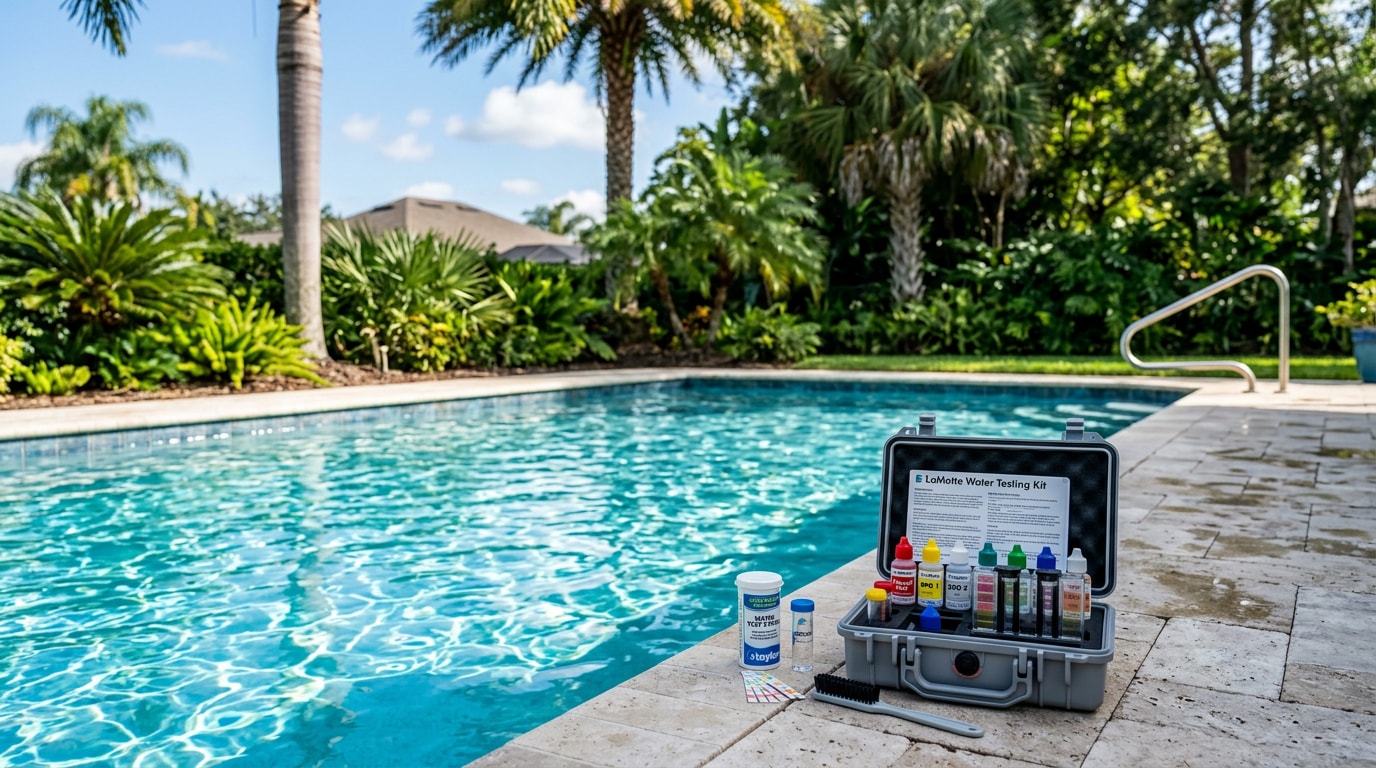
A pool water tester in Apopka, FL needs to check more than the usual chlorine and pH. Well water minerals and runoff from Lake Apopka change what a technician should be testing for and how often. Here is what that testing actually looks like on Apopka pools, neighborhood by neighborhood.
What a Professional Pool Water Tester Checks
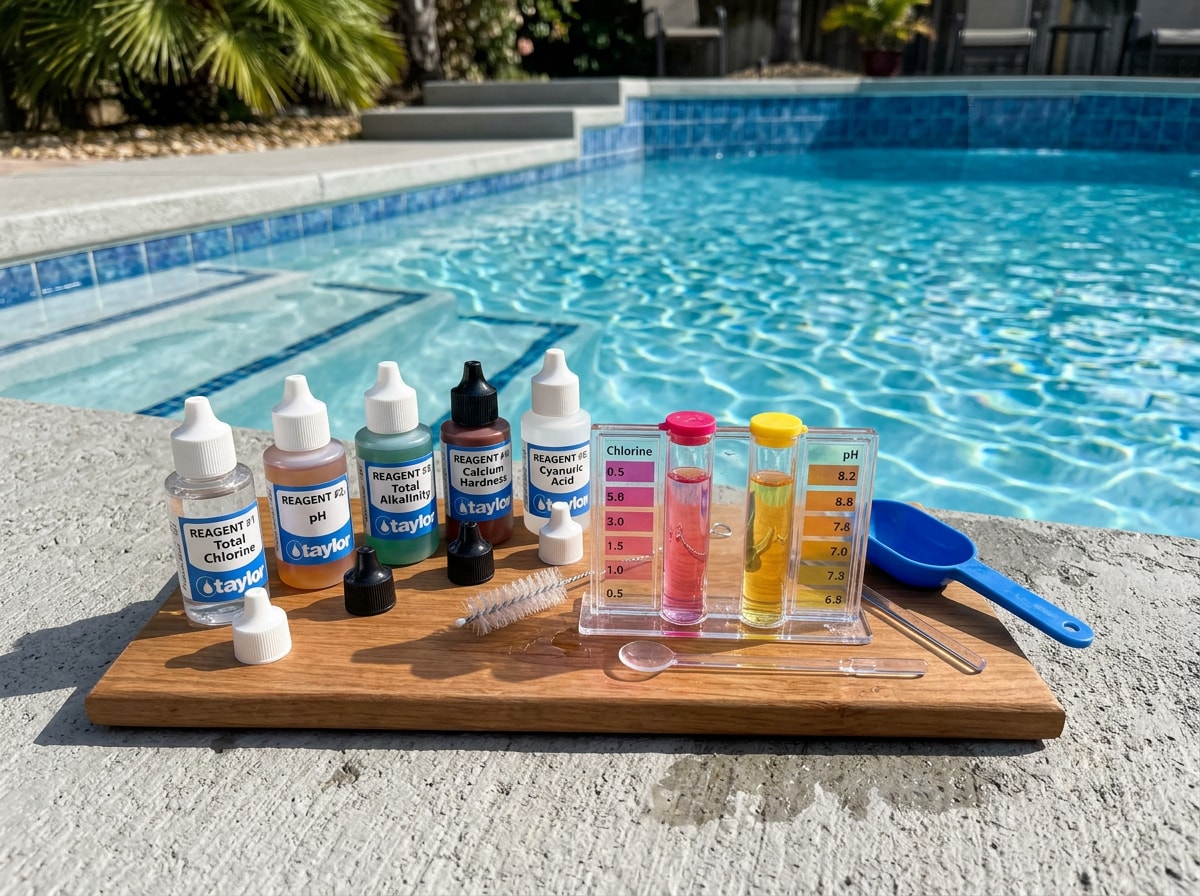
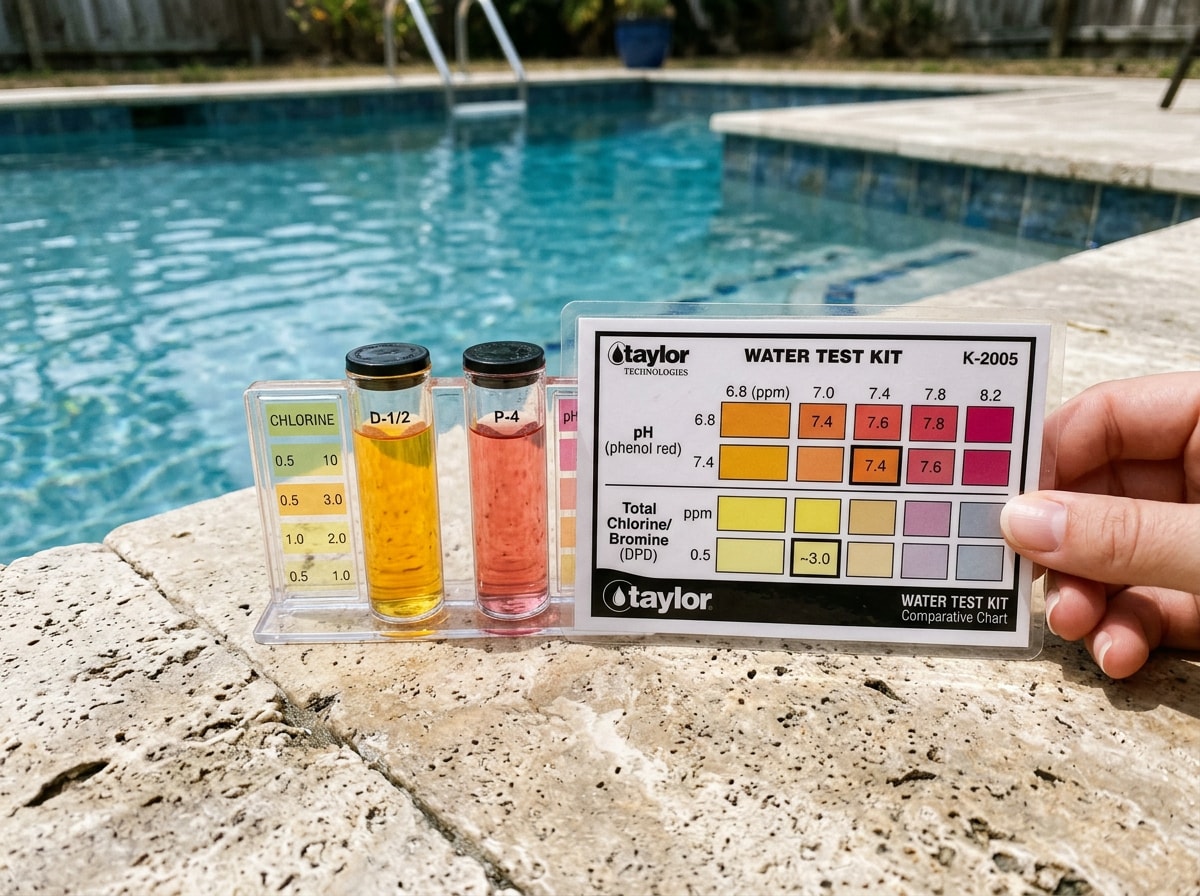
A real water test goes past a quick strip dip. Technicians using lab-grade reagents check:
- Free chlorine – the active sanitizer killing bacteria and algae
- pH – controls how well that chlorine actually works
- Total alkalinity – keeps pH from swinging after rain or heavy use
- Calcium hardness – prevents scaling or plaster etching
- Cyanuric acid (CYA) – the stabilizer that protects chlorine from sun breakdown
- Phosphates – an algae food source that chlorine readings won't flag on their own
Home test strips estimate these same numbers but with a much wider margin of error, which is why a strip can read "fine" the week before a pool turns green.
Why Apopka Pool Water Needs Different Testing Than Other Cities
Apopka sits on private well water in large sections of the city, and parts of town border Lake Apopka directly. Both factors change the testing checklist.
Well water across Central Florida commonly carries dissolved iron and manganese, minerals that stain plaster and turn water rust-colored once they oxidize. The EPA's secondary drinking water standard for iron is 0.3 mg/L, above which water develops a noticeably rusty or discolored appearance . Pools filled or topped off from a well that exceeds that threshold will show staining long before a chlorine reading ever looks abnormal.
Homes closer to the lake also deal with elevated background phosphate from fertilizer and organic runoff, which feeds algae growth even when chlorine tests normal. In our service visits around Kelly Park Crossing and Rock Springs Ridge, pools with "perfect" chlorine numbers have still turned cloudy within days because nobody was checking phosphate levels.
| Factor | Well-Water Pools | Municipal-Water Pools |
|---|---|---|
| Iron & Manganese | Often elevated; causes rust staining | Pretreated; typically minimal |
| Phosphate | Can spike after lake-area runoff | Lower, more consistent baseline |
| Calcium Hardness | Frequently high; scaling risk | Moderate and stable |
For more on how Central Florida groundwater affects home systems, the Florida Well Owner Network provides education and support resources for private well owners through UF/IFAS Extension.
How Often Should You Test Pool Water in Apopka?
Testing frequency depends on your water source and how much the pool gets used.
- Chlorine and pH: 2 to 3 times a week during swim season
- Total alkalinity: weekly
- Calcium hardness and CYA: monthly
- Iron, manganese, and phosphate (well-water pools): every service visit
As a residential pool owner, the CDC notes it is your responsibility to regularly check the chlorine concentration and pH of the water to help protect swimmers from illness . The agency's current guidance recommends pH between 7.0 and 7.8 and a chlorine concentration of at least 1 ppm in pools . Test more often after heavy rain, a pool party, or any time you add new chemicals.
DIY Test Strips vs. Professional Water Testing
Test strips are fine for a quick between-visit check. They are not a substitute for a technician using liquid reagents and a calibrated kit, especially on a well-water pool where iron and phosphate matter as much as chlorine.
| Test Strips | Professional Testing | |
|---|---|---|
| Chlorine/pH accuracy | Rough range, color-match only | Precise reagent-based reading |
| Checks iron/manganese | No | Yes, on well-water pools |
| Checks phosphate | Rarely | Yes |
| Documentation | None | Visit report with readings/photos |
Swimm Solutions technicians log every reading on a visit report, so you can see the exact numbers instead of guessing from a color chart. Get a free estimate and we'll walk through your pool's specific test schedule.
Apopka Pool Chemical Balancing Services
Once a test flags an imbalance, correcting it is its own skill. Overcorrecting pH or shocking a pool with the wrong dose creates new problems, like cloudy water or bleached liners. Our water chemistry balancing service handles that adjustment at the same visit as testing, so readings don't sit out of range for a week waiting on a follow-up trip.
Most ongoing pool maintenance plans bundle testing with skimming, brushing, and filter checks, since a dirty filter throws off water clarity even when the chemistry reads fine. For pools that need a standing schedule rather than one-off visits, weekly pool cleaning covers both.
Specialized Pool Services We Offer in Apopka
Beyond routine testing, several Apopka-specific issues come up often enough to warrant their own service line:
- Equipment repair for pumps, heaters, and automation systems strained by hard well water
- Equipment upgrades, including variable-speed pumps that handle mineral buildup better than older single-speed models
- Stain and scale treatment for plaster affected by iron or calcium
- Algae and phosphate remediation for lake-adjacent properties
See our pool equipment repair and pool equipment upgrade pages for details on either. For a deeper look at the chemistry side of water balance, our guide on pool chemistry in Oviedo, FL covers the same core numbers in more depth.
Apopka Pool Service by Neighborhood
Testing needs shift slightly by micro-area. Homes in Kelly Park Crossing and Rock Springs Ridge tend to deal with well-water mineral issues first. Properties along SR-429, US-441, and communities closer to the lakeshore see more phosphate and algae pressure instead.
Swimm Solutions services all of Apopka, FL, along with the surrounding Central Florida area. Visit our homepage for the full list of services, or see our Apopka, FL area page for neighborhood-specific coverage details.
FAQ
How much does professional pool water testing cost in Apopka?
Standalone testing is usually bundled into a maintenance or balancing visit rather than billed separately. Contact us for a free estimate based on your pool size and water source.
How often should you test pool water in Apopka, FL?
Test chlorine and pH 2 to 3 times weekly, alkalinity weekly, and calcium hardness or CYA monthly. Well-water pools should also get iron and phosphate checked at every visit.
Can I just use test strips instead of hiring a professional?
Strips work for a quick mid-week check but miss iron, manganese, and phosphate, the three readings that matter most on Apopka's well-water pools. A professional test catches imbalances strips won't show.
Does Apopka's well water really affect pool chemistry?
Yes. Well water common to the area often carries dissolved iron and manganese that stain plaster, and the EPA's own secondary standard for iron (0.3 mg/L) marks the point where discoloration becomes visible.
Is Apopka within your standard service area?
Yes. Apopka is part of our standard coverage area, with weekly cleaning, water testing, and chemical balancing available throughout most neighborhoods.
What happens if my pool chemistry stays unbalanced?
Unbalanced water accelerates algae growth, stains plaster and tile, and corrodes pump and heater components over time. Catching imbalances early through regular testing is far cheaper than repairing the damage after the fact.