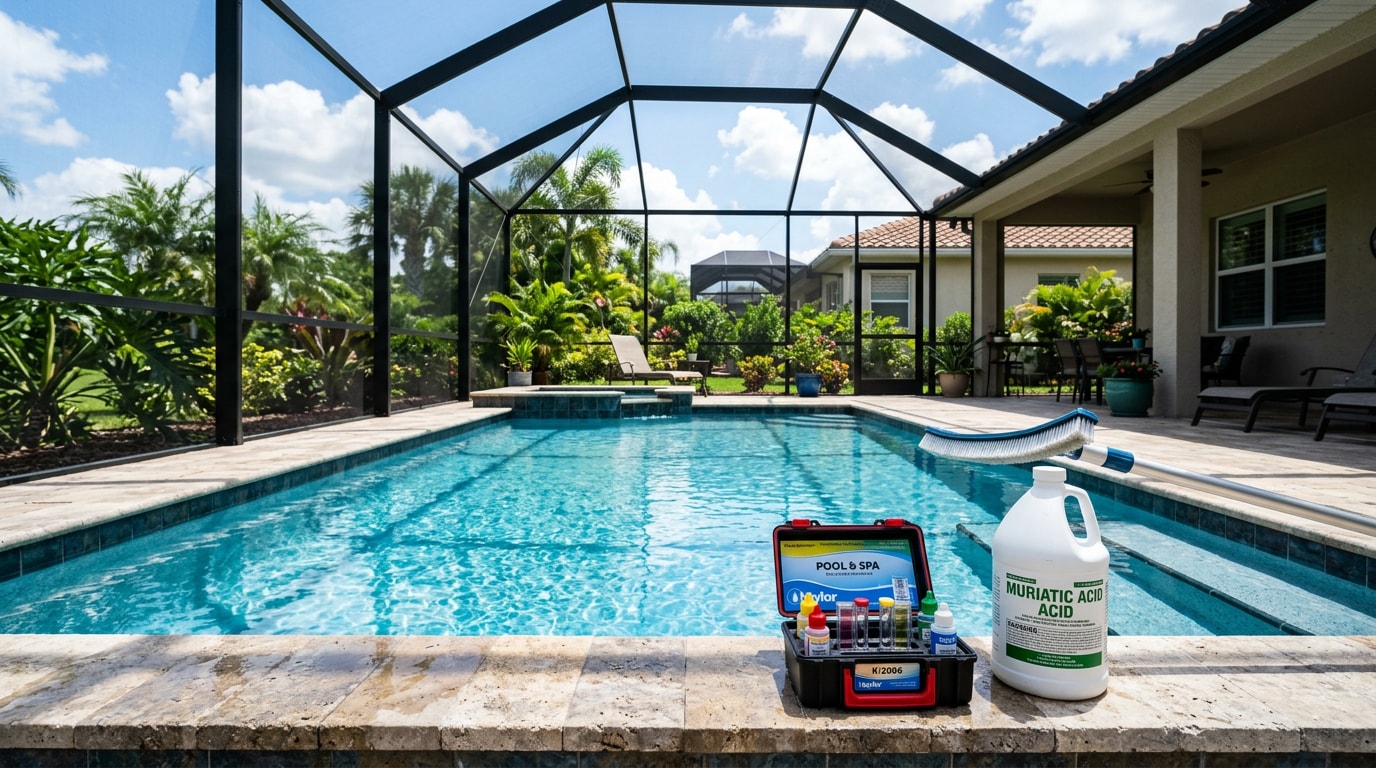

Pool essentials in Oviedo, FL come down to three things: clean water, working equipment, and knowing who to call when either one fails. Central Florida's heat, humidity, and summer storm pattern make pool ownership here different from almost anywhere else in the country. This guide breaks down what actually keeps an Oviedo pool running, from chemistry and cleaning to equipment, code requirements, and new-build resources.
Your Local Pool & Spa Resources in Oviedo, FL
Oviedo homeowners don't usually need one all-in-one provider. They need the right mix of help at the right time: a place to test water, a technician who can diagnose equipment fast, and a contractor who can handle bigger renovation or build-out work.
When comparing local options, ask three questions before you commit:
- Is water testing done in-house with calibrated equipment, or just test strips?
- Are the technicians certified, and how quickly can they schedule a repair?
- Does the company handle both supply/chemistry and mechanical repair, or only one side?
For the maintenance side of pool essentials, our weekly pool cleaning service and water chemistry balancing cover the two things that drift fastest in a Florida backyard. You can see the full range of what we handle locally at {{SITE_URL}} or browse service areas like Oviedo, FL and Winter Springs, FL.
Pool Cleaning & Water Chemistry in Oviedo's Climate
Pool maintenance in Oviedo looks different than it does in drier parts of the country. Central Florida's combination of intense summer heat, high humidity, and near-daily afternoon storms pushes organic debris and rainwater into pools constantly, which dilutes sanitizer and feeds algae faster than in most other regions.
In our service visits around Oviedo neighborhoods, chlorine demand regularly spikes the day after a summer thunderstorm. It's not that rain destroys chlorine directly. It's that runoff carries leaves, pollen, and organic debris into the water, and that organic load eats into your chlorine reserve within a day.
Chlorine and pH need to stay in a specific range to sanitize water without damaging equipment or irritating skin. CDC recommends pH 7.0–7.8 and a chlorine concentration of at least 1 ppm in pools and at least 3 ppm in hot tubs.
If using cyanuric acid, a chlorine stabilizer, or chlorine products with cyanuric acid, CDC recommends pH 7.0–7.8 and a chlorine concentration of at least 2 ppm in pools.
Here's how those numbers translate into a testing rhythm most Oviedo pool owners should follow:
| Parameter | Typical Residential Target | Test Frequency |
|---|---|---|
| Free chlorine | 1.0 to 4.0 ppm | Twice weekly, more after storms |
| pH | 7.0 to 7.8 | Twice weekly |
| Total alkalinity | 80 to 120 ppm | Monthly |
| Cyanuric acid (CYA) | 30 to 50 ppm (outdoor pools) | Monthly or quarterly |
CDC guidelines recommend testing the chlorine level and pH of pool water at least twice per day, and more often during heavy use, with free chlorine maintained between 1 and 4 parts per million and pH between 7.0 and 7.8. That standard was written for public pools with heavy bather loads, but it's a useful ceiling for how often to check your water during a rainy week or after a pool party.
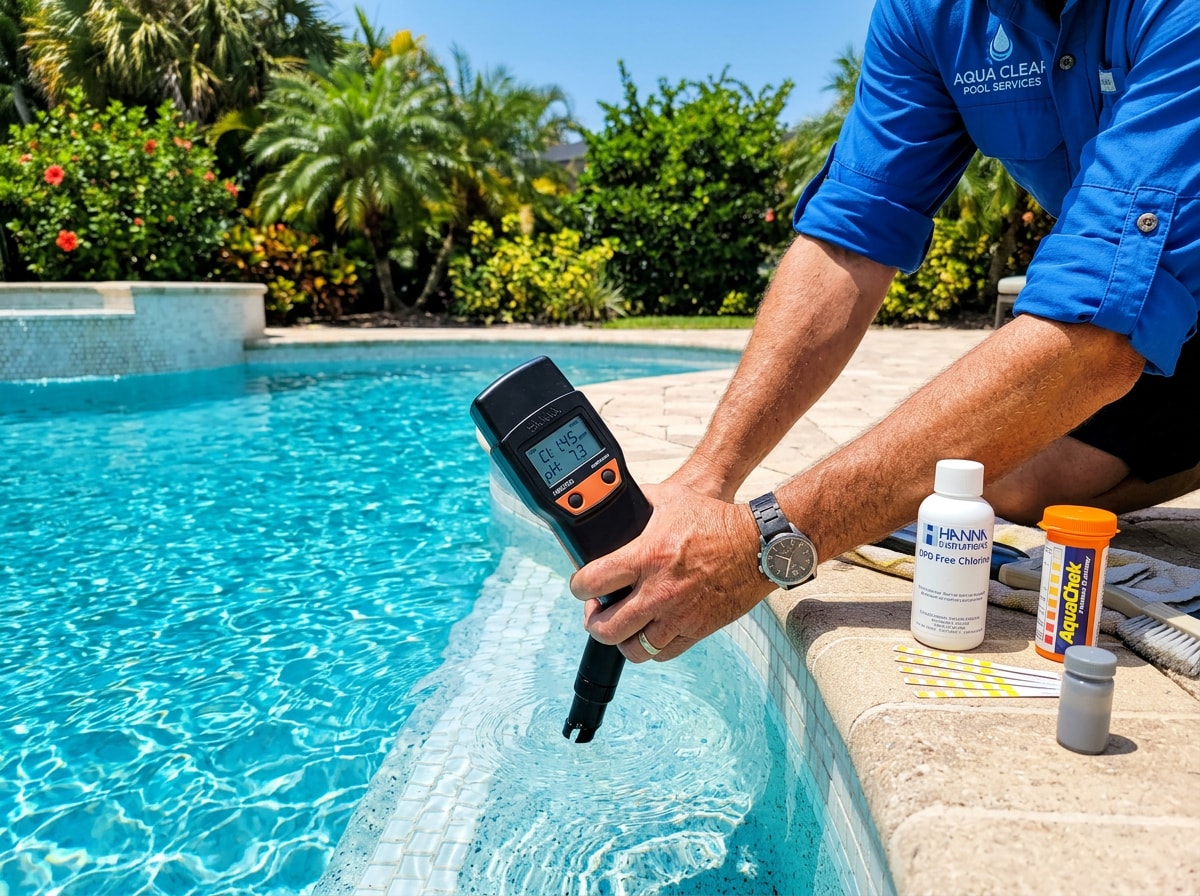
Filters also need attention more often during rainy season, since the same storm runoff that strains chlorine also loads up your filter media faster. For a full local breakdown of target ranges and troubleshooting, see our dedicated guide to pool chemistry in Oviedo, FL, or set up a recurring visit through pool maintenance.
Pool Equipment: Installation, Repair & Upgrades
Equipment essentials cover the mechanical side of ownership: pumps, filters, heaters, and salt chlorine generators. Pumps and filters fail most often in Florida largely because they run nearly year-round in a warm climate instead of sitting dormant for part of the year.
A few patterns show up consistently in service calls:
- Pumps usually need attention when they're undersized, outdated, or running loud from worn bearings.
- Filters tend to need repair for clogs, cracked housings, or rising pressure readings rather than full replacement.
- Salt systems and heaters have their own wear patterns and are not practical DIY repairs for most homeowners.
One upgrade worth understanding before you replace a pump: speed matters more than horsepower for energy cost. A variable-speed pool pump can reduce pool pump energy use by 50% to 90%. The math behind that is the pump affinity law. If you reduce the pump speed from 3,450 rpm to 2,400 rpm, a 30% reduction in speed, the wattage drops from 2,000 watts to 593 watts, a 70% reduction in power. That's why a technician will often recommend a variable-speed replacement even when your current pump still technically works.
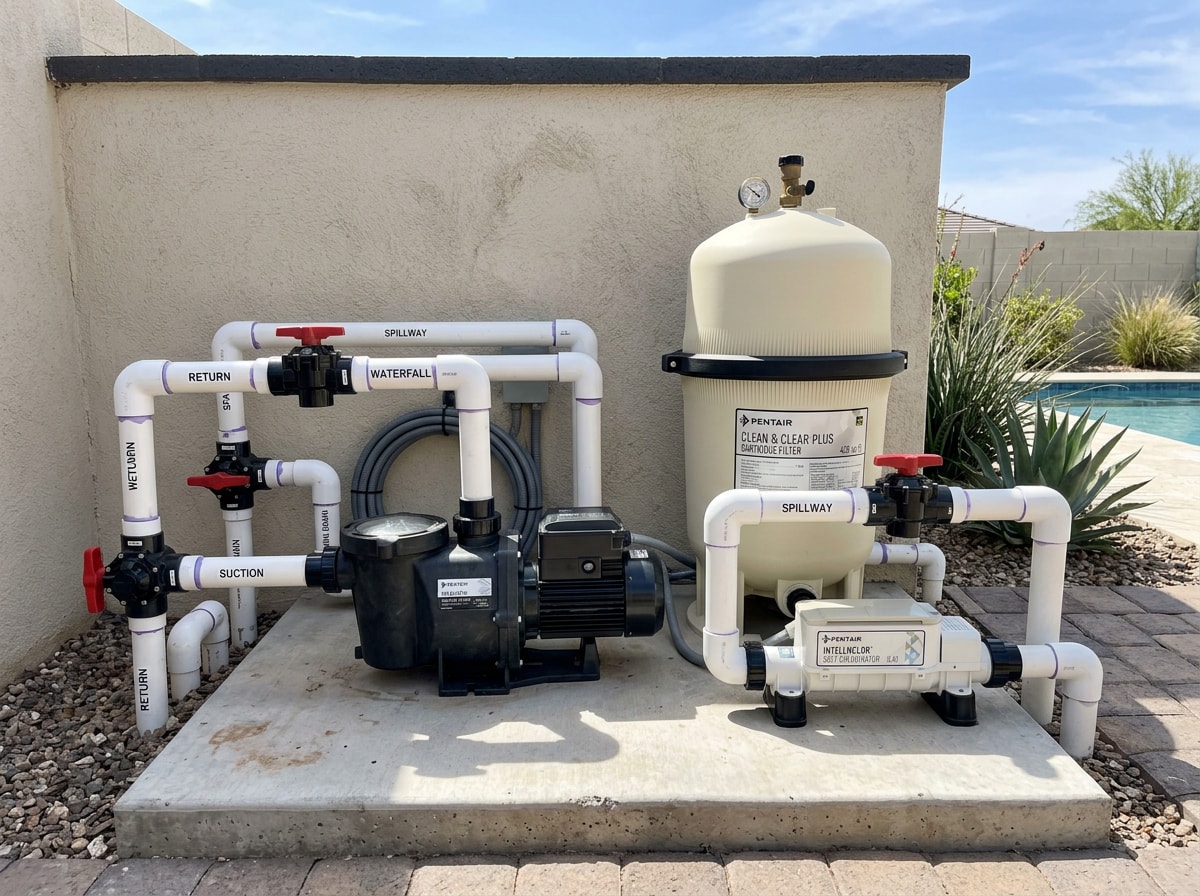
A technician can usually diagnose whether a part needs repair or replacement in a single visit. Browse pool equipment repair and pool equipment upgrade options, or get a free estimate if something is already acting up.
Buy Online, Pick Up In Store
Many Oviedo pool supply retailers now let customers order chemicals, parts, or accessories online and pick them up locally the same day. This model works well for heavy or time-sensitive items like chlorine and shock, since shipping is slow and some chemicals face shipping restrictions altogether.
Before relying on it, confirm three things:
- Store inventory is updated in real time, not a static catalog.
- Pickup windows match your schedule, especially before a weekend pool party.
- Same-day pickup is actually guaranteed, not just typical.
Shopping around also makes price comparison easier before you commit to a retailer for ongoing supply.
Building or Renovating? Custom Pool & Deck Essentials in Oviedo
Existing pool essentials matter for upkeep, but Oviedo residents planning a new pool or a renovation face a different set of decisions. Local builders generally offer a few common design paths worth understanding before choosing a direction.
Custom Pools & Spas
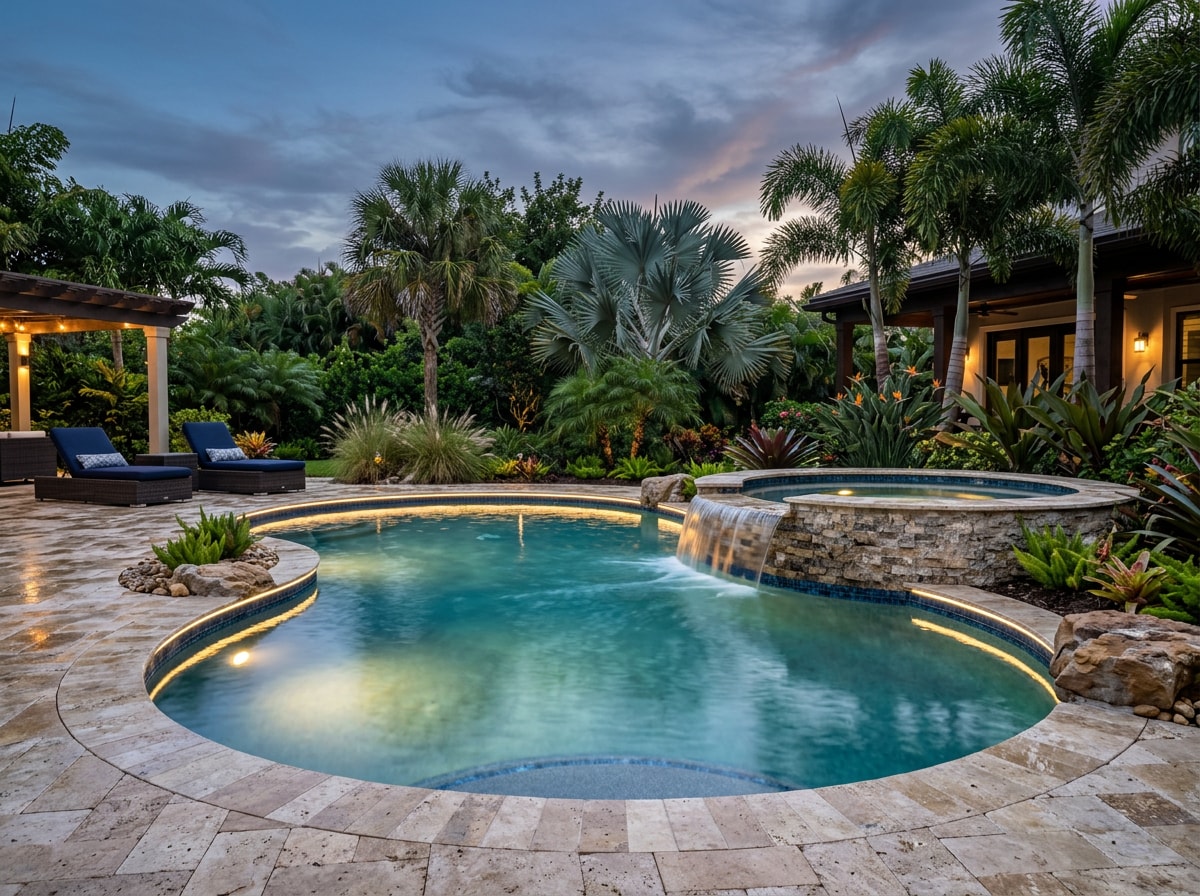
Custom pool design typically starts with layout, freeform versus geometric, then layers in features like tanning ledges, water features, or integrated lighting. A pool and spa combo is one of the more requested features in this area since it adds year-round usability without doubling the footprint. If your existing pool needs a full refresh instead of a new build, pool renovation covers resurfacing, tile, and deck work together.
Modern Pool Design
Modern pool design in Central Florida tends to favor clean geometric lines, dark-toned interior finishes, and minimal landscaping around the deck. Linear water features, recessed lighting, and waterline tile installation or decorative pool tile are common finishing touches that also keep long-term maintenance straightforward.
Residential Pools & Code Requirements
Residential pools differ from commercial pools mainly in scale, usage patterns, and regulatory oversight. A residential pool builder typically handles permitting, setback requirements, and safety barriers as part of the build. Florida's barrier rules are specific and get checked at inspection:
Where the barrier is mounted on top of the pool structure, the maximum vertical clearance between the top of the pool structure and the bottom of the barrier is 4 inches.
Maximum mesh size for chain link fences is a 2 1/4-inch square unless the fence has slats that reduce the openings to no more than 1 3/4 inches.
Gates that provide access to the swimming pool must open outward, away from the pool.
These standards come from Chapter 45 of the Florida Building Code, Residential, and they apply whether you're building new or adding a fence to an existing pool.
Energy-Efficient Equipment & Long-Term Pool Resources
A functioning pool depends on more than the pool shell itself. Pumps and filtration need to be sized correctly for the pool's volume, or they'll run inefficiently and shorten equipment lifespan. The Building America Solution Center, maintained with U.S. Department of Energy research, is a solid technical reference if you want to see the full efficiency math behind variable-speed pumps before you buy.
Florida's mild winters mean most pools stay open year-round here, unlike regions where equipment sits dormant for months. That makes periodic inspection more important, not less, since there's no long off-season to catch small problems before peak swim season. For sizing guidance and current equipment options, check pool equipment upgrade before a new build or major overhaul, or review our broader swimming pool contractor services if you're planning a larger project.
FAQ
What Is the Return Policy for Pool Supplies?
Pool supply return policies vary by retailer, but most require a receipt, restrict returns on opened chemical containers, and set a window of roughly 30 to 90 days for unopened products in original packaging. Always ask about returning pool chemicals specifically before buying extra, since open containers are rarely accepted for safety reasons.
Do Pool Supply Stores Offer Price Matching?
Many pool supply price match policies require a current ad or a verifiable price from a comparable local competitor, and some exclude clearance or online-only pricing. Ask staff directly about pricing matches before checkout, since policies and eligible items vary between retailers.
What's the Difference Between Professional and At-Home Water Testing?
Professional pool water testing uses in-store computerized equipment that measures multiple chemical levels precisely, while an at-home test kit relies on test strips or liquid reagents that are faster but less exact. CDC guidelines recommend testing the chlorine level and pH of pool water at least twice per day, and more often during heavy use. For a residential pool, that translates to frequent at-home checks with periodic professional verification, especially during peak swim season when chemical demand shifts quickly.
How Often Should I Test My Pool Water in Oviedo's Climate?
Test free chlorine and pH at least twice a week during Florida's swim season, and again within 24 hours after any heavy rain or a pool party. Oviedo's storm pattern dilutes chemicals and adds organic debris fast enough that a once-a-week schedule often misses the swing.
What Size Pool Pump Do I Need for a Florida Backyard Pool?
Pump sizing depends on your pool's gallon volume and the turnover rate you need, not just horsepower. A technician measures your pool's volume and plumbing before recommending a pump, and in most new installs a variable-speed model is sized to match your actual flow needs rather than oversized "just in case."
What Kinds of Pool Equipment Can Be Repaired?
Most pool equipment repair falls into four categories: pumps, filters, heaters, and salt chlorine generators. Pump repair typically addresses motor noise or leaks, while heater repair often involves ignition or thermostat issues. Technicians can usually inspect and diagnose most of these components during a single service visit.