High pH is usually why your pool looks cloudy, your chlorine feels weak, and your skin itches after a swim. If you're searching for how to lower pH in a pool in Winter Garden, FL, the fix is predictable once you know the right order of operations. This guide covers the exact chemicals, dosages, and steps our technicians use on local service routes every week.
Ideal Pool pH Levels for Winter Garden Pools
Pool water should sit between 7.2 and 7.8 on the pH scale, with 7.4 to 7.6 as the sweet spot for chlorine effectiveness and swimmer comfort. CDC recommends pH 7.0 to 7.8 and a chlorine concentration of at least 1 ppm in pools , and that range is also the baseline Florida uses for public and semi-public facilities.
Florida backs this with an actual rule, not just an industry suggestion. The pH is required to be between 7.2-7.8 for all pools and spas under state health code . Residential pools aren't inspected the same way, but the benchmark still holds.
Here's why the range matters so much:
- Below 7.2: Water turns corrosive. Expect skin and eye irritation plus damage to metal fittings and ladders.
- Above 7.8: Chlorine loses potency fast.
As pH goes up, the ability of chlorine to kill germs decreases, especially if pH is above 8.0 . Scale builds on tile, and water can look cloudy even with sanitizer present.
Central Florida's heat and sudden afternoon storms push pH out of range faster than cooler, drier climates. Pools here need more frequent testing than a generic national guide usually recommends.
How Pool pH Is Measured
Pool pH runs on a 0 to 14 scale. Seven is neutral, anything below is acidic, anything above is basic.
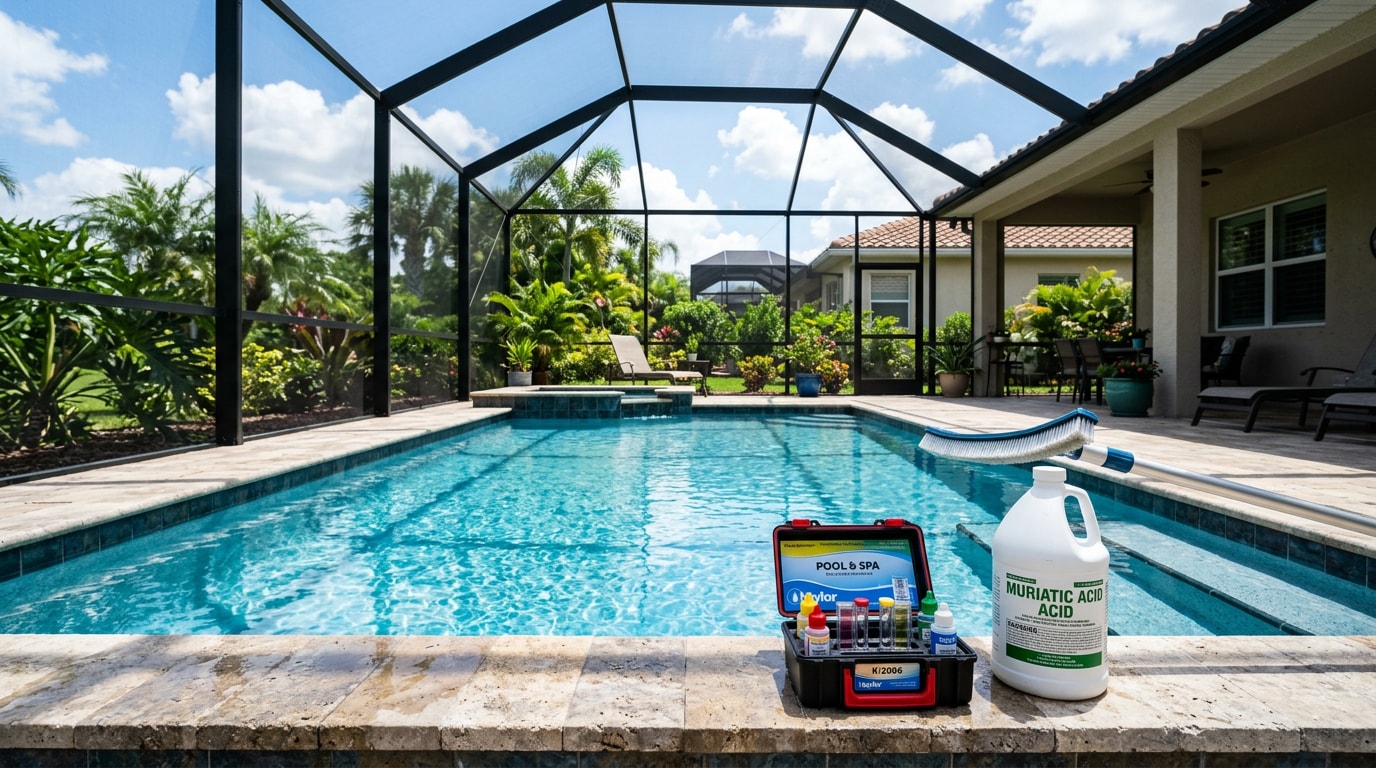
Three tools cover almost every home test:
- Test strips – fastest, good for a quick check
- Liquid reagent kits – more precise, better for dosing decisions
- Digital meters – most consistent if calibrated regularly
Whichever you pick, stick with it. Switching between methods mid-season makes it harder to spot real trends in your water.
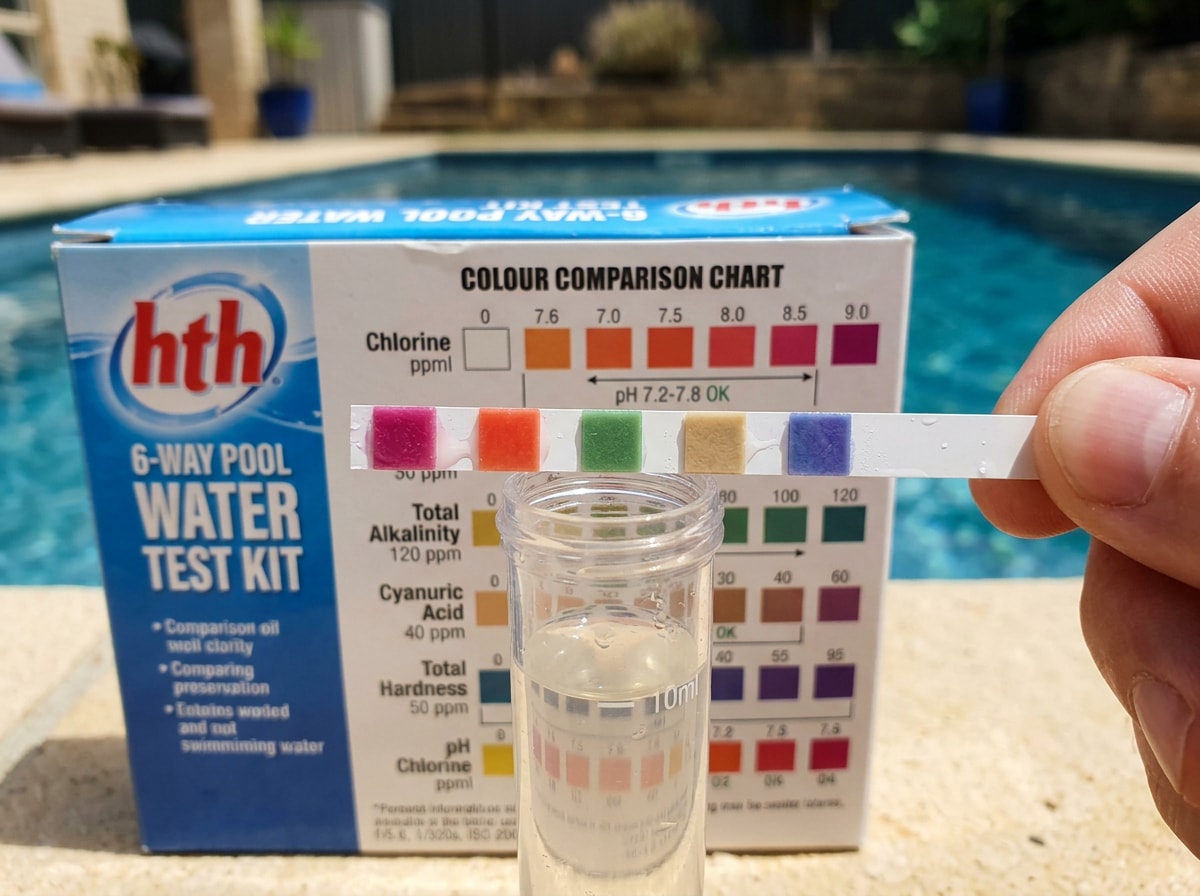
Total Alkalinity and pH
Fix total alkalinity before you touch pH. They're linked closely enough that correcting one out of order wastes chemical and time.
Think of alkalinity as pH's buffer:
- Low alkalinity lets pH bounce unpredictably after every chemical addition.
- High alkalinity drags pH upward over time and raises the odds of scale on surfaces and equipment.
A practical total alkalinity target for residential pools is 80 to 120 ppm. One detail most national guides skip: much of Orange County's tap and well water draws from Florida's naturally alkaline limestone aquifer. Pools topped off regularly with that water often start the season already pushing the high end of the alkalinity range, which is one more reason Winter Garden pools drift toward high pH faster than guides written for other states suggest.
When alkalinity is too high, a pH decreaser like sodium bisulfate brings both numbers down together. When alkalinity is low but pH still sits above 6.8, add an alkalinity increaser first instead of acid.
Chemical Options for Lowering pH
Two chemicals handle nearly every residential pH-lowering job: sodium bisulfate and muriatic acid. Both add acidity to the water, but they differ enough in handling, cost, and speed to be worth comparing before you buy either one.
Sodium Bisulfate
Sodium bisulfate, sold as "dry acid," is a fine granular powder. It's easier to store and handle than liquid acid since it won't splash or fume the same way.
One real caveat: skip windy days. The lightweight powder can drift and irritate skin or eyes before it ever reaches the water. Dry acid also dissolves more gradually, which gives a gentler correction curve than liquid acid.
Muriatic Acid
Muriatic acid (hydrochloric acid) is a liquid pH reducer with a pH of roughly 1, making it one of the strongest options available for residential pools. Because it's already liquid, dosing is straightforward with no dissolving time needed.
That strength comes with a tradeoff. Muriatic acid is more corrosive and hazardous than dry acid and releases fumes that call for gloves, eye protection, and good ventilation. OSHA's hydrogen chloride exposure and handling data outlines the precautions worth following at home.
| Factor | Sodium Bisulfate | Muriatic Acid |
|---|---|---|
| Cost per treatment | Slightly higher per pound | Generally cheaper per gallon |
| Safety profile | Lower fume risk, dust hazard | Higher fume and splash hazard |
| Storage | Stable, dry, long shelf life | Needs sealed, ventilated storage |
| Speed of action | Slower, more gradual | Fast-acting once diluted |
Step-by-Step: How to Safely Lower Pool pH
Once a test confirms your pool needs correction, the process follows the same order every time: test, calculate, dilute, add, circulate, retest.
1. Test the water. Check pH and total alkalinity together, since alkalinity affects how much acid you actually need.
2. Calculate volume and dosage. Know your pool's gallons before dosing anything. As a general reference, treating a 10,000-gallon pool to drop pH by about 0.2 typically takes somewhere in the 12 to 16 ounce range of muriatic acid, with dry acid needing somewhat more by weight for the same drop. Exact amounts shift with starting alkalinity, so check the product label.
3. Dilute before adding. Never pour acid straight into the pool at full strength. Measure the dose into a clean 5-gallon bucket of water first, always adding acid to water rather than the reverse. A common ratio is 10 parts water to 1 part acid.
4. Pour it in the right place. Pour slowly around the pool's perimeter, staying close to the water's surface to avoid splashback. Keep circulation running and add the mixture in the deepest part of the pool, away from lights, ladders, rails, and skimmers.
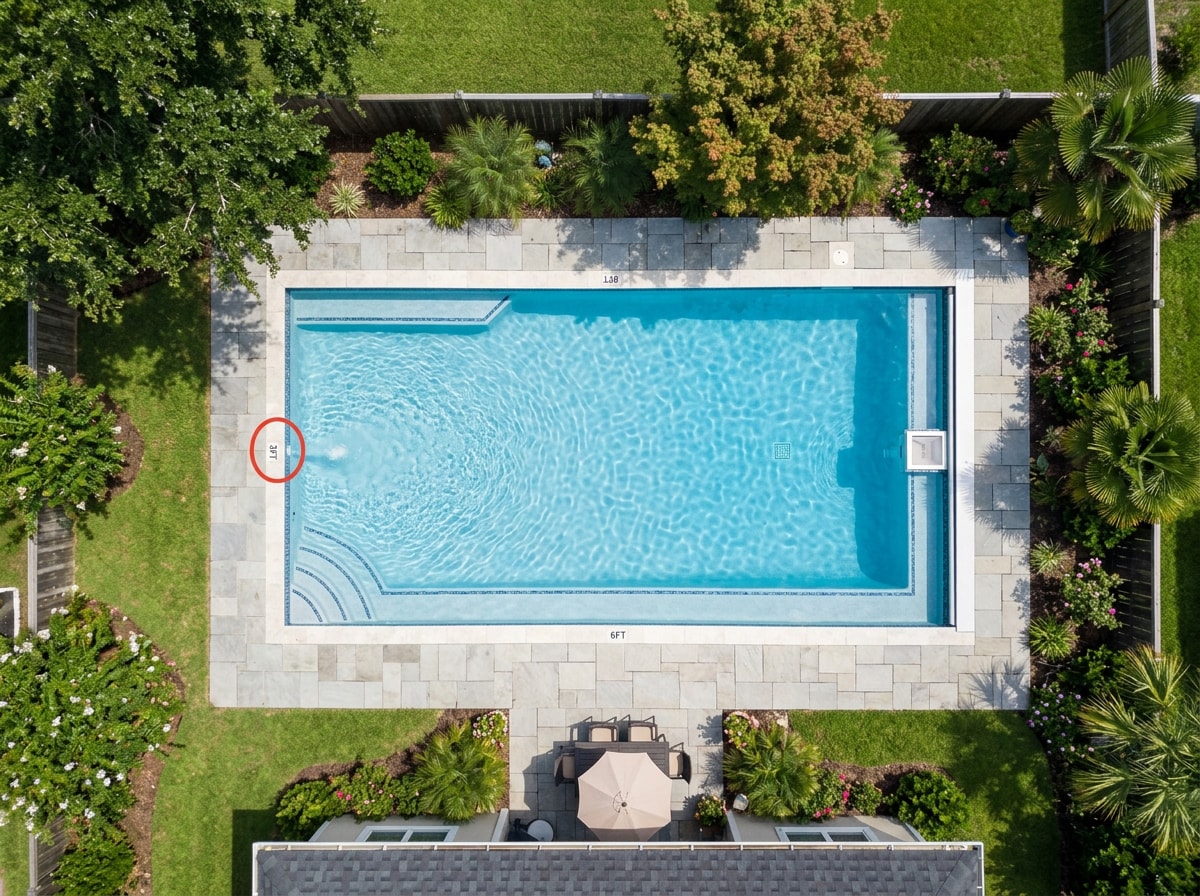
5. Let it circulate. Keep the pump running so the chemical disperses evenly. Brush away any visible granules on the bottom so they don't sit against plaster or liner.
6. Retest and repeat if needed. Wait 30 minutes to an hour before retesting. If the number isn't where it should be, add another small dose rather than guessing at a bigger one.
Overcorrecting is the most common DIY mistake. Small, incremental doses with patience between them beat one large addition that overshoots into acidic territory.
Quick Pool Water Treatment Checklist
Keep these on a shelf near the pump pad so you're never scrambling mid-season:
- A test kit or strips that read both pH and total alkalinity
- Liquid muriatic acid or dry acid (sodium bisulfate)
- Soda ash, in case pH needs raising instead
- A clean 5-gallon bucket reserved only for chemical dilution
- Gloves and eye protection
Will Shocking Your Pool Lower pH?
Not directly. Shock treatment targets chlorine and chloramine levels, not pH. Use it after heavy rain, a crowded pool party, early algae signs, or a strong chlorine smell, which usually signals chloramines rather than too much sanitizer.
Run the pump overnight after shocking and brush steps, walls, and corners the next morning. Some shock products carry a mildly basic pH of their own and can nudge readings slightly upward, but shocking isn't a reliable way to correct pH either direction.
Seasonal Pool Chemistry Care in Winter Garden, FL
Central Florida's wet summers and mild winters stress pool chemistry differently, so a one-size-fits-all testing schedule doesn't really work here.
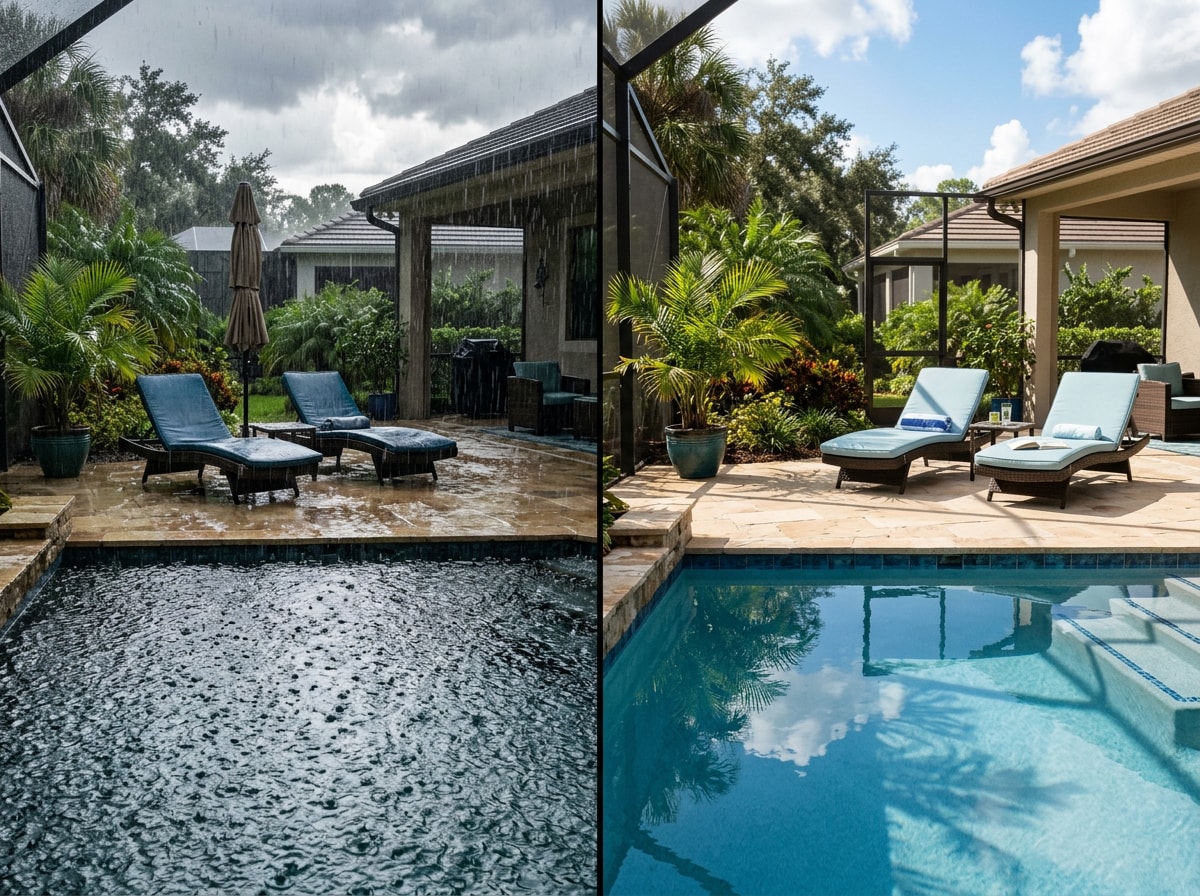
Rainy season (roughly June through September): Storms dilute chlorine and shift pH, so test more often during this stretch. Confirm deck drainage directs runoff away from the pool, and consider nudging the free chlorine setpoint up slightly to offset dilution.
Winter care: Winter Garden winters stay mild, but cooler nights still slow chlorine demand and change how fast pH drifts. Keep the pump running at least 6 hours a day rather than shutting it off, since stagnant water still invites algae and uneven chemistry in cooler stretches. Watch heaters for scale buildup if pH or alkalinity creeps high during the slower season.
For more on balancing water chemistry through Florida's seasons, our Pool Chemistry Oviedo, FL guide covers the same principles in more depth.
When to Call a Professional
On service routes across Winter Garden and the surrounding areas, our CPO-certified technicians see one pattern more often than rain: pools that were recently resurfaced or re-plastered tend to read high pH and high alkalinity for the first few weeks after the finish cures, as fresh cementitious material leaches lime into the water. Acid alone won't fix that fast. It needs patient, repeated small corrections while the surface finishes curing.
If your pH keeps climbing back no matter how much acid you add, or you'd rather not store muriatic acid at home, our water chemistry balancing service handles testing and dosing on a schedule, and our pool maintenance service covers the rest of the routine. We also serve Winter Garden, FL directly, so a technician can usually be out within a day or two.
Get a free estimate if you want a second set of eyes on your water before you buy another jug of acid.
FAQ
What is the cheapest way to lower the pH of a pool?
Standard dosing with muriatic acid remains the lowest-cost option per treatment compared to dry acid or specialty pH decreasers. Aeration can help raise low pH naturally, but there's no genuinely cheap, effective natural pH reducer that rivals acid in cost per gallon treated.
Does vinegar lower pool pH?
Vinegar contains acetic acid, which technically can lower pH in small volumes. At pool scale, the amount needed makes it impractical and expensive compared to muriatic acid or sodium bisulfate, so it's not a realistic household fix.
How much muriatic acid do I add per gallon?
A common rule of thumb is about one quart of muriatic acid per 20,000 gallons to meaningfully reduce pH, though this varies by product concentration. Always dilute first, using roughly 10 parts water to 1 part acid, and check your specific product's label for exact dosing.
Can I use sodium bisulfate instead of muriatic acid?
Yes. Sodium bisulfate (dry acid) lowers pH through the same basic chemistry as muriatic acid, just in powder form. The choice usually comes down to handling preference and cost rather than effectiveness.
Will shocking a pool lower pH?
Not directly. Shock treatment targets chlorine and chloramine levels, and any pH shift from a shock product is typically minor and incidental rather than a dependable correction method.
How long should I wait to swim after adding acid?
Wait until the chemical has fully circulated and you've retested, generally 30 minutes to an hour with the pump running. Swimming immediately after adding undiluted or freshly dosed acid risks skin and eye irritation from localized high concentration.
What happens if pool pH stays too high for too long?
Chlorine keeps losing effectiveness the longer pH sits above 7.8, which lets algae and bacteria gain ground even with sanitizer in the water. Scale also builds on tile, heaters, and equipment, which gets more expensive to reverse the longer it's ignored.
Our technicians are Certified Pool Operators who test and balance water across Orange County every week. If your pool's chemistry keeps fighting back, visit Swimm Solutions or explore our full range of pool cleaning services for ongoing support.