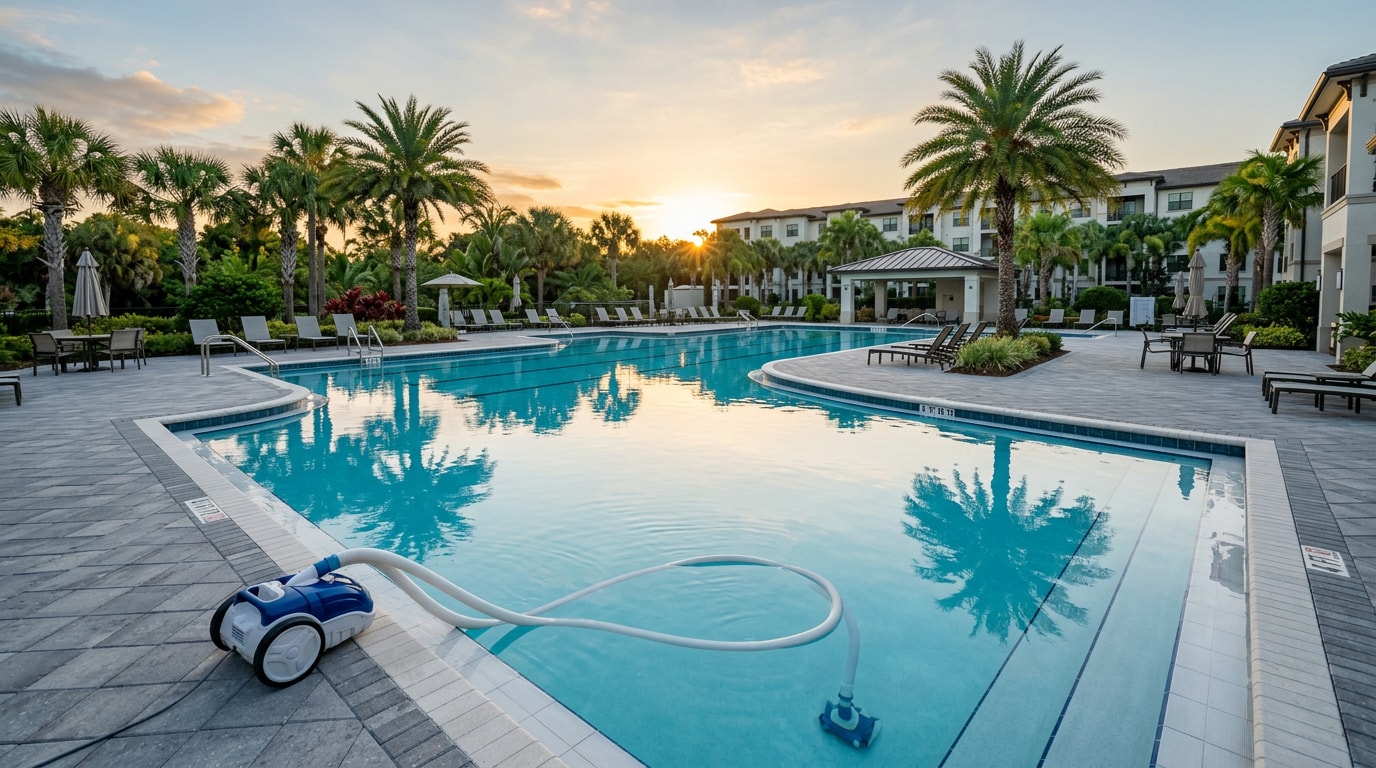
A commercial pool vacuum in Orlando, FL has to survive storm-driven leaf dumps, love bug season, and daily swimmer loads that a backyard model was never built for. This guide compares suction-side, pressure-side, and robotic units by GPM, debris capacity, and upkeep, along with what our crews see fail first on hotel, HOA, and apartment pools across Orange and Seminole counties. Pick the wrong one and you end up buying it twice.
Suction-Side, Pressure-Side, and Robotic Commercial Pool Vacuums Compared
Hotels, HOAs, apartment complexes, and waterparks can't rely on equipment built for a weekend homeowner. Commercial pools see heavier swimmer traffic, larger surface areas, and far more debris, so equipment needs to run longer and handle more volume without breaking down. Three technology categories dominate the commercial market, plus a cordless option many maintenance crews now carry as a backup.
Suction-Side Pool Vacuums
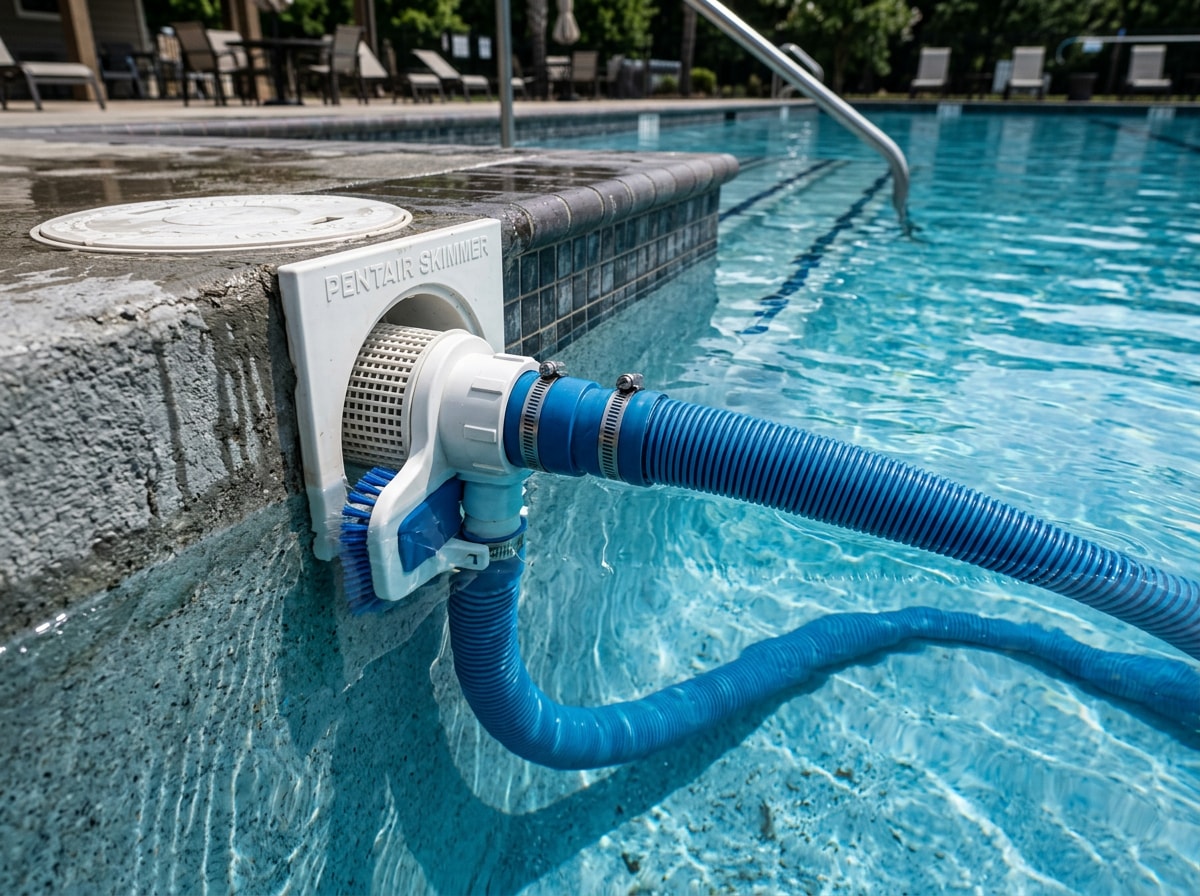
A suction-side pool vacuum attaches to a skimmer port or dedicated suction line and uses the pool's own pump to pull debris through a hose into the filter basket, making it a simple, lower-cost option for routine commercial filtration.
These units ride on wheels, a rubber disc, or bristles, pushing collected dirt into the pool's filter basket or skimmer basket, which staff need to check regularly so it doesn't clog mid-cycle. Because it draws from the pool's existing filtration system, a suction-side unit is fairly easy to maintain since there's no separate motor to manage. The tradeoff is added load on the main pump, which can strain older equipment during heavy debris days. Suction-side units tend to work best for medium-sized pools where staff can monitor filter load throughout the day.
Pressure-Side Pool Vacuums
A pressure-side pool vacuum connects to the water return jet instead of the skimmer. Water pressure pushes the unit around the pool, and it runs in step with the pump motor, shutting down whenever the pump does.
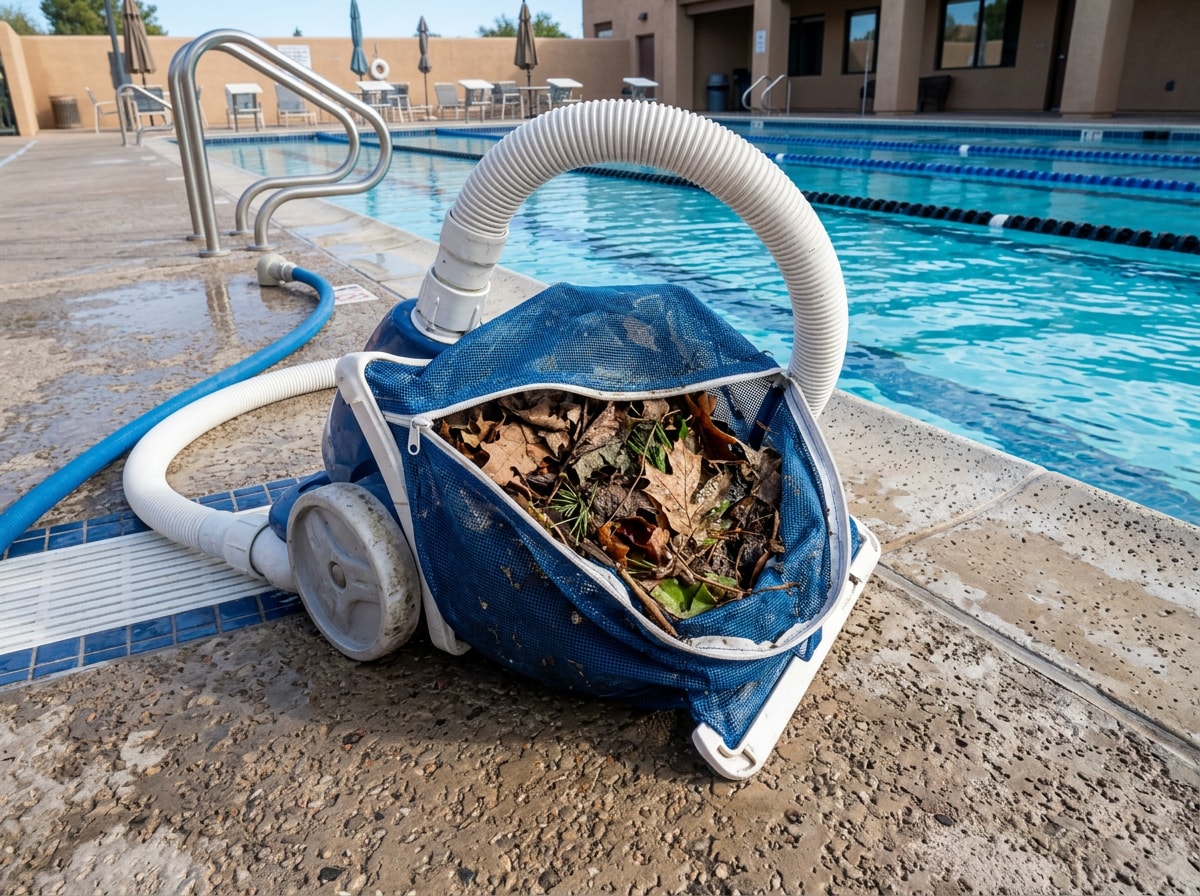
This design handles larger debris like leaves, acorns, and twigs well, which matters after a Central Florida storm rolls through. Most models use reusable collection bags that need emptying once full, keeping debris out of the main filtration system entirely. Higher-end pressure-side machines, similar to the Polaris 3900 Sport, require a dedicated booster pump and offer larger debris bags built for heavy leaf loads. That extra pump raises equipment cost upfront, but on properties with mature trees or exposed decks it often pays for itself in reduced debris-removal labor.
Robotic Commercial Pool Vacuums
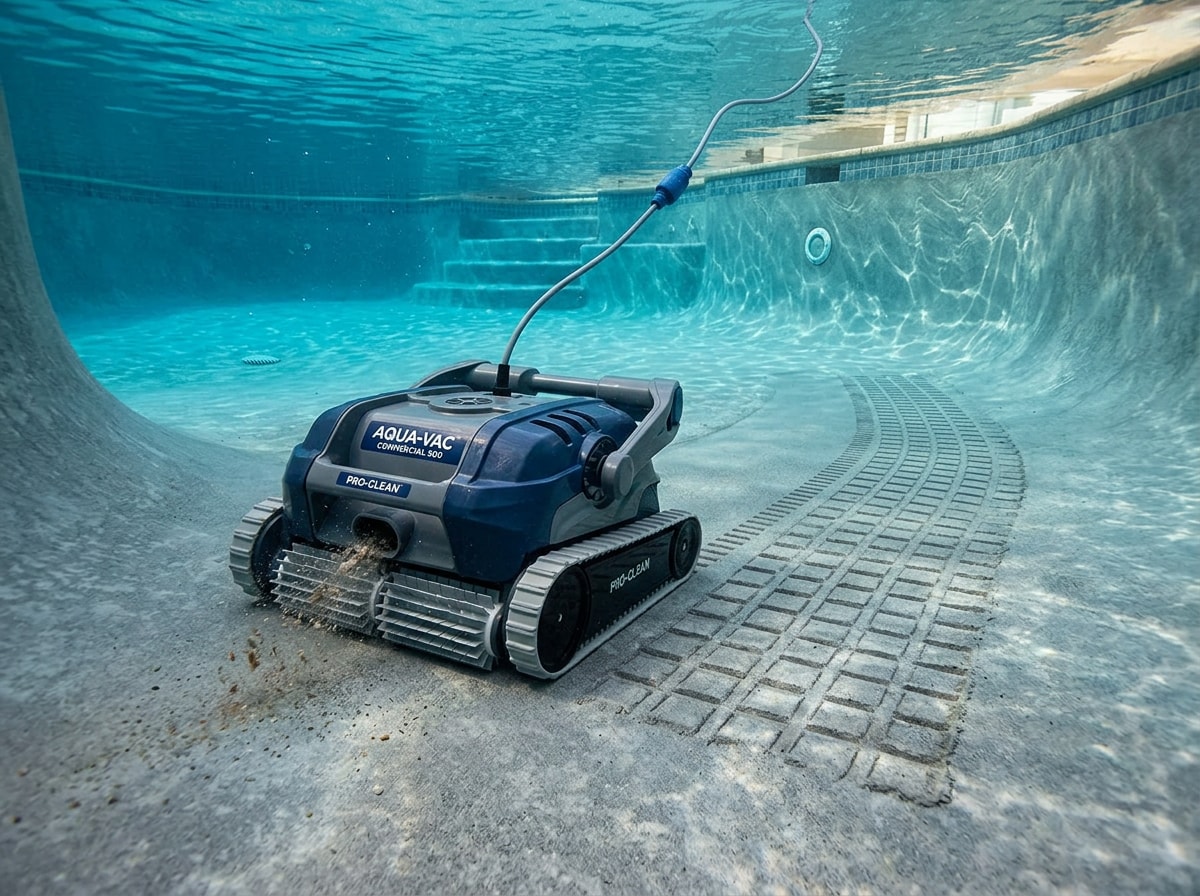
Robotic units run on an independent motor and filtration system rather than pulling from the pool's pump at all. They scrub walls, steps, and floors on programmed cycles, which means no added strain on the main circulation system during heavy-use hours.
They sit at the higher end of the price range, but for properties managing several pools, the reduced labor time can offset that cost over a season. Many commercial models also include remote or app-based scheduling, which helps a maintenance crew time cleaning cycles around pool hours and swim-team or event use.
Cordless Handheld Vacuums
Cordless handheld models have become popular for spot-cleaning and smaller commercial pools where a full in-ground system isn't justified. They're light, battery-powered, and easy for one staff member to operate without running hoses or cords across a deck, which is useful for crews covering multiple small pools in a single day.
How to Choose the Right Commercial Pool Vacuum for an Orlando Property
Picking a commercial pool vacuum Orlando, FL properties can rely on comes down to weighing a handful of factors side by side. The sections below cover what a facilities manager or commercial buyer actually needs to evaluate before signing off on a purchase.
Suction Power & Debris Capacity
GPM, or gallons per minute, measures how much water a vacuum pulls through its system, and it's the best predictor of debris-removal performance. Commercial pools accumulate leaves, insects, sand, and silt, so strong, consistent suction matters more than almost any other spec.
Capacity is the other half of the equation. For battery-powered vacuums, capacity usually refers to run time. For other models, it refers to the size of the waste collection basket, and a smaller basket means more stops to empty it during a cleaning route.
Orlando properties face a specific debris mix worth planning around: live oak leaves, palm fronds, love bugs during their spring and fall swarms, and wind-blown sand or pollen after the region's frequent afternoon storms. Typical GPM and runtime ranges across the four main categories look like this:
| Model Type | Approx. GPM | Approx. Runtime |
|---|---|---|
| Cordless handheld | 20-25 GPM | 45-60 minutes |
| Suction-side (basic) | 25-35 GPM | Continuous (pump-powered) |
| Pressure-side w/ booster | 35-45 GPM | Continuous (pump-powered) |
| Robotic commercial unit | 30-40 GPM equivalent | 2-3 hour cycle |
These are general industry ranges, not a single manufacturer's published specs, and actual numbers vary by model year. Commercial filtration flow is generally capped at a maximum of 0.375 GPM per square foot of filter area , which is noticeably lower than residential ratings on the same equipment, so it's worth checking a current commercial filter spec sheet before matching a vacuum to your filtration system.
Filtration System
Micron rating determines how fine a particle a filtration system can capture, and it matters because large debris is only part of the problem. Florida's warm water and high swimmer loads accelerate fine silt and biofilm buildup, so pairing a vacuum with tighter fine-debris filtration keeps water clearer between full filter cleanings.
Lower micron ratings catch smaller particles but may need more frequent cleaning, so there's a real tradeoff between water clarity and maintenance frequency. National guidance from the Pool & Hot Tub Alliance sets recommended minimum guidelines for water quality parameters in public pools, spas, and hot tubs , which is a useful baseline when deciding how much filtration performance a property actually needs. For more on keeping cartridge-style filters performing between cleanings, see this pool filter cartridge maintenance guide.
Portability and Weight
Staff who move between multiple pools in a day need equipment that won't wear them out before lunch. A lighter, portable vacuum lets crews maneuver without fatigue, and a cordless design removes tangled cords and fixed power sources altogether.
Some cordless models let staff wear the battery pack on a waist belt or shoulder strap, improving balance while cleaning. For multi-property maintenance crews, that lightweight design can shave real time off a daily route.
Versatility of Use
A commercial-grade unit should clean vinyl, fiberglass, and gunite surfaces without scratching the finish, and it should perform just as well in shallow entry zones as in the deep end. That range matters on properties with mixed pool types across different buildings or amenity areas.
Look for interchangeable heads and attachments. Swappable heads make it easier to reach tight corners, steps, and other hard-to-reach spots, which is especially useful for management companies overseeing both gunite and vinyl pools across a portfolio.
Durability and Build
Commercial use means daily or weekly cycles of chlorinated water, UV exposure, and rough handling, conditions that wear out residential-grade plastic fast. Choose a unit built with reinforced materials like heavy-duty ABS and metal components to resist cracking and fading over time.
That kind of construction costs more upfront, but it holds up under the frequency of use residential vacuums were never designed for. A unit that fails after a season of heavy commercial use ends up costing more in replacement than a sturdier model would have.
Maintenance and Serviceability
Routine maintenance keeps equipment running at full suction and extends its working life. Staff should check these items regularly:
- Scrubbers and brushes for wear
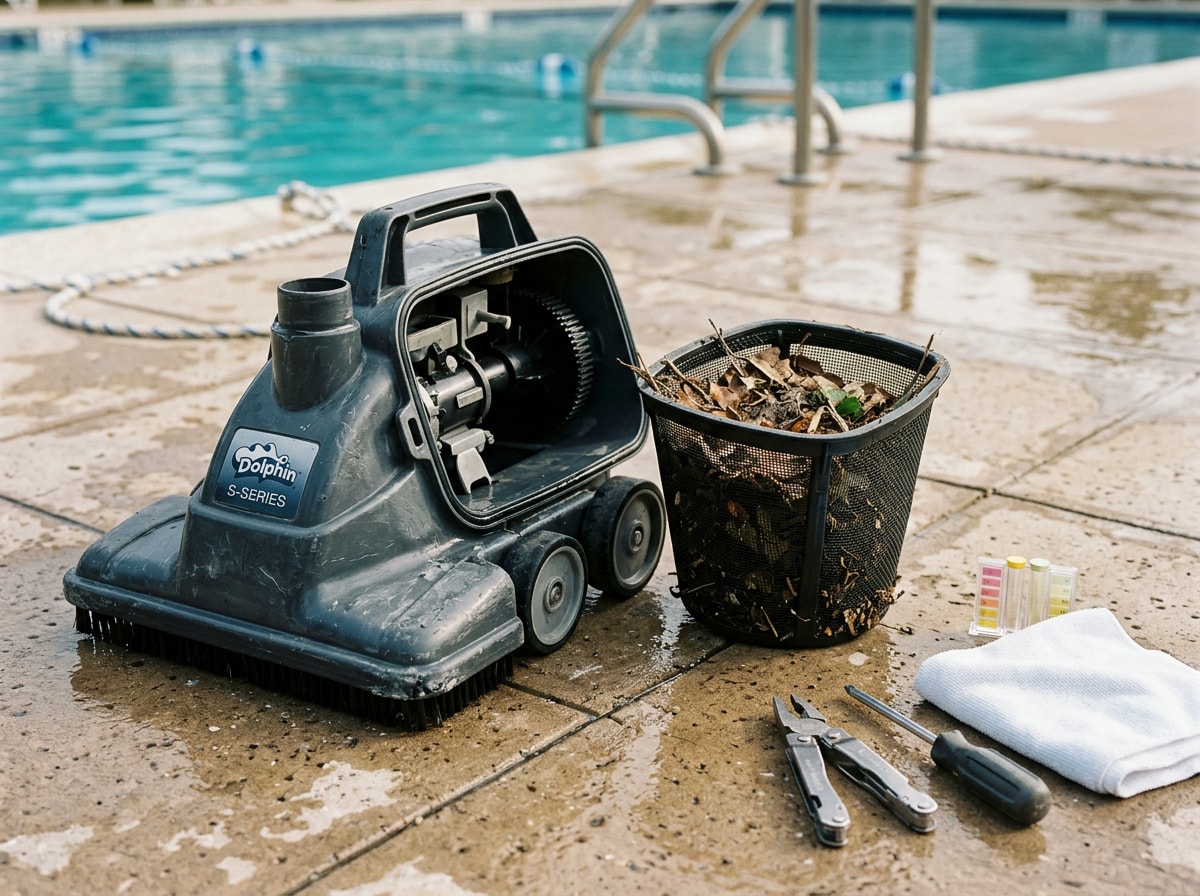
- Debris basket, emptied before it's full
- Filters and nets, cleaned on schedule
- Wheels, hoses, and connectors for cracks or damage
- Hoses drained after each use
Watch for warning signs that point to a larger service need: loss of suction, reduced cleaning performance, or broken wheels and brushes. Catching these early usually means a quick repair instead of a full replacement. The CDC's Model Aquatic Health Code is a set of guidelines, based on science and best practices, that state and local authorities can use to help make public pools and other water activities safer , and it includes maintenance benchmarks many facilities reference as a starting point, though Florida's own health codes may set additional local requirements. A vacuum showing repeated performance drops is often a sign of a bigger issue; our pool equipment repair team sees this most often on units that skipped a season of basic upkeep.
Buy Equipment or Hire a Commercial Pool Service?
Most of what comes up when you search for pool vacuuming help in this market isn't a product page, it's a local service company. That's worth noting, because plenty of Orlando properties never actually buy a commercial vacuum at all. They contract a service provider who brings the equipment, the labor, and the compliance knowledge as part of a standing agreement.
Buying equipment outright makes sense when a property has in-house maintenance staff, consistent debris loads, and someone who can handle basket cleaning and hose storage between uses. It makes less sense for a small HOA or boutique hotel with no dedicated pool staff, where a damaged unit or a missed cleaning cycle becomes a compliance headache instead of a minor inconvenience.
For properties leaning toward outsourcing, a weekly pool cleaning plan or a full commercial pool service agreement covers vacuuming, basket checks, and water chemistry in one visit, which is often cheaper than the labor cost of running equipment in-house. Swimm Solutions services hotel, HOA, and apartment pools throughout the Orlando area, and our technicians can walk a property through which approach fits its traffic and budget. Get a free estimate before committing to either path.
Best Commercial Pool Vacuum Options for 2026
Pricing, specs, and availability shift often, so it's worth confirming exact figures directly with manufacturers before making a final decision rather than relying on older buying guides.
Cordless handheld models remain the pick for spot-cleaning and smaller commercial pools where a full in-ground system isn't justified. Pressure-side machines, often paired with a dedicated booster pump, stay the go-to choice for properties with heavy leaf and storm debris, a common scenario during Central Florida's summer rainy season. Robotic commercial units sit at the top of the price range but offer the most hands-off operation, running independent cycles without pulling from the pool's pump at all.
Quick Comparison
| Category | Best For | Key Spec | Power Source |
|---|---|---|---|
| Suction-side | Medium pools, lower budget | 25-35 GPM | Main pump |
| Pressure-side | Heavy leaf/storm debris | Large debris bag + booster pump | Main pump + booster |
| Cordless handheld | Spot-cleaning, multi-property crews | 45-60 min runtime | Battery |
| Robotic | Hands-off daily cleaning | Independent filtration | Electric motor |
Final Thoughts: Which Type Wins for Your Property
The right choice depends on the property, not a single "best" model. Facilities dealing with heavy leaf and storm debris should lean toward pressure-side units with a booster pump. Multi-property maintenance crews often get more value from a lightweight, cordless vacuum they can carry between sites. Operators who want the most hands-off solution, and have the budget for it, tend to land on a robotic system.
For most commercial operators, balancing suction power, durability, and ease of maintenance matters more than chasing the single highest-spec machine. If equipment ownership sounds like more overhead than it's worth, our pool maintenance and water chemistry balancing plans cover the vacuuming along with everything else a Florida health inspection checks. See our work on properties throughout Orlando, FL, or browse the related pool auto fill guide if you're planning other equipment upgrades at the same time. Contact us for a free estimate before you buy.
FAQ
What kind of pool vacuum do professionals use?
Professionals typically choose between suction-side, pressure-side, and robotic commercial-grade cleaners depending on the pool's size and debris load. Larger commercial properties often run pressure-side or robotic units, while smaller or budget-conscious operations still rely on suction-side models connected to the existing filtration system.
Who makes the best commercial vacuum?
Several brands have strong reputations in commercial pool equipment, including manufacturers known for pressure-side systems with booster pump compatibility and others known for robotic and cordless handheld lines. Market leaders shift over time, so it's worth confirming current reviews and warranty terms before buying.
How much does a commercial pool vacuum cost?
Cordless handheld units generally cost less than full pressure-side or robotic commercial systems, which require more components like booster pumps or independent motors. Exact pricing varies widely by technology type and brand, so getting a current quote is more reliable than relying on general price ranges.
What is the best pool vacuum for heavy debris?
Higher-GPM pressure-side units with a booster pump tend to handle heavy leaf and storm debris best, which matters for Central Florida properties during hurricane season. Matching equipment to a specific property's debris load usually comes down to tree coverage and how exposed the pool deck is.
Do commercial pools in Florida require daily vacuuming?
Florida health codes don't universally require vacuuming every single day, but most public pools need daily visual inspection and debris removal to stay compliant and safe for swimmers. Heavier-use properties, like hotels and waterparks, often vacuum daily anyway simply to keep up with swimmer load and storm debris.
Can a residential pool vacuum be used on a commercial pool?
A residential vacuum can technically run in a commercial pool, but it won't hold up to daily use, larger surface areas, or heavier debris loads for long. Commercial-grade units use reinforced materials and stronger motors specifically because residential equipment wears out fast under that kind of frequency.