If you're shopping for a pool auto fill in Orlando, FL, you already know the problem: triple-digit heat indexes and sudden summer downpours swing your water level in opposite directions, sometimes in the same week. An automatic filler solves both ends of that problem without you touching a hose. Our technicians install and service these systems across the Orlando metro every pool season, and that hands-on work shapes everything below.
What Is a Pool Auto Fill?
An automatic water filler tops off a swimming pool whenever the water level drops too low, using a float or sensor connected to a water supply line. It shuts the valve the moment the level is correct again, no timer, no manual check.
Skip the auto fill and two things can go wrong. Pumps can run dry and suffer costly damage when the skimmer starts pulling air, or an unattended hose can overfill the pool and flood the deck or landscaping. A matched system handles both risks without daily attention.
Why Orlando Pools Lose Water Faster Than You'd Think
Evaporation, not splash-out, is the biggest water thief in a Central Florida pool. EPA estimates that, depending on climate, an uncovered 500-square-foot swimming pool could lose between 12,000 and 31,000 gallons of water per year due to evaporation, with this number being even higher for heated pools. Orlando's heat, humidity swings, and near-constant pool use push most backyard pools toward the higher end of that range.
A pool cover helps too. Using a pool cover can prevent up to 95 percent of pool water evaporation. Most Orlando homeowners skip the cover for convenience, which is exactly why an auto fill earns its keep here faster than it would in a milder climate.
Not every water drop is evaporation, though. A pool losing more than about a quarter-inch a day, even with an auto fill installed, usually signals a leak rather than normal water loss. If that sounds familiar, our swimming pool leak detection guide walks through how to tell the difference before you call anyone out.
Types of Pool Auto Fill Systems
A few mechanical and electronic approaches exist, and the right one depends on your pool type, budget, and how hands-off you want the system to be.
| System Type | How It Works | Typical Street Price | Best For |
|---|---|---|---|
| Float-valve leveler | Mechanical float opens/closes a valve, no electronics | $90-$180 | Most inground pools, budget installs |
| Electronic sensor leveler | Sonar or digital sensor triggers a solenoid valve | $300-$600 installed | Vanishing-edge pools, tighter control |
| Clip-on portable float | Hangs over the pool wall, hose-fed | $75-$125 | Above-ground pools, post-resurface fills |
Real retail listings back up that range: a basic over-the-deck water leveler sells for
The Pool Sentry Over the Deck Water Leveler | M-3000 $89.99
, a Pentair unit with a Fluidmaster valve runs around $177.76, and a portable CMP AquaLevel leveler for inground pools lists near $94.32.
Automatic Pool Water Leveler
A water leveler ties into a dedicated water supply line and senses when the pool drops below a set point, then refills until it reaches the correct level. The Pentair automatic water filler helps protect your investment by using simple, reliable float mechanisms to monitor and control the water level in your pool or spa.
When water drops below a preset level, the unit meters in additional water until the proper level is restored, and if water levels are too high, the built-in overflow will take the right amount of water out of the system.
Float-valve levelers cost less upfront and need little maintenance, but they react slowly during Orlando's heavy-rain and high-evaporation seasons. Electronic sensor levelers cost more and may need occasional recalibration, but they respond faster and offer tighter control, which matters most during peak summer swings.
Pool Water Level Float
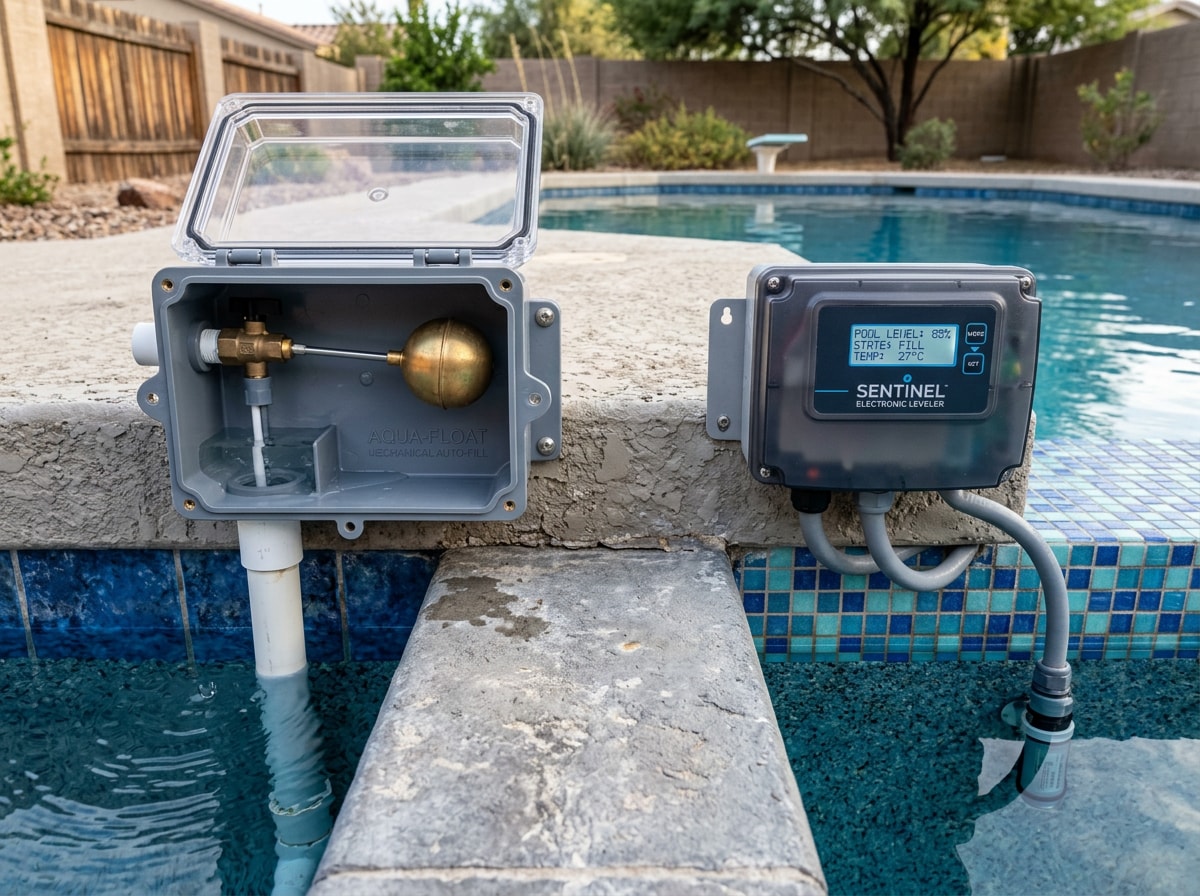
This component works like a toilet-tank float: it rises and falls with the water, opening or closing a valve accordingly. A worn float can stick, causing under- or over-fill, so most floats need replacing every few years, especially in pools that run a salt chlorinator, since salt accelerates wear on the internal mechanism.
Pool Auto Fill Valve
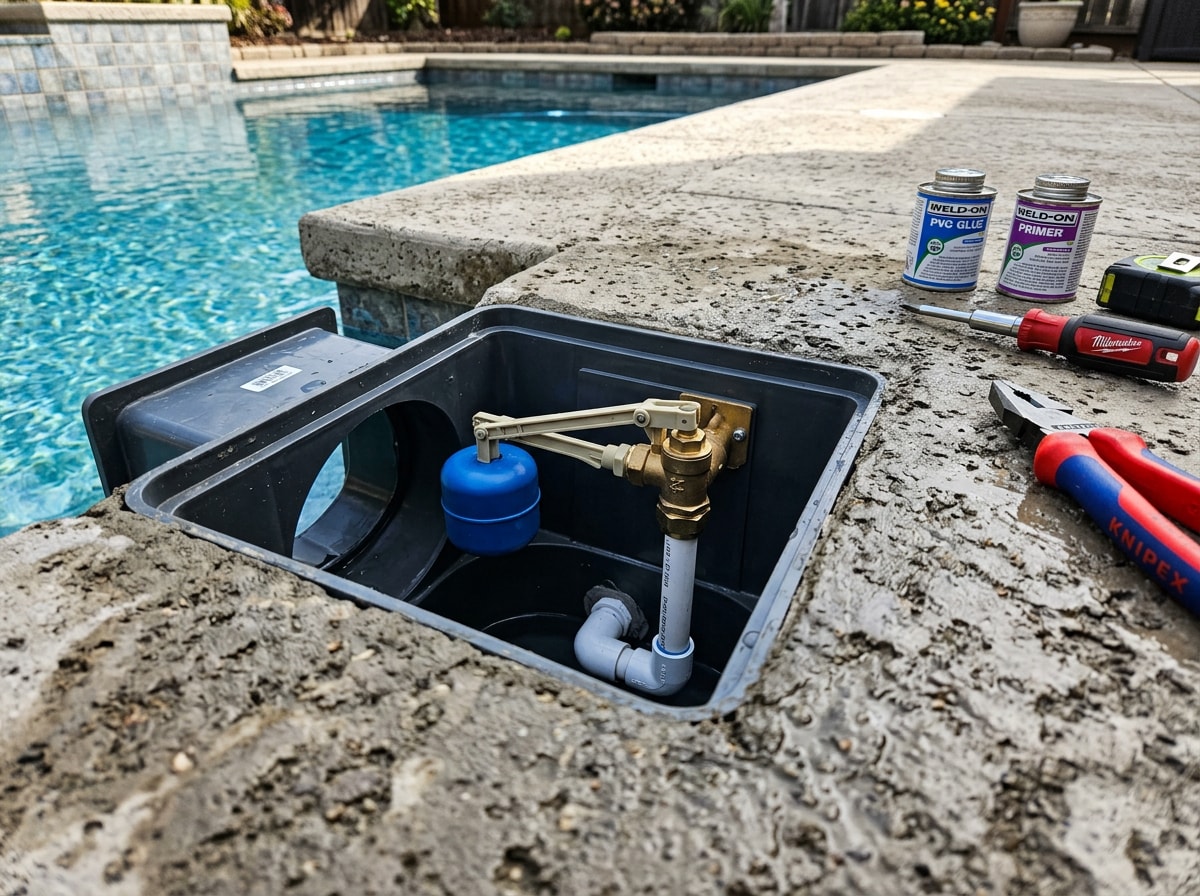
The fill valve is the part that physically opens to admit water and closes once the level is correct. It's typically installed through the skimmer line, a dedicated supply line, or a deck-mounted housing, depending on your pool's plumbing. For exact mechanism specs and installation tolerances, Pentair publishes full technical documentation for its automatic water fillers.
Features Worth Paying For
When comparing units, judge the feature set, not the brand name on the lid.
- Adjustable fill rate so the system matches your pool's actual drain-down speed
- Corrosion-resistant housing,
tough, corrosion- and chemical-resistant ABS polymer construction holds up far longer than painted metal in Florida's humidity
- Reliable shutoff that prevents both equipment damage from low water and overfill flooding
- Salt-system compatibility if you run a saltwater chlorinator
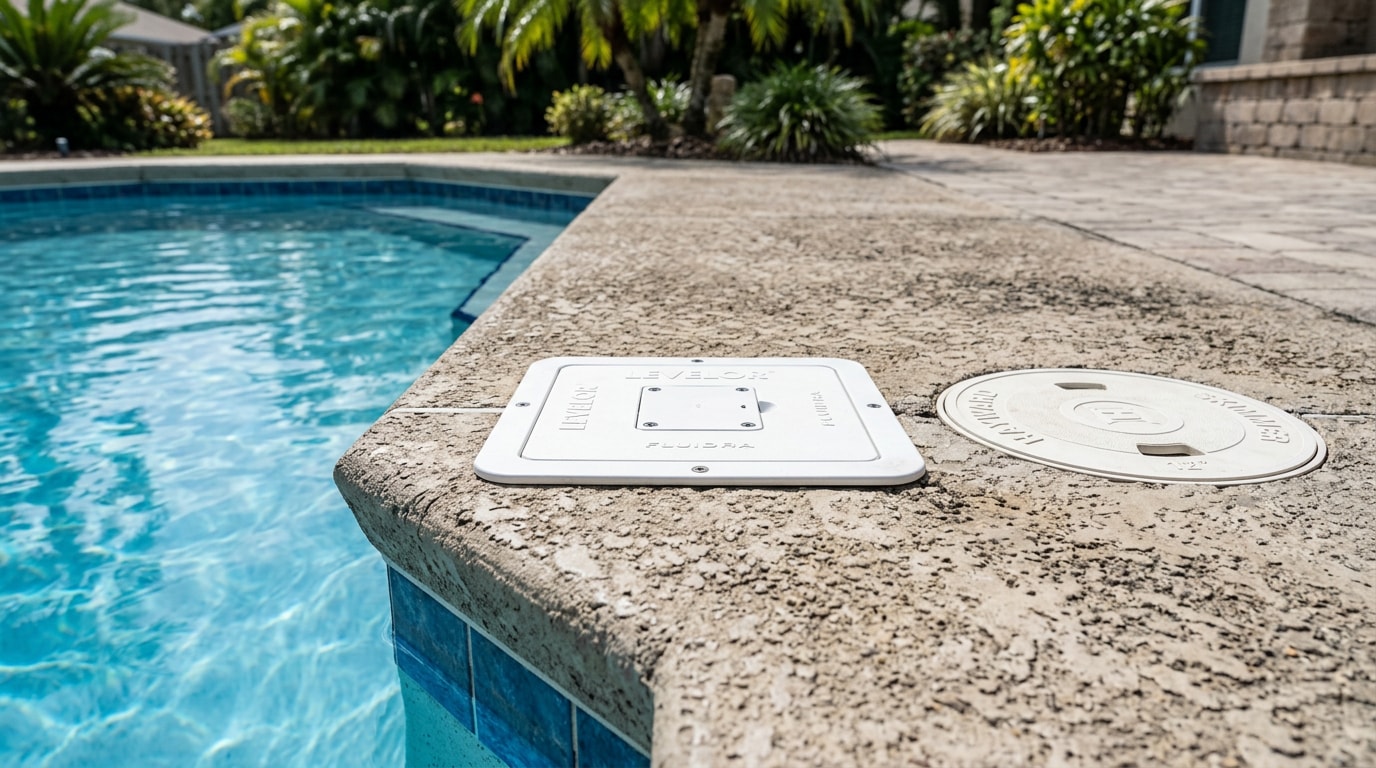
- Color-matched lid options so the unit blends into your deck instead of standing out
These basics matter more than any single manufacturer's marketing claim. Browse our pool equipment upgrade services for compatible add-ons if you're already planning other equipment work.
Inground vs. Above-Ground Installation
Inground pool auto fill setups usually tie into the existing skimmer line or use a separate deck housing near the equipment pad. Above-ground pools typically rely on simpler clip-on floats instead, since there's no permanent plumbing to tap into.
Can You Add Auto Fill to an Existing Pool?
Yes. Retrofitting an existing pool is common and doesn't require draining it in most cases. A technician taps into the equipment pad's water supply, runs a line to a new deck-mounted or skimmer-housed valve, and sets the fill level to match your tile line. The job is more involved than a new-build install, where the line gets run before the deck is poured, but it's a routine upgrade.
Installation: DIY vs. Professional
Basic clip-on float units are genuinely DIY-friendly, clipping onto the skimmer in minutes with no plumbing involved. Electronic levelers that tie into permanent plumbing are a different story. Running a dedicated water line, setting the sensor calibration, and tying into your deck without cracking tile is a job for a licensed technician, and doing it right protects your equipment warranty and avoids slab leaks you won't notice until the water bill arrives.
See examples of finished installs on our projects page if you already know you want a professional install.
What a Pool Auto Fill Costs in Orlando
Installed pricing depends on the system type and how much plumbing work is involved.
| Item | Typical Cost |
|---|---|
| Float-valve leveler, installed | $150-$300 |
| Electronic sensor leveler, installed | $400-$900 |
| Retrofit into existing skimmer line | $200-$500 |
| New-construction install (tied in before deck pour) | $100-$250 |
The water itself is the cheap part of the equation. Water rates are effective as of October 01, 2026 under OUC's published schedule, and the average residential water bill was set to rise 60 cents to $26.30 per month effective October 2026, with the first 7,000 gallons each month carrying no rate change while the next 3,000 gallons rise from $2.30 to $2.50 per 1,000 gallons . For an exact per-gallon estimate on your account, check the OUC Service Rates & Costs page directly.
If your pool just got resurfaced, you're filling it from empty rather than topping it off, which is a different cost conversation. Our Replaster Pool Cost in Lake Mary, FL guide breaks down total fill and resurface budgets side by side.
Choosing the Right System for Your Pool
Skip the star ratings and judge units on criteria that actually predict how they'll perform in an Orlando backyard:
- Multi-season reliability: has the model held up through at least two Florida summers in similar installs?
- Ease of float adjustment: can a homeowner nudge the level without tools, or does it need a technician visit?
- Salt compatibility: will the valve corrode faster under a salt chlorinator?
- Lid and ring color match: does it come in a finish that matches pavers, travertine, or concrete?
- Supply line condition: an old or undersized line will bottleneck even the best valve, worth a quick check from your pool equipment repair technician before you buy.
There's no universal "best" device. The right one depends on your pool type, budget, and whether you want a DIY clip-on or a plumbed-in professional install. Get a free estimate and we'll tell you which fits your setup in one visit.
We install and service auto fill systems throughout Orlando, Winter Park, Windermere, and Lake Mary, along with the rest of Central Florida.
FAQ
How does a swimming pool automatic filler work?
A float or sensor detects a low water level, triggers the valve to open, lets water in through the supply line, then shuts off automatically once the level is correct.
Can I add an autofill system to an existing pool?
Yes. A technician taps into your equipment pad's water supply and runs a line to a new valve, either through the skimmer housing or a deck-mounted unit. No draining is required in most retrofit jobs.
How much does a pool autofill cost in Orlando?
Float-valve units typically run $150-$300 installed. Electronic levelers with dedicated plumbing run $400-$900. The part itself is cheap; labor and line-running account for most of the total.
How much does it cost to fill a 20,000-gallon pool with water?
With a garden hose on municipal water, the cost stays well under $100 for most Orlando households, since OUC's lowest usage tiers carry the smallest per-gallon rate. Check the OUC rate schedule for your exact tier, since a large one-time fill can push you into a higher usage bracket for that billing period.
Do I need an automatic pool water leveler if I already check my pool regularly?
Manual checking works until you travel or hit peak evaporation season. An automatic leveler saves time and catches drops you'd otherwise miss while away from home.
What's the best auto fill device for my pool?
There's no single winner. The right choice depends on pool type, budget, salt-system compatibility, and whether you prefer a DIY clip-on float or a professional plumbed-in install. For installation support in your area, see our Orlando service page or visit our homepage to browse every service we offer.