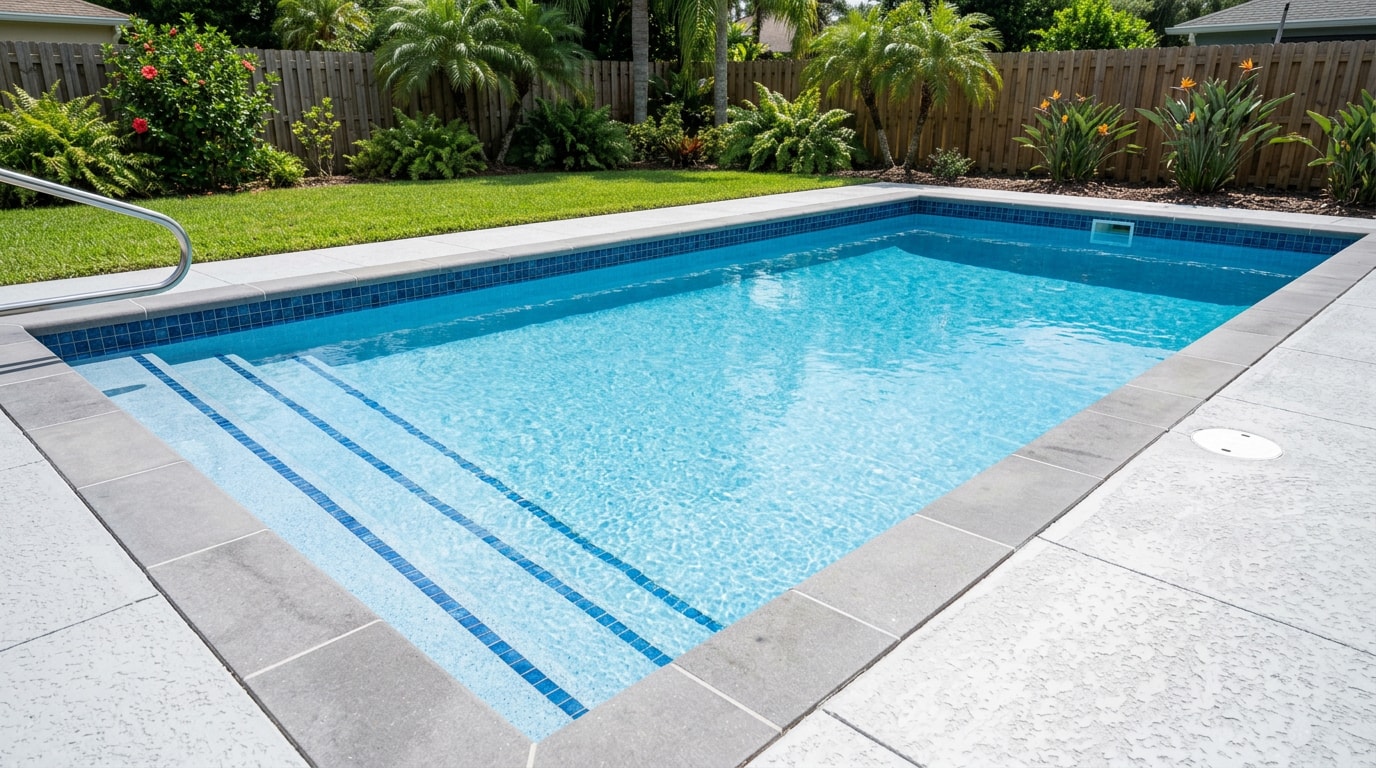
Inground pool liners in Ocoee take a harder beating than almost anywhere else in the country, thanks to nearly 230 sunny days a year baking the vinyl from spring through fall. Most homeowners here replace a liner long before the pool shell underneath shows any real wear. This guide covers the warning signs, real installed costs, thickness options, and what a properly licensed crew should be doing differently than a weekend handyman.
At Swimm Solutions, our crews are based right in Winter Garden and handle liner replacements throughout Orange County every month of the year, so the recommendations below reflect what actually holds up under Florida sun, not generic national averages.
Visit Swim Solutions to see our services and request a free estimate.
Signs Your Ocoee Pool Needs a New Liner
A liner rarely fails all at once. Watch for these warning signs before a small problem becomes a drained pool:
- Fading or a chalky, faded finish on the vinyl surface
- Wrinkles or folds along the walls that won't smooth out
- Visible or separating seams, especially near steps and corners
- Water loss beyond normal evaporation (more than about a quarter-inch per day)
- A liner that feels stretched, thin, or slightly ballooned when you press on it
If two or more of these apply, patching is usually a short-term fix at best.
What Inground Pool Liner Replacement Costs in Ocoee
Pricing in Central Florida for a full inground vinyl pool liner replacement typically falls between $3,500 and $7,500 installed Inground Vinyl Pool costs $3,500 – $7,500 on average in Florida , with the final number driven mostly by pool size, shape complexity, and liner thickness.
| Liner Package | Typical Installed Cost | Best For |
|---|---|---|
| 20 mil, standard pattern | $3,500 - $4,800 | Simple rectangular pools, budget-conscious owners |
| 27 mil, standard pattern | $4,500 - $6,500 | Full-sun pools, pets, active households |
| Custom shape, tanning ledge, or steps | Add $500 - $1,200 | Freeform pools, sun shelves, multi-level steps |
Complex shapes, deep ends, and patterned liners can push costs toward the higher end of these ranges Complex shapes, deep ends, or patterned liners may increase costs by 10–25% .
20 Mil vs. 27 Mil: Picking the Right Thickness for Florida Sun
Most inground liners ship in one of two common thicknesses, and the difference matters more here than in milder climates.
- 20 mil is the most common thickness for inground pools and is flexible enough to install easily in tight corners
This is the most common thickness for inground pools. Many builders install 20 mil on both walls and floors. It is flexible, easier to install in tight corners, and provides adequate durability for standard use .
- 27 mil is roughly 35% thicker than 20 mil and holds up better against punctures and UV bleaching
A 27 mil liner is roughly 35% thicker than 20 mil .
- A 20/27 blend is a popular middle ground, with thinner vinyl on the walls for easy stretching and thicker vinyl on the floor where foot traffic and cleaning tools do the most damage
A popular middle ground where the vertical walls are 20 mil to allow for easy stretching into corners and the horizontal floor is 27 mil .
For climates with heavy, year-round sun exposure like Ocoee, industry guidance generally points toward the thicker end of that range to resist UV damage and stretching Hot and sunny climates call for 25 to 30 mil thickness, which protects against UV damage and stretching from heat buildup .

Vinyl liner material itself is governed by a national specification, ASTM D1593, which sets minimum standards for resin content and physical testing of the vinyl sheeting This specification covers nonrigid, unsupported vinyl chloride plastic film and sheeting in which the resin portion of the composition contains at least 90% vinyl chloride . That same standard is directly referenced inside the model swimming pool and spa code used across the country This standard is referenced in the 2012 International Swimming Pool and Spa Code , which is a detail most liner guides skip entirely. You can review the current ASTM D1593 specification if you want the technical detail behind "mil" ratings.
The Replacement Process: What Actually Happens
A full pool renovation that includes a liner swap generally breaks into two physical phases once the old liner is scheduled for removal.
Liner Removal
The pool is drained completely, and the hydrostatic relief plug is pulled so groundwater pressure doesn't push against the empty shell. Crews then strip the old liner and inspect the walls and floor for soft spots or rust on wall panels. This stage usually takes a day or two once draining is finished.
Skimmer Faceplate and Hardware Replacement
Skimmer faceplates, gaskets, and return fittings typically get swapped at the same time as the liner, since they wear out at roughly the same rate. Replacing them together creates a watertight seal instead of risking a leak around old hardware a few months later. If your pool also needs new waterline tile while it's drained, that's the easiest time to handle a pool tile replacement in the same visit.
UltraSeam Liner Technology: Why It's Nearly Standard Now
UltraSeam, sold by Latham as Ultra-Seam, replaces visible stitched or glued floor seams with a welded process that makes seams stronger and far less noticeable Latham is one of the only swimming pool liner companies that offers innovative Ultra-Seam technology, an exclusive process that makes floor seams stronger and virtually invisible . Seams at corners and steps are historically where older liners fail first, so this isn't just a cosmetic upgrade. Most Central Florida installers, including our team, now treat it as a standard feature rather than a premium add-on. You can see the manufacturer's own breakdown on the Latham Ultra-Seam liner page.
After Installation: Water Chemistry and Startup Care
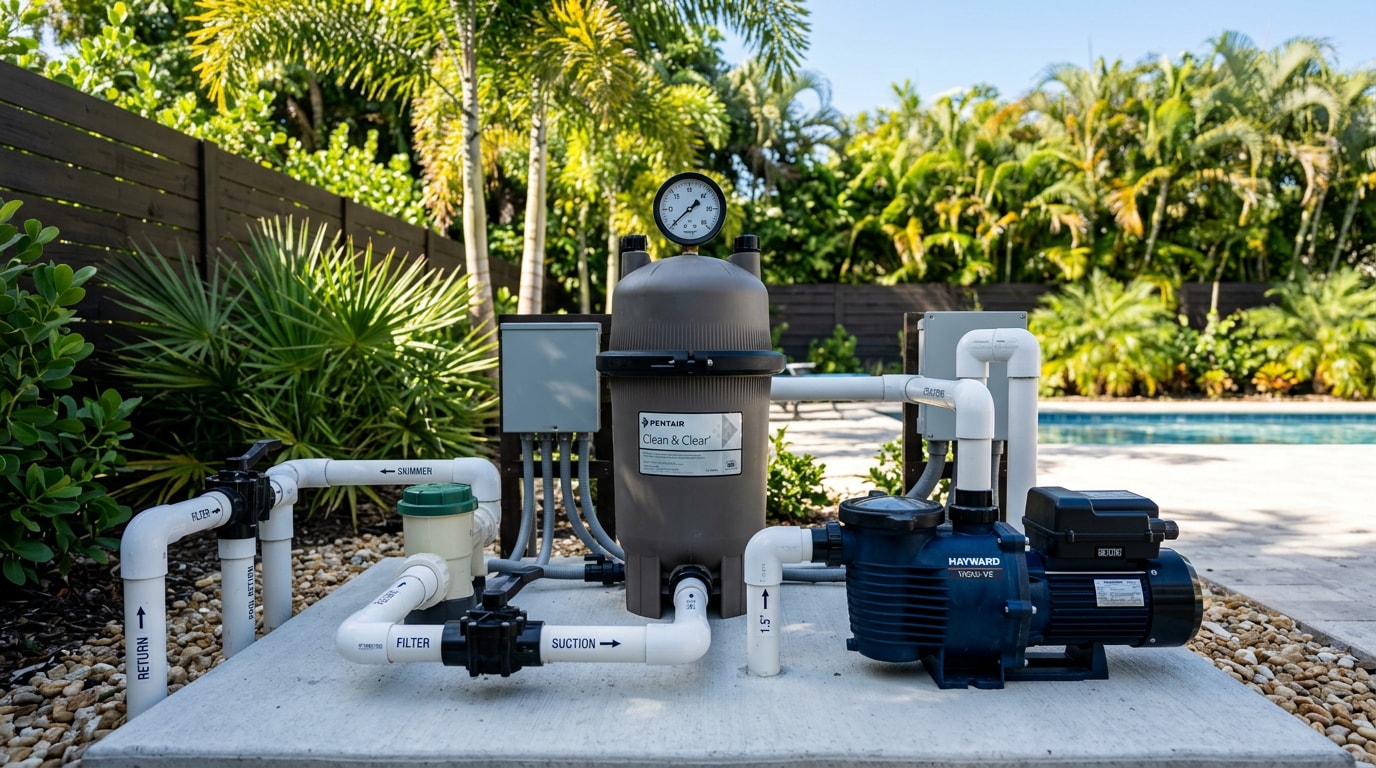
A brand-new liner is vulnerable to staining and etching if the water isn't balanced correctly during fill and startup. Fresh plaster dust, high chlorine shock levels, and unbalanced pH can all leave marks on new vinyl within the first few weeks. Our water chemistry balancing service covers this startup window, and if your filter system is due for attention around the same time, our guide on pool filter cartridges walks through the maintenance schedule that keeps a new liner looking sharp longer.
Hiring a Licensed, Insured Pool Contractor in Ocoee
Florida treats pool contracting as its own regulated trade, separate from general contracting. To hold a state pool/spa license, an applicant generally needs at least three to four years of verifiable trade experience and must pass a state exam covering trade knowledge and building code Applicants must demonstrate a minimum of 4 years of experience in the pool construction trade for Class A, or 3 years for Class B, and candidates must pass the Florida state licensing exam covering trade knowledge and Florida building codes . Licensed contractors also carry minimum insurance set by the state board Insurance requirements are set by the CILB: contractors must maintain a minimum of $100,000 in public liability coverage and $25,000 in property damage coverage .
Before you sign anything, confirm the company's license is active using the state's own license verification portal. Any legitimate installer should hand over their license number without hesitation.
Areas We Serve Near Ocoee, FL
Swimm Solutions installs and replaces inground pool liners throughout Ocoee and the surrounding communities, including Winter Garden, Apopka, and the rest of Orange County. Browse our completed project gallery to see recent liner and renovation work, or visit our full swimming pool contractor page for every service we offer beyond liners.
Ready to get a firm number for your pool? Get a free estimate and we'll measure your pool, walk you through thickness options, and give you a written quote before any work begins.
FAQ
How long do inground pool liners last?
Most inground vinyl liners last 8 to 12 years depending on thickness, water chemistry, and sun exposure Every 8–12 years, depending on liner quality, maintenance, and weather exposure . Thicker 27 mil liners in shaded or well-maintained pools can push past that range; thin liners in full Florida sun often fall on the shorter end.
How much does inground pool liner replacement cost?
Expect $3,500 to $7,500 installed for a typical inground vinyl liner in Central Florida, with custom shapes and heavier mil liners landing toward the top of that range. Request a free estimate for an exact number on your pool.
What's the difference between 20 mil and 27 mil liners?
A 27 mil liner is about 35% thicker than a 20 mil liner, which translates to better puncture and UV resistance at a modest cost increase. 20 mil is easier to stretch into tight corners, which is why many pools use a 20/27 blend, 20 mil walls with a 27 mil floor.
How long does liner installation take once materials arrive?
Once the custom liner is delivered, installation itself usually takes a single day for a straightforward rectangular pool. Complex shapes, steps, or tanning ledges can add a second day.
Do I need a permit to replace a pool liner in Florida?
A straightforward liner-only swap rarely triggers a new building permit on its own. If the job also involves structural repairs, new tile, or deck work, your contractor should confirm permit requirements with the local building department before starting.
Is it worth replacing a pool liner instead of patching it?
Replacing a worn liner is usually worth it once patching becomes frequent, since a new liner stops structural water loss, protects the pool shell, and restores the pool's appearance. Frequent repeat leaks are the clearest signal that patching is no longer a real fix.
What are the signs it's time to replace your pool liner?
Visible cracking, fading, wrinkles along the walls, and leaks that keep returning after patching are the most common signs. If repairs are only holding for a few weeks at a time, replacement is typically the more economical choice.