Figuring out how to clear a cloudy pool in Seminole County usually comes down to one trigger: an afternoon storm that dumps pollen, dirt, and organic debris into the water faster than your filter can keep up. We've walked Seminole County homeowners through this exact fix more times than we can count, and the pattern rarely changes. Here's the step-by-step process that actually works, plus how to tell when the problem is bigger than a bag of shock can handle.
Why Seminole County Pools Turn Cloudy
Cloudy water almost always traces back to one of five issues: weak filtration, unbalanced chemistry, suspended dirt, algae growth, or diluted chlorine after rain. In Central Florida, rain is usually the domino that knocks the other four over.
Storm runoff carries leaves, pollen, and fine organic material into the pool. That debris feeds algae and burns through chlorine, leaving less sanitizer to keep the water clear. Roughly 72% of Orlando's annual rainfall arrives between May and October, with June averaging 8.05 inches of rain, the wettest month of the year. That's exactly why cloudy-water calls spike through the summer across the region, according to data from NOAA's climate normals for Orlando International Airport.
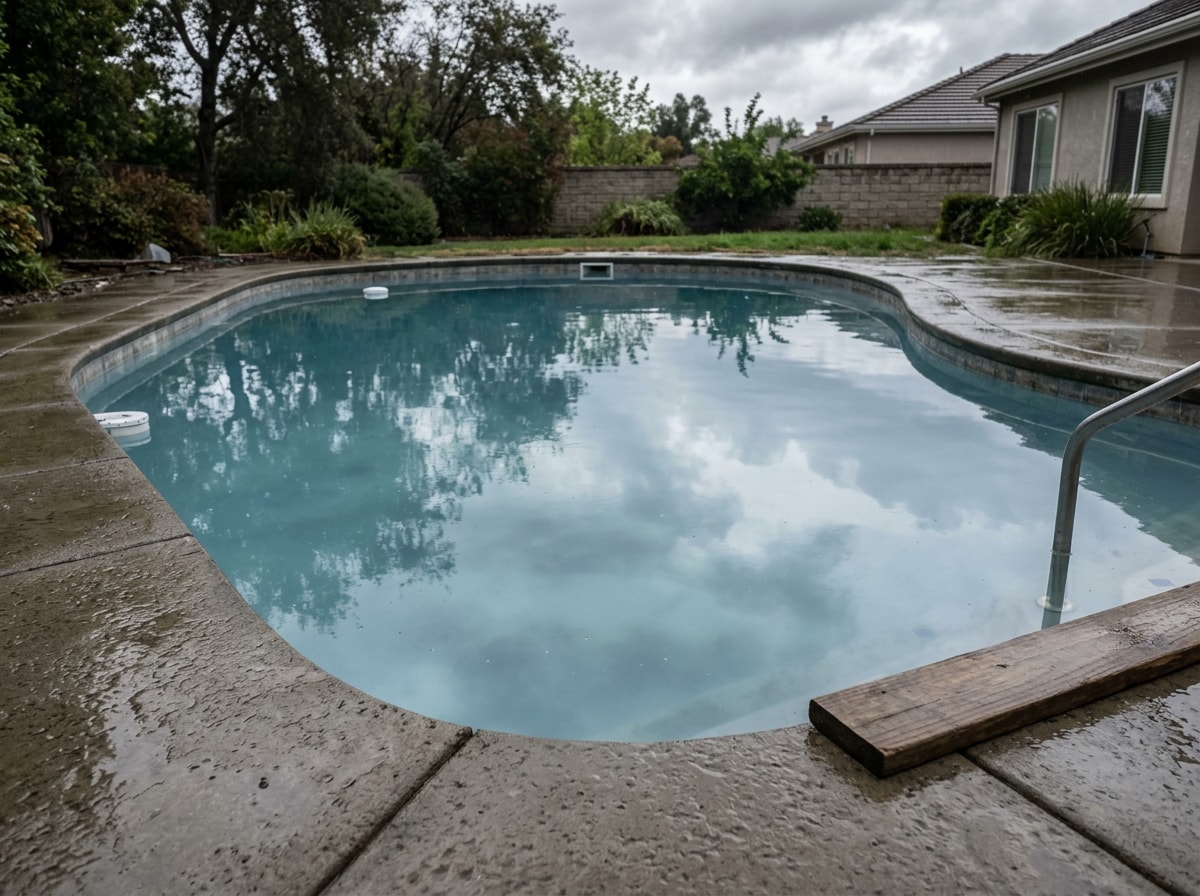
Fast-Fix Protocol: 5 Steps to Clear Cloudy Water
Work through these in order. Skipping steps is the most common reason a "fix" doesn't hold.
- Test and balance chemistry. Check pH, free chlorine, and alkalinity before adding anything else.
- Clean or backwash the filter. A clogged filter can't clear water no matter how much chemical you throw at it.
- Shock the pool if chlorine is low. This oxidizes organic contaminants and kills algae spores causing the haze.
- Add a clarifier or flocculant. Clarifier for mild haze, flocculant for severe or green water (see comparison below).
- Run the pump continuously until the water is visibly clear, then retest and rebalance.
Most Seminole County pools clear within 24 to 48 hours when these steps are followed in sequence without skipping ahead.
Pool Clarifier vs. Pool Flocculant: Which One Do You Need?
| Factor | Pool Clarifier | Pool Flocculant |
|---|---|---|
| Best for | Mildly hazy water | Severely cloudy or green water |
| How it works | Binds micro-particles so the filter catches them | Clumps particles so they sink to the floor |
| Equipment needed | Standard filtration, no change needed | Filter set to recirculate, then vacuum to waste |
| Downtime | None, pool stays usable sooner | 8–12 hours of settling, plus vacuuming |
| Water loss | None | Some water lost during vacuum-to-waste |
If you're unsure which one your pool needs, our water chemistry balancing service can test and recommend the right product for your setup.
Step-by-Step: Using Flocculant Safely for Severe Cases
Flocculant is the stronger option and should be reserved for water that's beyond what a clarifier can handle. Confirm your basics are in order first, then work through this sequence.
- Test and adjust chemistry. Unbalanced pH or chlorine undermines how well flocculant can perform, so don't skip this.
- Turn off the heater and automatic cleaner. Running equipment stirs up particles that are trying to settle.
- Switch the filter to "recirculate." This routes water around the filter so floc isn't trapped before it clumps.
- Add flocculant evenly around the perimeter. Pour slowly rather than dumping it in one spot.
- Shut off the pump and let the water sit. Most manufacturers recommend 8 to 12 hours of undisturbed settling time.
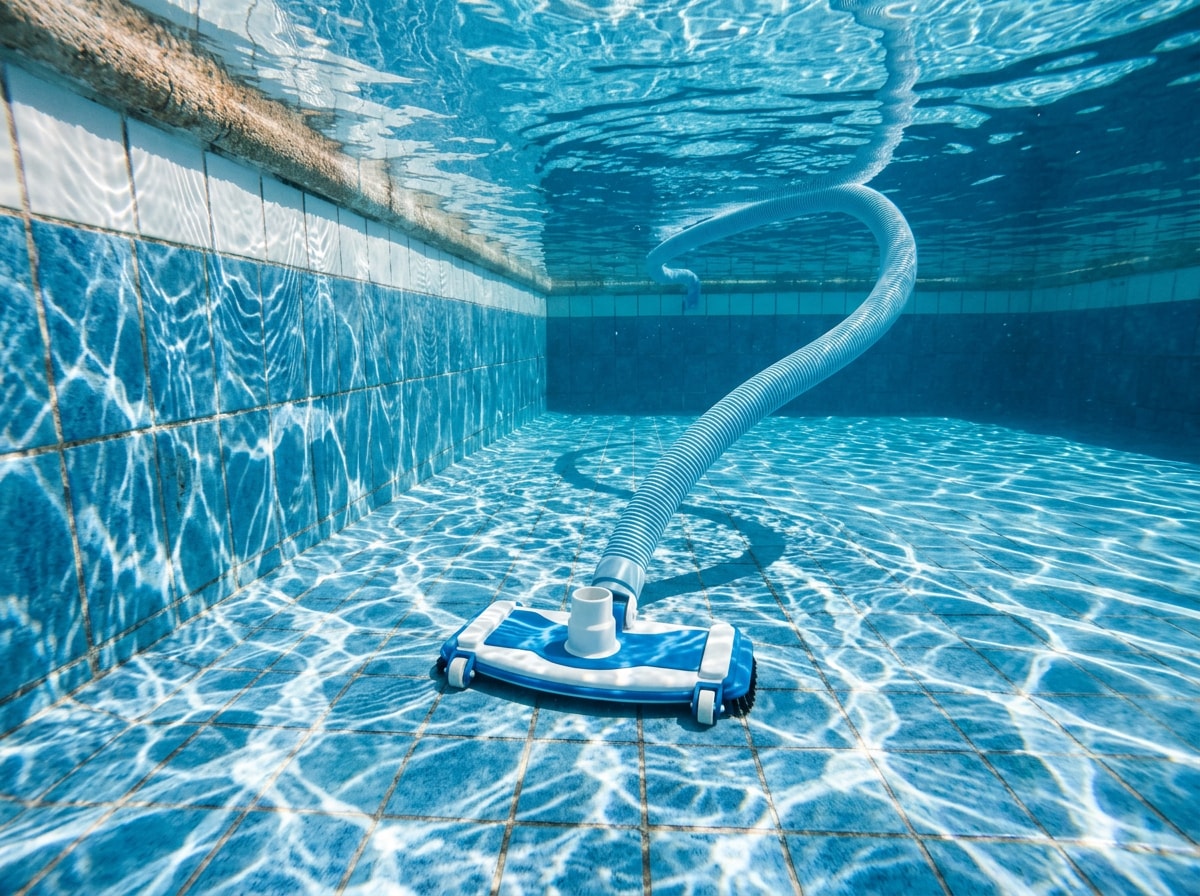
- Vacuum to waste, slowly. This bypasses the filter entirely, sending clumped debris out of the system instead of re-clouding the water.
- Reset the filter and rebalance chemistry. The flocculant process can shift pH and chlorine, so retest once the water looks clear.
Safety Precautions When Using Pool Chemicals
Work in a ventilated area, wear gloves and eye protection, and never mix flocculant with other pool chemicals in concentrated form. This alert reviews the hazards of swimming pool chemicals and the protective measures pool owners should take to prevent fires, toxic vapor releases, and personnel injuries , according to the EPA's chemical safety alert on pool chemical storage and handling.
Keep swimmers out of the water until chemistry is rebalanced. If you notice unusual filter pressure or pump noise after treatment, a pool equipment repair check can catch strain before it becomes a bigger repair.
How to Fix a Cloudy Pool After It Rains in Seminole County
Seminole County's rainy season brings afternoon storms most days from roughly June through September. Covering or securing loose debris and checking that skimmers aren't blocked ahead of a storm reduces how much organic material ends up in the water.
Maintaining a minimum free chlorine level of 1 ppm and a pH between 7.0 and 7.8 gives your pool a buffer against the dilution that comes with heavy rain, per CDC guidance on operating residential and public pools. After a storm passes, check pH and chlorine right away, shock if chlorine reads low, and run the filter an extra four to six hours to clear suspended debris before it feeds algae. Most pools recover visibility within 24 hours when this sequence happens promptly.
When to Call a Pool Professional
Call in a professional when cloudiness persists after multiple flocculant or shock treatments, when equipment seems strained from running longer cycles, or when a pool keeps cycling between green and cloudy despite repeated fixes. At that point, the issue is often something a home test kit can't fully diagnose: a filtration problem, a stubborn algae strain, or a deeper chemistry imbalance.
A pool cleaning service visit can run lab-level water testing and pinpoint what's actually going wrong before more chemicals get added on top of the problem. If your pool has gone fully green rather than just cloudy, our green pool recovery service handles that heavier lift. Schedule a free inspection and we'll walk you through what's actually causing the haze before recommending a fix.
Serving Seminole County Homeowners
Ongoing pool care is available across Seminole County and nearby Lake Mary, FL for homeowners whose cloudy water needs more than a one-time fix. Regular maintenance is often what keeps cloudiness from becoming a recurring summer headache. You can see our full service area and offerings on the Swim Solutions homepage.
FAQ
Will shock clear up cloudy pool water?
Shock helps if cloudiness stems from low chlorine or early algae growth, but it won't fix underlying filtration or chemistry problems on its own.
What is the best pool clarifier?
There's no single "best" clarifier. The right one depends on your pool size and the root cause of the cloudiness, which is why testing comes before treating.
Can too much chlorine make a pool cloudy?
Yes, in some cases. Excess chlorine can interact with high calcium or stabilizer levels, creating cloudiness even when sanitizer levels look adequate on paper.
Will baking soda clear a cloudy pool?
No. Baking soda raises total alkalinity and pH, but it doesn't bind or remove the particles causing cloudiness. It can even make haze worse if it pushes pH too high.
How long does it take to clear a cloudy pool in Seminole County?
Most pools clear in 24 to 48 hours once chemistry is balanced, the filter is clean, and the pump runs continuously. Severe cases treated with flocculant can take a bit longer due to the settling and vacuum-to-waste steps.
How often should I clean my pool?
Skim and brush weekly, and test the water regularly. Consistent, light maintenance prevents cloudiness more reliably than occasional deep cleaning.
What if my pool turned green over the summer?
A green pool is usually advanced algae growth, a more severe version of cloudiness. The same core fixes apply: rebalance chemistry, shock the water, then use flocculant if particles remain suspended. For a full walkthrough, see our guide on how to fix a green pool.